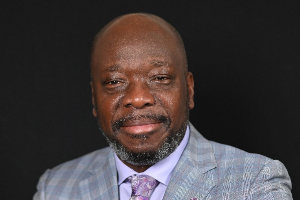
October 12 marks the day former Capital Bank founder and Managing Director William Ato Essien was sentenced to 15 years’ imprisonment with hard labor after defaulting on an agreement to repay more than GH¢90 million to the state.
The Accra High Court handed down the sentence on October 12, 2023, after revoking a restitution arrangement that had allowed him to avoid immediate imprisonment in exchange for repaying funds linked to the collapse of the defunct bank.
Essien, who pleaded guilty to charges involving stealing and money laundering, was accused of misappropriating funds from liquidity support provided to Capital Bank by the Bank of Ghana (BoG).
His conviction became one of the notable developments arising from Ghana’s 2017 banking sector clean-up, which resulted in the collapse of several financial institutions and intensified scrutiny of banking executives and the management of public funds.
How Ato Essien’s repayment deal collapsed
In December 2022, Essien entered into an agreement with the state under Section 35 of the Courts Act to repay the money through instalments.
He initially paid GH¢30 million but failed to meet subsequent payment deadlines. Under the arrangement, he was expected to make further payments towards settling the outstanding amount.
His failure to honor the agreed payment schedule prompted the court to reconsider the arrangement. Reports on the proceedings indicated that he had paid only part of a scheduled installment, leading to the revocation of the agreement.
On October 12, 2023, the court sentenced him to 15 years in prison with hard labor.
The sentence followed his guilty plea to 16 counts involving stealing and money laundering in connection with the financial dealings of Capital Bank.
The case drew attention to the consequences of failing to honor a court-approved restitution agreement, particularly where the funds involved were linked to public financial support.
The Court of Appeal grants Ato Essien GH¢10m bail
Although Essien was sentenced in 2023, his imprisonment took another turn on July 30, 2025, when the Court of Appeal in Accra granted him bail pending the determination of his appeal against his conviction and sentence.
A three-member panel granted him bail in the sum of GH¢10 million with two sureties, allowing him to leave prison while his legal challenge proceeded.
The court imposed conditions requiring him to deposit his passport at the registry and report to the registrar once every month.
The bail decision came amid public discussion about his health after reports emerged that he had been receiving medical attention. Concerns about his condition had featured prominently in calls for his temporary release.
His lawyers have argued that the 15-year sentence amounts to a miscarriage of justice, pointing to the substantial amount he had already paid towards restitution before being jailed.
However, the grant of bail did not overturn his conviction or amount to a presidential pardon. It permitted his temporary release while the appeal remained pending.
Ato Essien makes his first public appearance after leaving prison
Months after his release on bail, Essien made a reported public appearance at a government press conference in December 2025, marking his first widely reported appearance since leaving prison.
According to a report by YEN.com.gh, photographs shared by Mustapha Abubakar, Deputy Chief Executive Officer of Tema Oil Refinery, showed Essien attending an event connected to the signing of an agreement between Cybele Energy and the Government of Guyana for oil exploration in the South American country.
The event was attended by government officials and other dignitaries, including Presidential Adviser Kofi Okyere Darko.
Essien’s appearance brought renewed public attention to the former banking executive, whose conviction and release on bail had generated considerable interest following the collapse of Capital Bank.
His presence at the event also underscored the distinction between being released from prison on bail and having a conviction overturned. At the time of the reported appearance, his release was linked to the ongoing appeal process rather than a permanent discharge from the sentence.
The development followed the Court of Appeal’s July 2025 decision, which allowed him to remain out of prison under specific conditions while challenging the judgment against him.
The Capital Bank collapse and its aftermath
Capital Bank was among the financial institutions affected by the Bank of Ghana’s banking sector clean-up, which began in 2017 and led to the collapse of several banks.
The exercise raised concerns about corporate governance, regulatory oversight, financial management, and the use of public funds to support struggling financial institutions.
As the founder and former managing director of Capital Bank, Essien became one of the most prominent figures to face a custodial sentence arising from the banking crisis.
His case centered on more than GH¢90 million in liquidity support funds that the state sought to recover through the restitution arrangement.
The court’s decision to impose a prison sentence after the repayment agreement collapsed demonstrated the legal consequences of failing to meet the terms of such an arrangement.
What next for Ato Essien?
Three years after his imprisonment, Essien’s case remains a significant chapter in the aftermath of Ghana’s banking sector clean-up.
His release on GH¢10 million bail in July 2025, followed by his reported public appearance in December of that year, marked major developments in a case that began with the collapse of a bank and ended in a high-profile prosecution.
The central legal question is whether the Court of Appeal will uphold or overturn his conviction and 15-year sentence.
Until the appeal is determined, the bail arrangement remains distinct from a permanent release or acquittal. Essien’s case continues to draw attention to the recovery of public funds, accountability in the banking sector, and the enforcement of court-approved repayment agreements.
EA
General News of Monday, 12 October 2026
Source: www.ghanaweb.com
Today in History: Ato Essien jailed 15 years over GH¢90m repayment default
 William Ato Essien