The election of Kojo Bamba as First Vice Chairman of the New Patriotic Party (NPP) has sparked a debate about grassroots mobilisation, political experience and the place of political vigilantism in Ghanaian politics.
Bamba, whose official name is Kwadwo Fosu Boadu, won the party's October 3, 2026, national executive elections in Kumasi with 3,116 votes, beating 12 other contenders.
His victory attracted praise from some NPP figures who regard him as a committed grassroots organiser, while others have questioned the message his election sends because of his reported association with the Delta Force vigilante group.
Below are seven notable people who have spoken for or against Bamba following the elections.
1. Anthony Karbo – NPP Organisational Committee Chairperson
Anthony Karbo has been among the prominent NPP figures defending Bamba following his election, insisting that his victory should not be interpreted as an endorsement of political vigilantism.
Speaking on Citi FM’s Eyewitness News on October 8, 2026, Karbo argued that Bamba’s longstanding involvement in the party should be considered when assessing his suitability for the position.
Karbo described Bamba as an active party member and grassroots organiser, arguing that his experience and commitment to the NPP should not be overshadowed by the controversy surrounding his background.
2. Joseph Danquah Smith Butey – Former NPP Acting National Chairman
Former NPP Acting National Chairman Joseph Danquah Smith Butey has also defended Bamba, arguing that his ability to speak fluent English should not determine whether he is considered competent to occupy a senior political position.
Speaking to Starr FM after the elections, Butey said Bamba’s election should be respected if he met the requirements for the position.
Who is Kojo Bamba? The man trending after the NPP Conference
He maintained that political competence should not be judged solely by a person’s command of English or conventional expectations of leadership.
3. Sylvester Tetteh – Former Bortianor-Ngleshie Amanfro MP
Former Bortianor-Ngleshie Amanfro MP, Sylvester Tetteh, believes Bamba’s victory was driven largely by his influence among grassroots members of the NPP.
Speaking on Channel One TV on October 7, 2026, Tetteh said many observers had underestimated Bamba’s connections within the party.
Tetteh explained that Bamba’s previous involvement with the party’s youth wing had enabled him to build relationships with delegates and activists over several years.
According to him, these connections helped Bamba secure the support needed to win the contest despite questions about his candidacy.
4. Dr Fahd Osman – NPP National Communications Team Member
NPP communications team member Dr Fahd Osman has also sought to explain the factors that may have influenced delegates to vote for Bamba.
Speaking on Metro TV’s Good Morning Ghana on October 8, 2026, Osman said some delegates were concerned about the treatment of party members during the 2024 general elections and wanted a leader who would prioritise their protection.
He cited alleged incidents involving restrictions on NPP members at collation centres, including in Wenchi, as part of the experiences that shaped delegates’ thinking.
5. Mustapha Gbande – NDC Deputy General Secretary in Charge of Operations
Unlike the NPP figures who have defended Bamba, National Democratic Congress (NDC) Deputy General Secretary in Charge of Operations Mustapha Gbande has criticised the decision to elect him.
Speaking on JoyNews’ AM Show on October 5, 2026, Gbande described the outcome as a setback for Ghanaian politics, arguing that Bamba’s reported association with the Delta Force raised concerns about the country’s efforts to discourage political vigilantism.
Gbande questioned what Bamba’s elevation would communicate to party supporters and young people, particularly at a time when political parties have repeatedly faced criticism over the activities of vigilante groups.
Kojo Bamba breaks silence after missing first NPP leadership meeting
He argued that political parties should strengthen democratic competition rather than create the impression that individuals associated with force or intimidation are best suited for leadership.
However, Gbande also acknowledged that Bamba’s background did not automatically disqualify him from political office, noting that different personalities and skills could play roles in political campaigns.
6. Johnnie Hughes – Journalist and Political Commentator
Journalist and political commentator Johnnie Hughes has also examined the implications of Bamba’s victory, raising questions about the direction of the NPP and the place of political vigilantism in Ghana’s democracy.
In a commentary published by 3News on October 9, 2026, Hughes considered what Bamba’s election could mean for the party’s leadership and its approach to political mobilisation.
His analysis focused on whether Bamba’s grassroots appeal could translate into effective leadership and whether the controversy surrounding his background could undermine efforts to discourage political violence.
Hughes also drew comparisons between the controversy surrounding the Delta Force and debates about the Azorka Boys, associated with the NDC, questioning whether Ghana’s major political parties apply consistent standards when dealing with groups linked to political mobilisation and force.
7. Dr Arthur Kobina Kennedy – NPP Member and Political Commentator
NPP member and political commentator Dr Arthur Kobina Kennedy has offered a more measured assessment of Bamba’s election.
In an opinion article published by 3News on October 6, 2026, Kennedy said the party’s elections appeared to have been free and fair and that those who won deserved congratulations.
However, Kennedy’s acceptance of the election outcome did not amount to an unqualified endorsement of political vigilantism.
He questioned the suggestion that the NPP could overcome its electoral challenges by relying on individuals or groups associated with political force, arguing that the party needed to reflect on its direction following its defeat in the 2024 general elections.
Kennedy’s position highlights the distinction between respecting the outcome of an internal democratic process and endorsing every implication of the result.
The reactions to Bamba’s election reveal a divide over what the NPP needs as it prepares for the 2028 general elections.
His defenders point to his grassroots connections, organisational experience and ability to appeal to delegates who want stronger representation within the party.
His critics, meanwhile, argue that his reported association with the Delta Force raises questions about political accountability and whether Ghana’s political parties are doing enough to discourage vigilantism.
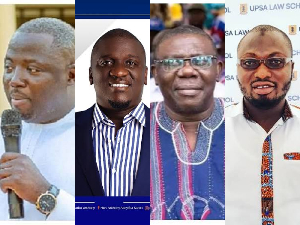
For others, the central issue is whether Bamba can translate his popularity among party delegates into effective leadership while addressing concerns about his public image.
MRA/VPO
THE LOWDOWN: GES PRO Speaks on SHS Placement Crisis and Teachers’ Strike
General News of Monday, 12 October 2026
Source: www.ghanaweb.com
Endorsement vs Criticism: What notable personalities have said about Bamba’s election
 The central issue is whether Bamba can translate his popularity into effective leadership