Samuel Arthur Odoi-Sykes was a diplomat, lawyer, parliamentarian and politician whose career spanned some of the most significant periods in Ghana's political history.
He held several important positions in public life, serving as a student activist, teacher, diplomat, Member of Parliament, Minority Leader and party chairman.
He was particularly remembered for his role as National Chairman of the New Patriotic Party (NPP) from 1998 to 2001, a period that culminated in the party's historic victory in the December 2000 presidential and parliamentary elections.
Early life and education
Odoi-Sykes was born in Accra in 1928.
He received his secondary education at Accra Academy, where he completed his studies in 1948.
He later attended the University of Ghana, where he obtained a Bachelor of Arts degree in History in 1959.
His education continued in the United Kingdom, where he studied law at the Inner Temple in London and qualified as a Barrister-at-Law before being called to the Ghana Bar.
He also obtained a Diploma in American Foreign Policy from the Johns Hopkins University School of Advanced International Studies, adding international relations to his academic and professional background.
His early days in politics
Odoi-Sykes' involvement in politics began while he was still a student.
Between 1957 and 1959, he founded and led the student wing of the United Party (UP), becoming one of the young political activists of the period.
Former NPP Chairman Samuel Odoi-Sykes is dead
From 1958 to 1959, he also served as General Secretary of the National Union of Ghana Students (NUGS).
His early political activities gave him experience in organisation, advocacy and leadership, skills that later became central to his career in party politics.
Teaching and public service
After completing his education, Odoi-Sykes worked as a teacher at Abuakwa State College in Kyebi.
He later joined the Ministry of Information, where he worked as an information officer.
His experience in public communication eventually led him into Ghana's diplomatic service, where he spent several years representing the country abroad.
A career in diplomacy
In 1961, Odoi-Sykes joined Ghana's Foreign Service.
He began his diplomatic career as First Secretary at the Ghana High Commission in New Delhi, India.
In 1963, he was posted to the Ghana Embassy in Washington, D.C., where he served as Press Attaché.
He later headed Ghana's information services for the United States and the Caribbean, giving him responsibility for communicating Ghana's interests and activities to audiences across the region.
NPP In A Brief Historical Persepective
After returning to Accra, he became Director of the Overseas Information Directorate at the Ministry of Foreign Affairs.
His diplomatic career subsequently took him to the Soviet Union and the United Kingdom.
From 1969 to 1970, he served as Minister-Counsellor and Deputy Ambassador in Moscow.
He later became Deputy High Commissioner in London, serving from 1970 to 1972.
His diplomatic assignment in London ended after the 1972 military coup, which resulted in the closure of the mission.
Following the coup, Odoi-Sykes joined the Commonwealth Secretariat, where he worked as a senior administrative officer.
Return to elected politics
Odoi-Sykes returned to elected politics in 1978, when he won a seat on a local council in the Greater Accra area.
He later became involved in the formation of the Popular Front Party (PFP).
Under Ghana's Third Republic, he was elected Member of Parliament for Ashiedu Keteke, representing the Accra Central area.
He served in Parliament from 1979 to 1981.
From 1980, he became the PFP's parliamentary leader and served as Minority Leader, making him one of the leading opposition voices in Parliament at the time.
His parliamentary career came to an end following the December 31, 1981, military coup, which overthrew the government of the Third Republic.
His role in the NPP
Odoi-Sykes later became involved in the political movement that eventually produced the New Patriotic Party.
He served as Chairman of the NPP's Greater Accra branch from 1995 to 1998.
In 1998, he was elevated to the position of National Chairman of the party.
His tenure came at a critical period in the NPP's history as the party prepared for the 2000 general elections.
The NPP went into the election with John Agyekum Kufuor as its presidential candidate.
The party won the parliamentary elections and emerged as the largest political force in Parliament. Kufuor subsequently won the presidential run-off against the National Democratic Congress (NDC) candidate, John Evans Atta Mills.
The victory was historic for the NPP.
It marked the party's first presidential victory and resulted in the first peaceful transfer of power from one democratically elected government to another between Ghana's two major political traditions under the Fourth Republic.
‘There’s a good reason behind it’ - Freddie Blay backs Ghana Jollof amid ‘hate speech’ case
Odoi-Sykes was therefore the NPP National Chairman when the party achieved its first major breakthrough at the presidential level.
He remained National Chairman until 2001.
High Commissioner to Canada
Following the NPP's victory and Kufuor's assumption of office, Odoi-Sykes returned to diplomacy.
President Kufuor nominated him as Ghana's High Commissioner to Canada.
He began his posting in Ottawa in October 2001.
His appointment drew on his extensive diplomatic experience, having previously served in Ghana's missions in India, the United States, the Soviet Union and the United Kingdom.
He remained in Canada until 2006, after which Margaret Amoakohene succeeded him.
A career across different political eras
Odoi-Sykes' career covered several chapters of Ghana's political development.
He began as a student activist in the years immediately following independence and subsequently worked as a teacher and government information officer before entering the Foreign Service.
He later became a parliamentarian and Minority Leader during the Third Republic before emerging as one of the prominent figures in the NPP during the Fourth Republic.
His career also reflected a rare combination of diplomacy, law, parliamentary politics and party organisation.
As National Chairman of the NPP, he played a central leadership role during the period in which the party transitioned from opposition to government.
His death and legacy
Samuel Arthur Odoi-Sykes died on October 5, 2026, at the age of 98.
His death brought to an end a long career in Ghanaian public life that had spanned more than six decades.
He was remembered for his contributions to Ghana's diplomatic service, his time in Parliament and his leadership of the NPP.
Above all, his name remained closely associated with the 2000 elections, when the NPP secured its first presidential victory and Ghana witnessed a historic peaceful change of government under the Fourth Republic.
Odoi-Sykes left behind a legacy that cut across generations from the politics of the independence era and the early republics to the emergence and consolidation of Ghana's Fourth Republic.
MRA/VPO
THE LOWDOWN: GES PRO Speaks on SHS Placement Crisis and Teachers’ Strike
General News of Thursday, 8 October 2026
Source: www.ghanaweb.com
NPP Chairman, Diplomat: How the late Samuel Odoi-Sykes shaped Ghana’s political history
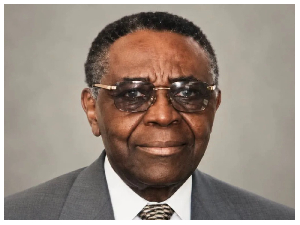 Samuel Arthur Odoi-Sykes left behind a legacy that cut across generations


Entertainment