Lawyer and Director of Legal Affairs of the United Party, Andrew Appiah-Danquah, has rejected claims that Members of Parliament require the Speaker’s permission before they can be arrested.
According to him, Article 117 of the 1992 Constitution does not provide MPs with blanket immunity from arrest, stressing that the provision applies to specific circumstances involving parliamentary duties.
'Our democracy is certainly not under attack' – Appiah-Danquah
Speaking in an interview on Channel One TV on Thursday, October 1, 2026, Appiah-Danquah said the principle of equality before the law must guide discussions surrounding the attempted arrest of Manhyia South MP and lawyer Nana Agyei Baffour Awuah.
He explained that law enforcement agencies typically invite suspects before resorting to arrest warrants when such invitations are not honoured.
“The issue, I think, is the MP, or indeed, does their claim, has allegedly refused to honour that invitation,” he said.
Appiah-Danquah said suggestions that MPs cannot be arrested without the Speaker’s permission could create the impression that some individuals are above the law.
“When I say the value of rule of law, the value of rule of law that says that we are all equal before the law, because a very dangerous impression is being given that one. If you are an MP, then you cannot necessarily be arrested without the permission of the Speaker,” he said.
He argued that Article 117 only restricts the arrest of an MP while the person is on their way to or from Parliament or attending parliamentary proceedings.
“Article 117 states clearly that you cannot arrest whilst the person is on his way to Parliament, so it's more situational,” he said.
Appiah-Danquah further argued that lawyers do not enjoy immunity from arrest while in court, although he acknowledged that arresting a lawyer during proceedings could disrupt the person's ability to represent clients.
He said such a situation could ultimately affect ordinary citizens who depend on lawyers for legal representation.
“So even though there's no immunity, an argument could be made that it doesn't serve anybody's interests,” he said.
Commenting on the attempted arrest of Baffour Awuah at the Accra High Court, Appiah Danquah said the manner in which the incident was handled could have been better.
“For me, my initial thoughts are, yes, the manner of the arrest was quite smirking. It was unfortunate. It could have been handled better,” he said.
However, he maintained that the circumstances should not be used to suggest that certain individuals are beyond the reach of the law.
“I think there's a danger there where we make a communication that suggests that certain people within this country are above the law. Even their presence isn't above the law,” he added.
NA/VPO
General News of Thursday, 1 October 2026
Source: www.ghanaweb.com
MPs not above the law - Andrew Appiah-Danquah
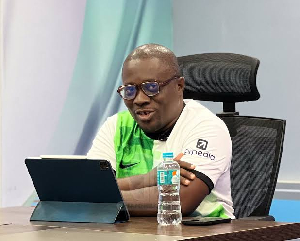 Andrew Appiah-Danquah is a lawyer and director of Legal Affairs of the United Party



Entertainment