The Ghana Water Justice Network (GWJN) has called for an independent review of the US$235 million judgement debt awarded against Ghana in connection with the Teshie-Nungua Desalination Plant.
The debt was granted to Befesa Desalination Developments Ghana Limited over the Water Purchase Agreement between the company and the Ghana Water Company Limited (GWCL).
In a press statement issued in Accra on Tuesday, September 29, 2026, GWJN said the judgement raised concerns about who would ultimately bear the financial cost of what it described as the failure of a water sector private-public partnership (PPP).
“For us, apart from this being another judgement-debt issue, the award raises the important question of who eventually bears the cost when poorly conceived water privatisation contracts go wrong?” the group said.
GWJN said concerns about the project had been raised by residents, community groups, civil society organisations and workers over the years.
It cited the Teshie Concerned Citizens Association, which it said had repeatedly raised concerns about the taste, salinity and general acceptability of water supplied from the plant.
The group also said the Integrated Social Development Centre (ISODEC) and Water Citizens had worked with the community to raise concerns about the project's financial viability and its implications for GWCL.
It further pointed to warnings from the Public Utility Workers' Union (PUWU) about the financial burden of the agreement on GWCL.
“PUWU questioned why the country had committed itself to an expensive desalination arrangement when cheaper alternatives could have been considered, and petitioned successive governments over the serious technical and financial problems of the project,” GWJN said.
GWJN also raised concerns about the project's origins, noting that it came from an unsolicited proposal.
It questioned why authorities proceeded with the arrangement despite concerns raised by communities, workers and civil society organisations.
“The central question here is; if communities, workers and civil society raised all these red flags, why did the authorities persist only for the country to be saddled with a judgement debt?” it asked.
The group is demanding full disclosure of the contractual and financial arrangements surrounding the project, including the Water Purchase Agreement, subsequent amendments and renegotiated terms, the State Guarantee and key findings from the arbitration.
It also called for an independent, public-interest review to determine what went wrong and whether institutional failures occurred.
GWJN said the review should also establish whether the public interest was adequately protected and ensure that anyone found responsible for wrongdoing is held accountable.
The group further opposed any attempt to recover the judgement debt through increases in water tariffs.
“We strongly submit that the financial consequences of this PPP failure must not be passed on to ordinary people through higher water tariffs, as many households are already struggling with current high tariffs,” it said.
“Any attempt to recover this judgement-debt through water tariffs must therefore be stopped,” GWJN added.
The network also called on the government to reconsider its approach to PPPs in the water sector, arguing that lessons from the Teshie-Nungua project should inform future decisions.
Among its demands are full disclosure and an independent review of the project, protection of consumers from tariff increases to recover the liability, transparency in any proposed settlement or renegotiation, and greater public investment and parliamentary oversight of the country's water infrastructure.
The statement was signed by ISODEC, Africa Water Justice Network, Revenue Mobilisation Africa, HELP Foundation Africa, Fisheries Alliance, Students, Workers Solidarity Network, Water Citizens Network and Free The Citizens.
Business News of Wednesday, 30 September 2026
Source: www.ghanaweb.com
GWJN demands review of $235 million Teshie-Nungua desalination debt
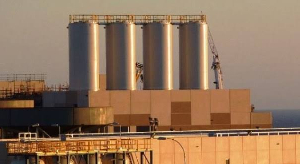 The judgement debt was granted to Befesa Desalination Developments Ghana Limited