Ghanaians living abroad continue to send billions of dollars home each year, but behind the huge remittance figures are migrants who often make significant financial sacrifices to support their families in Ghana.
The Bank of Ghana says remittance inflows rose from about US$4.6 billion in 2024 to nearly US$7.8 billion in 2025, equivalent to roughly six per cent of Ghana’s Gross Domestic Product (GDP).
The figure highlights the growing importance of the Ghanaian diaspora to the country’s economy.
Ghana to add 1,200MW state-owned thermal power capacity – President Mahama
However, the large amounts being sent home do not necessarily mean migrants have plenty of disposable income.
A 2021 study of 129 Ghanaian migrants in the United Kingdom found that those who sent more than £150 a month experienced a 19.8 percent decrease in their living-condition index.
The finding suggests that some migrants sacrifice their own standard of living to support relatives back home.
The pressure is also linked to family expectations, with migrants often supporting parents, children, siblings and extended relatives with school fees, rent, medical bills, utility payments and construction projects.
The Bank of Ghana says remittances are widely used by Ghanaian households to pay for education, healthcare, rent and other everyday expenses.
At the same time, migrants have to contend with the rising cost of living in their host countries. Rent, food, transport, taxes, insurance and other expenses can consume a significant portion of their income before they determine how much they can send to Ghana.
There is also a hidden cost in transferring the money. The World Bank says the total cost of remittances includes both transfer fees and exchange-rate margins.
In the third quarter of 2025, the average cost of sending money through the US-Ghana corridor was about 4.37 per cent, while the UK-Ghana corridor recorded an average of about 4.24 per cent, although costs varied significantly among providers.
This means a service advertising a low or zero transfer fee may still offer a less favourable exchange rate.
For migrants, therefore, the more important figure is often how many cedis the recipient eventually receives rather than the advertised transfer charge alone.
The Bank of Ghana has also called for a shift from consumption-driven remittances towards investment-oriented diaspora capital, including through instruments such as diaspora bonds and collective investment schemes.
The aim is to channel more of the money sent home into businesses and other productive activities rather than solely meeting immediate household needs.
Ghana’s remittance story therefore has two sides: the country received nearly US$7.8 billion in 2025, but many of the Ghanaians generating those inflows are also trying to pay their own bills, build savings and establish financially secure lives abroad.
The challenge is not only to increase remittances, but also to make transfers cheaper and more transparent while creating opportunities for more diaspora money to support long-term investment in Ghana.
ANAS/MA
Foundries, Machines and Jet Engines: Ghana’s untapped engineering potential
Business News of Monday, 28 September 2026
Source: www.ghanaweb.com
Why some Ghanaians abroad still struggle to send money home
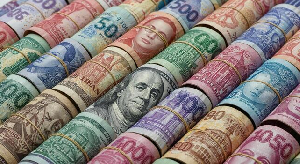 Some migrants sacrifice their own standard of living to support relatives back home