The moment you arrive in Ghana, there are some things you notice almost immediately and some you simply have to experience before you understand them.
From the warmth of an unsolicited greeting to vendors weaving through traffic, the constant sound of car horns and music, and directions that may involve a landmark rather than a street name, Ghana can offer first-time visitors a very different experience from what they expected.
For some, the biggest surprise is how quickly strangers can become conversational. For others, it is the food, the pace of life, the colourful streets or the sheer creativity Ghanaians use to navigate everyday life.
These seemingly ordinary experiences are part of what makes a first visit memorable and offer visitors a glimpse into Ghanaian culture beyond the beaches, tourist attractions and familiar images of the country.
Fort Good Hope: How colonial architecture was designed for war and control
1. Ghanaians take greetings seriously
For many Ghanaians, greetings are an important part of everyday interaction.
One of the first cultural lessons visitors quickly learn is that greetings matter in the country.
Walking up to someone and immediately starting a conversation or making a request without greeting can come across as rude.
“Good morning”, “Good afternoon” or “Good evening” usually comes first, depending on the time of day.
2. The warmth and friendliness can be striking
Ghana is often associated with its hospitality, and visitors tend to notice how easily conversations can begin.
A stranger may offer directions, recommend a restaurant, ask where you are from or simply strike up a conversation.
For someone accustomed to keeping interactions with strangers brief, the openness can be a pleasant surprise.
3. Time
Perhaps one of the biggest culture shocks is the time at which scheduled events start.
A meeting scheduled for 10:00am may not necessarily begin at exactly 10:00am. Food orders can take longer than expected, traffic can disrupt carefully planned schedules, and “I am coming” may sometimes mean that the person is just starting the journey.
Visitors can quickly learn that patience can be useful. What may initially feel like poor punctuality can also be understood as part of Ghana's more flexible social rhythm.
4. “Please” appears everywhere
Another detail visitors often find amusing is how frequently Ghanaians use the word “please”.
“Come here, please.”
“Give me that, please.”
“Yes, please.”
“Please, I am fine.”
“Wait, please.”
The word is deeply woven into everyday communication and is often used to soften requests and show courtesy.
Even apparently simple interactions can therefore sound unusually polite to newcomers.
5. The right hand matters
Visitors also quickly discover that the right hand has an important place in Ghanaian etiquette.
Giving or receiving items, particularly food or money, is traditionally done with the right hand. Eating with the right hand is also common.
The left hand has traditionally been regarded as inappropriate for certain social interactions, although practices can vary.
It is one of those small cultural details that visitors usually pick up on arrival.
6. The roads can feel like a marketplace
For many visitors, Ghana's roads provide one of the most memorable first impressions.
At traffic lights and during traffic jams, vendors move between vehicles selling bottled water, drinks, snacks, plantain chips, phone accessories, fruits, shoe polish, doormats and a host of other items.
The Central Business District offers a combination of colour, noise, bargaining, food, clothing and constant movement that can be overwhelming but fascinating for a first-time visitor.
7. Ghana is a full sensory experience
Ghana is not a country you simply see; you hear it, too.
There are car horns, music from shops and passing vehicles, street preachers, drinking bars, traders calling out to customers and conversations taking place everywhere.
You smell roadside food, grilled meat and fried plantain and, depending on where you are, the unmistakable combination of traffic and dust.
And then there is the fashion: colourful fabrics, carefully tailored outfits, traditional prints and an impressive attention to appearance.
8. Food can become an unexpected highlight
Visitors quickly discover that Ghanaian food is much more than jollof rice.
There is waakye, banku and tilapia, fufu and soup, kenkey, kelewele, fried plantain and a wide variety of stews and soups available even by the roadside.
Local food can also be considerably cheaper than meals at restaurants, although prices vary depending on where and what you eat.
And then, of course, there is the jollof conversation.
A visitor may arrive knowing little about the West African jollof rivalry and leave with a surprisingly strong opinion about which country makes the best version.
9. WhatsApp, mobile money and landmarks are part of everyday life
Ghana's digital habits can also surprise visitors.
WhatsApp is deeply embedded in everyday communication, from personal conversations to interactions with businesses and service providers.
Mobile money is similarly widespread, making it possible to pay for many everyday transactions without carrying large amounts of cash. Mobile money vendors can be found on almost every corner.
And when it comes to finding your way around, visitors may discover that a Ghanaian's directions do not always look like the directions they are accustomed to.
Instead of a precise street number, they may hear:
“Turn after the filling station.”
“It's close to the ECG office.”
“Opposite the porridge seller.”
“Come to the junction and call me.”
Landmarks can sometimes matter more than formal addresses.
10. The country's history can hit differently
Beyond the food, beaches and lively streets, Ghana carries a profound historical weight.
For many visitors, particularly people of African descent travelling to Ghana for the first time, visiting Cape Coast Castle and Elmina Castle can be an emotional experience.
The sites offer a direct encounter with the history of the transatlantic slave trade and Ghana's place in that history.
Elsewhere, the Kwame Nkrumah Memorial Park offers visitors an opportunity to reflect on Ghana's independence and the wider Pan-African movement.
For many travellers, these experiences provide deeper insights into the country.
JKB/MA
Stan Dogbe Orders Kpeshie Lagoon Restoration After Demolition of Illegal Structures
General News of Monday, 14 September 2026
Source: www.ghanaweb.com
10 things first-time visitors notice when they arrive in Ghana
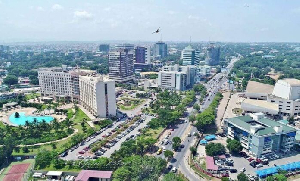 A drone footage of Accra