Pan-African analyst Sekou Nkrumah has backed the government’s 24-hour economy policy but cautioned that it must be tied to a broader long-term strategy to transform Ghana’s productive capacity.
Nkrumah said the concept was sound, but questioned whether Ghana currently had the industries, infrastructure and energy capacity required to make round-the-clock production sustainable.
Speaking on The Last Word on Asaase Radio on Thursday (3 September), he said the policy should not become a “mirage” — an attractive idea that appears within reach but fails to materialise because of weak implementation.
“Nobody has a problem with the concept or the policy, but sometimes I think the problem is: how do you implement it in an economy like Ghana? What are the things that we need to do to push that forward?” he asked.
Nkrumah said simply extending operating hours would not automatically transform the economy unless Ghana developed the productive base capable of taking advantage of the additional hours.
“We have to understand which sectors and so on. So, as I was saying, coming home with Ghana, more productivity, but do we have, in the first place, the industries that are running, that can be running 24 hours, the factories, the industries and so on, and do we have even the energy that can power those industries and so on 24 hours?” he said.
He argued that the 24-hour economy should therefore be understood as part of a much bigger economic transformation agenda rather than simply a programme for creating jobs.
According to him, Ghana must prioritise production, industrialisation and value addition, particularly by processing its natural resources locally instead of continuing to export them largely in raw form.
“I think the point there is we should make productive transformation the centre of economic policy,” he said.
Nkrumah proposed that Ghana, within the next 20 years, should aim to become a major producer of processed cocoa products, agro-processing machinery, pharmaceuticals, fertilisers, construction materials, textiles and garments, solar energy components, processed foods and digital services.
He said this would require a sustained long-term industrial policy supported by infrastructure, energy, research and capital.
“Nothing works in isolation, so you have to obviously be building the infrastructure that will help Ghana to become a serious industrial country,” he said.
Nkrumah also called for greater value addition to Ghana’s key commodities, arguing that cocoa should feed chocolate, cosmetics and pharmaceutical industries, while gold should generate refining, financial services, engineering and technology industries.
He said bauxite should form part of an aluminium industrial chain, while other critical minerals should be incorporated into domestic and African industrial strategies.
“No strategic Ghanaian commodity should leave Ghana in the same form in which it entered the global market,” he said.
The analyst also called for a developmental state that would coordinate national priorities and mobilise capital and infrastructure while allowing the private sector to play a central role.
He said the state should not attempt to operate every commercial enterprise but should exercise greater control or ownership over strategically important sectors and assets.
Nkrumah further urged the government to better explain the ideological and economic thinking behind the 24-hour economy to the public.
He said policies introduced by one government should not automatically be abandoned when political power changes, particularly if they form part of a viable long-term national development strategy.
“If NDC started a good policy, I think it is important, no matter what party takes over, that they continue with this solid project,” he said.
He added that political parties could introduce their own approaches and instruments while maintaining successful national development programmes.
Nkrumah said the government still had an opportunity to strengthen and expand the 24-hour economy policy and ensure that it becomes part of a broader strategy for Ghana’s economic transformation.
“The 24-hour economy policy is okay, as I said earlier, but it has to be understood in much broader terms,” he said.
Business News of Monday, 7 September 2026
Source: asaaseradio.com
'How do you implement it in an economy like Ghana?' – Sekou Nkrumah on 24-hour economy
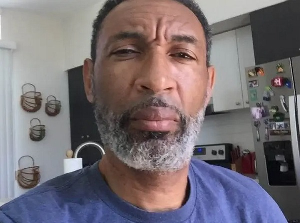 Sekou Nkrumah is a son of the late president Dr Kwame Nkrumah