For many footballers, making a FIFA World Cup appearance is the fulfilment of a childhood dream.
For others, the achievement becomes an opportunity to give thanks, celebrate with loved ones or give something back to the communities that supported them.
Benjamin Asare’s recent World Cup thanksgiving celebration has generated debate in Ghana, with some questioning the decision to organise a lavish party after his performances at the 2026 tournament.
But the idea of a Ghanaian player marking a major football milestone with thanksgiving or charity is not entirely new.
Lawrence Ati-Zigi, who started Ghana’s 2026 World Cup opener against Panama before being forced off with an injury, was later spotted at the Church of Pentecost, Kotobabi Assembly, where he joined a thanksgiving service following Ghana’s World Cup campaign.
Harrison Afful, who made his World Cup debut for Ghana at the 2014 tournament in Brazil, has also been involved in charitable gestures.
In 2016, two years after the World Cup, he visited the Save Them Young Mission orphanage and donated football boots, balls and uniforms to the children.
The late Christian Atsu similarly became known for combining his football success with faith and philanthropy.
His former mentor Abdul Haye Yartey recalled that Atsu donated his first salary from FC Porto to a church in Ghana.
He later supported schools, orphanages and other charitable causes with part of his 2014 World Cup earnings.
Outside Ghana, Kylian Mbappé offered perhaps the most striking example.
After winning the 2018 World Cup at his first appearance, the French forward donated his World Cup earnings and winning bonus to Premiers de Cordée, a charity supporting children with disabilities.
Paul Pogba also donated the boots he wore during France’s 2018 World Cup triumph to charity; they were later auctioned for €30,000.
FKA/AM
Sports News of Monday, 7 September 2026
Source: www.ghanaweb.com
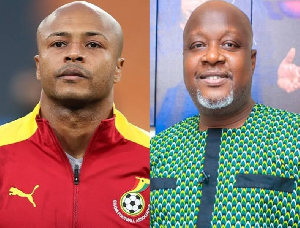
Benjamin Asare, Harrison Afful and Others: How some players celebrated their World Cup debut
 Benjamin Asare (L), Harrison Afful (M) and Christian Atsu