President of the Ghana Football Association (GFA) Kurt Okraku believes history will be kinder to his administration than the present appears to be.
The GFA boss, who has been in charge of Ghanaian football since 2019, says he expects Ghanaians to appreciate and remember the work of his administration after he is gone.
“When I’m gone, just like Kwame Nkrumah, people will appreciate. People will not only appreciate but people will remember the good things that we did for Ghana football,” Okraku said in an interview with 3Sports.
It is a striking comparison.
Kwame Nkrumah is remembered as Ghana’s first president and a central figure in the country’s independence struggle, while Okraku is asking to be judged by the historical footprint he leaves on football.
But there is a difficult question sitting underneath that statement:
What exactly will Ghanaian football have to remember Kurt Okraku for?
Okraku took over the GFA in October 2019, becoming president after the association’s turbulent period following the collapse of the previous administration and the Normalisation Committee era. He was subsequently re-elected in 2023.
His supporters can point to genuine achievements.
The Black Satellites won the 2021 U-20 Africa Cup of Nations. The Black Stars qualified for the 2022 FIFA World Cup and, after missing the 2025 Africa Cup of Nations, recovered to qualify for the 2026 World Cup.
The Black Queens also returned to the WAFCON and secured a historic bronze medal at the 2024 tournament in Morocco, Ghana’s first podium finish at the competition in more than two decades.
Okraku has also risen in African football administration, becoming a member of the CAF Executive Committee for the 2025-2029 period.
Those are not insignificant accomplishments.
But national-team qualification and administrative appointments are only part of the story.
The bigger test of a football association president is whether the football ecosystem itself is becoming healthier.
And that is where Okraku’s proposed legacy becomes much harder to defend.
The performance of Ghana’s entire national-team structure provides a far more revealing assessment of the administration’s record.
The Black Satellites, once one of Ghana’s most reliable sources of international success, have suffered a dramatic decline.
The concern extends beyond the U20s.
The Black Starlets have also struggled to maintain Ghana’s traditional dominance at U17 level.
The Black Stars problem
For an administration that has repeatedly spoken about restoring Ghana to the top of African football, the Black Stars’ trajectory has been uncomfortable.
Ghana failed to qualify for the 2025 AFCON, the first time in more than two decades that the country missed the continental tournament.
Okraku himself described that failure as the lowest point of his tenure.
The subsequent qualification for the 2026 World Cup offered relief, but Ghana’s campaign in North America did not completely erase the concerns.
The Black Stars eventually reached the Round of 32 but were eliminated by Colombia.
And the instability surrounding the national team has remained difficult to ignore.
The domestic game remains the biggest unfinished business
Perhaps the strongest challenge to Okraku’s legacy claim is not the Black Stars at all.
It is the Ghana Premier League.
The domestic league remains plagued by low attendances, limited commercial appeal, infrastructure problems and concerns about the overall quality of the match-going experience.
That is a major problem.
A country cannot build a sustainable football industry around the national team alone.
The league is supposed to produce the players, employ coaches, sustain clubs, develop supporters and create the commercial ecosystem from which the national teams benefit.
Yet Ghanaian clubs continue to struggle financially and competitively.
And while the GFA has introduced initiatives aimed at improving club licensing and professional standards, the fact that clubs still struggle to meet basic infrastructure, financial and administrative requirements shows how much work remains.
So, what will the legacy be?
This is where Okraku’s Nkrumah comparison deserves scrutiny.
History does not ultimately remember leaders because they believed they had done a good job.
It remembers what remained after they left.
For Okraku, that means the real verdict will not be determined by speeches, awards, FIFA or CAF positions, nor even by the number of times Ghana qualifies for the World Cup.
It will be determined by whether the Ghana Premier League is stronger when he leaves than when he arrived.
Whether Ghanaian clubs are financially sustainable.
Whether supporters have returned to the stadiums.
Whether Ghana consistently competes for trophies in Africa.
Whether the Black Stars have a clear technical identity rather than constantly changing direction.
Whether young Ghanaian players have a properly structured pathway from grassroots football to the senior national team.
And whether the GFA itself is regarded as an institution that commands confidence from clubs, players, supporters and the wider football public.
There are certainly things Okraku can put in the positive column.
But there are also glaring gaps.
That is why the Nkrumah comparison may have unintentionally created a much bigger conversation than the GFA president intended.
Okraku is asking Ghanaians to think about his legacy.
That means Ghanaians are entitled to ask what that legacy actually looks like.
For now, the record is mixed: there have been moments of progress, particularly in women’s football and some national-team qualification successes, but the central problems confronting Ghanaian football have not disappeared.
And until those problems are solved, the question will remain:
When Kurt Okraku is gone, will Ghanaian football remember the transformation he promised, or the transformation that never quite arrived?
FKA/AM
Sports News of Monday, 7 September 2026
Source: www.ghanaweb.com
Dr Nkrumah Comparison Raises the Big Question: What has Kurt Okraku left Ghana football?
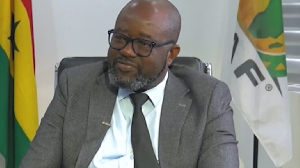 President of the Ghana Football Association (GFA) Kurt Okraku