The Association of Ghana Industries (AGI) is advocating higher excise duties on imported sugary products as part of efforts to promote healthier consumption while protecting local manufacturers from what it considers an uneven competitive environment.
The Association said policies aimed at reducing excessive sugar consumption and addressing related health concerns must be carefully designed to avoid increasing the cost of food and beverages beyond the reach of consumers or undermining local industries.
President of the AGI, Dr Kofi Nsiah Poku, made the call on the sidelines of an AGI roundtable on Low- and No-Calorie Sweeteners.
He said Ghana needed a balanced approach that considered public health, affordability and industrial development.
Dr Nsiah Poku noted that the country’s dietary habits, which are largely dominated by carbohydrate-based foods, required broader discussions about nutrition and healthier consumption choices.
However, he cautioned that policies that are excessively stringent could have unintended consequences for consumers and businesses.
“If the Ministry of Health policies are too strict and stringent, it means food will not be easily available for people because it will not be very much affordable. And therefore, if we agree and we have a balance, then we can really look at it,” he said.
The AGI President argued that efforts to promote healthier diets should be accompanied by measures that strengthen domestic production.
He said the government must examine the impact of imported sugary products on Ghanaian food and beverage manufacturers, many of which continue to contend with high energy, raw material, financing and other production costs.
According to him, higher excise duties on imported sugary products could help address public health concerns while creating a more level playing field for local producers.
Industry urged to meet standards
Meanwhile, Chief Executive Officer of the AGI, Seth Twum-Akwaboah, said companies would have to adapt their products and production processes once new standards are agreed upon.
He said businesses could not ignore regulatory requirements, even where compliance required additional investment.
“Standards are standards. Once the standard is set and we all agree this is the standard, what it takes to meet the standard is the individual companies’ responsibility. If it means reformulating, do so because you have standards you are to meet,” he said.
Twum-Akwaboah acknowledged that reformulating products and meeting new standards could initially increase costs for manufacturers.
However, he warned that companies that failed to adapt could eventually lose access to markets.
Call for science-based policies
For his part, Director General of the International Sweeteners Association, Laurent Oger, called for policies governing low- and no-calorie sweeteners to be based on scientific evidence.
He said such ingredients had been extensively assessed by food safety authorities globally and urged policymakers and industry players to rely on robust scientific evidence when developing nutrition and food policies.
“We are encouraged by the level of engagement and the openness of stakeholders to discuss the evidence surrounding low/no calorie sweeteners,” he said.
The roundtable brought together industry players, policymakers and health experts to discuss ways of encouraging healthier consumption while maintaining the growth and competitiveness of Ghana’s food and beverage industry.
The discussions highlighted the challenge facing policymakers in balancing public health objectives with consumer affordability and the need to protect and expand domestic manufacturing.
Business News of Friday, 4 September 2026
Source: businesspostonline.com
AGI calls for higher excise duties on imported sugary products
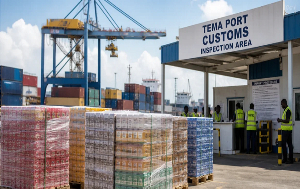 A file photo of Tema Port