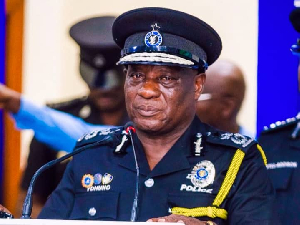
Inspector-General of Police (IGP) Christian Tetteh Yohuno has challenged religious leaders to move beyond preaching tolerance and take a more visible role in protecting Ghana’s peace.
According to him, Christianity and Islam have a powerful influence over the attitudes of young people and can help prevent religious disagreements from developing into violence.
The IGP made the call when he met Christian and Muslim leaders at the National Police Headquarters on Friday, August 14, 2026, where he urged them to use their influence to promote interfaith harmony and strengthen public confidence in Ghana’s justice system.
He asked religious leaders to make three key commitments, including using their regular services to actively discourage religious intolerance and conflict.
“Dedicate your Friday sermons in Islam, and Sunday sermons strictly to messages of interfaith harmony, self-control and the danger of religious conflict,” he said.
Yohuno said religious leaders must also help their followers understand that acts that threaten Ghana’s peace could have serious consequences for future generations.
“Remind your congregations that an attack on the peace of Ghana is an attack on the future of their own children,” he said.
The IGP also wants Christian and Muslim leaders to make their unity more visible in communities instead of limiting their cooperation to words.
He encouraged religious leaders to attend events together, share meals and issue joint statements whenever necessary to demonstrate that differences in faith do not have to create divisions.
"Let the public see Christians and Islamic leaders standing together, sharing meals, issuing joint statements and walking through our communities hand in hand. Show the youth that diversity of faith is strength, not a fault line,” he said.
Yohuno believes such public displays of unity could have a particularly strong impact on young people, who are often influenced by what they see from religious leaders.
The IGP further urged religious leaders to discourage their followers from taking the law into their own hands whenever allegations of wrongdoing arise.
He said disputes should be reported to the appropriate state institutions rather than being settled through mob action, online abuse or physical attacks.
“Reaffirm trust in statutory justice, not online harassment or physical violence,” he said.
He added that allowing the state to investigate and determine cases was not a sign of weakness but an indication of responsible citizenship.
“Teach them that trusting the state to resolve offences is a mark of civic maturity and religious wisdom,” he said.
Yohuno cautioned Ghanaians against assuming that the country’s relative peace will automatically endure.
He pointed to conflicts in other parts of West Africa, where unresolved tensions and seemingly minor disputes eventually escalated into violence that devastated communities.
“Just look around our West African subregion. We see nations where small sparks were allowed to fester until they grew into infernos of civil strife, destroying communities, markets, schools and places of worship,” he said.
He said Ghana had avoided similar devastation because previous generations chose dialogue and cooperation when faced with disagreements.
“Ghana has been spared this tragedy not because we are immune to disagreement, but because generations before us chose to dialogue over destruction and brotherhood over peace,” he said.
The IGP therefore urged the religious community to use its influence to prevent hostility from taking root and help restore public confidence in the country’s institutions.
“Let us make this matter serve as a clear reminder that the law works and let this meeting mark the end of hostility,” he said.
Watch the video below:
NA/VPO
General News of Friday, 14 August 2026
Source: www.ghanaweb.com