The Deputy Ranking Member of Parliament’s Finance Committee, Dr Gideon Boako, has drawn attention to key concerns raised by the International Monetary Fund (IMF) regarding Ghana’s mining sector, the Domestic Gold Purchase Programme and the financial position of the Bank of Ghana.
In his latest economic commentary, The Boako Economic Digest – #001/26, the Tano North Member of Parliament said the IMF acknowledged that the Domestic Gold Purchase Programme had helped strengthen Ghana’s foreign reserves and supported exchange rate stability.
However, he noted that the Fund estimated that the programme had also generated financial losses of about $1.7 billion, equivalent to 1.5% of Ghana’s Gross Domestic Product (GDP).
According to Boako, the losses weakened the Bank of Ghana’s balance sheet through assay costs, fees paid to the Ghana Gold Board (GoldBod) and discounts on gold sold to exporters.
Boako further stated that, according to the IMF, responsibility for the losses had been transferred to GoldBod for onward absorption by the government from July 2026.
He said the development raised important questions about fiscal risk management and transparency.
Boako also highlighted the IMF’s concerns that illegal mining continues to deprive Ghana of billions of dollars in export earnings through gold smuggling while causing severe environmental degradation.
He said the Fund noted that illegal mining was destroying agricultural land, polluting water bodies and threatening cocoa production.
The Finance Committee’s Deputy Ranking Member added that the IMF believes the Bank of Ghana continues to carry significant losses and negative equity resulting from quasi-fiscal operations and the domestic debt restructuring programme.
He said the Fund maintained that restoring the central bank’s financial health, alongside comprehensive reforms in the energy sector and broader institutional improvements, would be essential to securing Ghana’s long-term economic resilience.
Business News of Wednesday, 5 August 2026
Source: www.ghanaweb.com
BoG's financial health still a concern despite gold programme gains – Boako
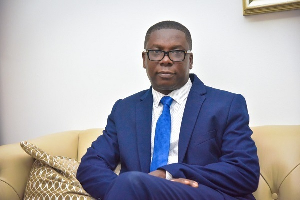 Dr Gideon Boako is the Deputy Ranking Member of Parliament’s Finance Committee


Entertainment