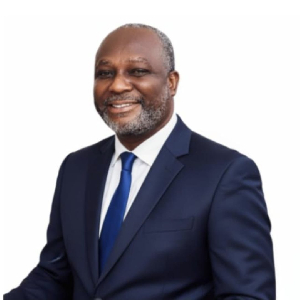
Randy Abbey was wearing two hats when Ghana went to the 2026 FIFA World Cup.
One belonged to Ghana's cocoa industry.
The other belonged to the Black Stars.
As Chief Executive Officer of the Ghana Cocoa Board (COCOBOD), Randy Abbey was at the helm of an institution battling one of its most difficult periods, with cocoa farmers facing delays in payment and large quantities of cocoa struggling to find buyers.
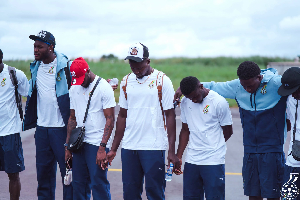
At the same time, he was chairman of the Black Stars Management Committee, responsible for overseeing the administrative side of Ghana's World Cup campaign.
Now comes the revelation that the first job came with a $50,000 payment.
Moses Armah Parker, a member of the five-man committee, disclosed that each committee member received $50,000 as an appearance fee for the World Cup.
According to Parker, the amount represented half of the $100,000 paid to each player, with no additional per diems or winning bonuses for the committee members.
For Abbey, that means his Black Stars assignment came with an additional $50,000 while he was already occupying the top executive position at COCOBOD.
And the timing matters.
The cocoa sector was not enjoying business as usual.
COCOBOD had been struggling with financing problems earlier in 2026, delayed payments and unsold cocoa.
Farmers complained about delays in receiving money for cocoa they had supplied, while the organisation searched for ways to keep the buying system functioning.
In February 2026, Abbey himself acknowledged the difficulties confronting the sector and was publicly involved in efforts to find a solution.
Yet, during this same period, he was also taking on responsibility for Ghana's national football team, as they prepared for the World Cup in USA, Canada and Mexico, a responsibility for which he would receive $50,000.
That creates a striking contrast.
If the $50,000 was an appearance fee because Abbey was actively involved in the Black Stars' World Cup campaign, then he was earning an additional $50,000 while simultaneously holding responsibility for COCOBOD during a period of serious difficulty.
If, on the other hand, his COCOBOD responsibilities remained his primary full-time occupation and the Black Stars role did not demand a comparable level of work, then the size of the payment becomes even more striking.
Either way, the picture is difficult to overlook.
This is not about begrudging anyone for serving Ghana's national team.
It is about the extraordinary situation in which the CEO of one of Ghana's most important public institutions could simultaneously take on another high-profile national role and receive $50,000 for it.
And it happened while the institution he was paid to run was dealing with farmers who were struggling to get paid.
The five committee members collectively received $250,000.
That is not an insignificant amount of money for a management committee. And Abbey's share alone, $ 50,000, is enough to make his dual responsibilities particularly striking.
The Black Stars may have needed administrators in the United States.
COCOBOD needed its chief executive too.
And while Ghana's cocoa sector was dealing with its problems, the man at the top was earning an additional $50,000 from another national assignment.
That is the uncomfortable part of this story.
FKA/AM
Sports News of Wednesday, 5 August 2026
Source: www.ghanaweb.com
$50,000 Bonus: Did Randy Abbey leave COCOBOD to serve Ghana at the World Cup?
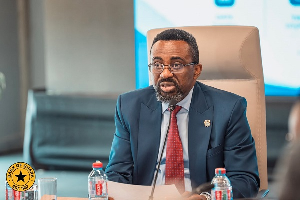
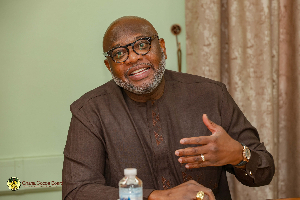 Chief Executive Officer of the Ghana Cocoa Board (COCOBOD), Randy Abbey