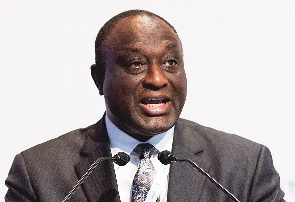
Tax analyst Francis Timore Boi has cautioned that Ghana risks creating future tax burdens if the government continues intervening in fuel prices without a clearly defined policy to guide such decisions.
Speaking to journalists on Tuesday, August 4, 2026, Timore Boi said while the government’s latest GH¢2-per-litre diesel relief may ease pressure on households and businesses in the short term, repeated interventions could become difficult to sustain and eventually strain public finances.
According to him, the government should adopt a rules-based approach that clearly spells out when it will intervene in the fuel market instead of making ad hoc decisions.
COCOBOD begins stakeholder engagement on Ghana Cocoa Board Bill 2026
"Can we limit the number of times, or can we set a threshold for government intervention? For example, if crude oil reaches around $120 per barrel, government can then step in to cushion consumers," he proposed.
Timore Boi explained that setting such conditions would help manage public expectations, warning that transport operators and consumers could begin to assume that the government will always shield them from rising fuel prices.
"My principal concern has always been whether this approach is fiscally sustainable and also the expectation it creates," he said.
The tax analyst observed that the first fuel price intervention introduced in April 2026 came when crude oil was trading at about $101 per barrel. However, despite global crude prices falling to around $87 per barrel, the government has announced another round of fuel price relief.
He questioned what the government would do if international crude prices were to rise sharply in the coming months.
"If crude subsequently increases to around $120 per barrel or beyond, will government continue to absorb two cedis per litre, increase the relief, or allow the full cost to be passed on to consumers?" he asked.
Timore Boi further warned that continuous subsidies could eventually create fiscal gaps that the government may seek to close through new taxes.
He recalled that emergency spending during the COVID-19 pandemic was later followed by the introduction of the COVID-19 Health Recovery Levy to finance rising expenditure.
He also stressed that the government must strike a balance between offering immediate relief and protecting the country’s long-term fiscal health.
He maintained that introducing clear limits for fuel price interventions would make the policy more predictable and prevent temporary relief measures from becoming permanent fiscal obligations that taxpayers may ultimately have to finance.
ANAS/MA
Ghana's recovery due to superior economic management - Ato Forson
Business News of Tuesday, 4 August 2026
Source: www.ghanaweb.com
Here's why fuel subsidies without clear limits could trigger new taxes
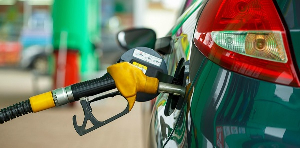 File photo of fuel pump