As part of ongoing engagements to mobilise international support for communities affected by Ghana's recent floods, the Minister of State in charge of Climate Change and Sustainability, Seidu Issifu, held a strategic meeting with the International Monetary Fund (IMF) Resident Representative for Ghana, Adrian Alter on Thursday, July 16, 2026.
The meeting forms part of a broader series of high-level consultations being undertaken by the Office of the Minister of State with development partners, international organisations, private sector institutions and philanthropic organisations to mobilise technical and financial assistance for flood-affected communities while strengthening Ghana's long-term climate resilience.
These engagements form part of the Government's Climate Emergency Resource Mobilization Track, which seeks both immediate humanitarian support and sustained investment in climate adaptation.
During the discussions, the IMF Resident Representative proposed the establishment of a Climate Community Fund as an innovative domestic financing mechanism to support Ghana's climate agenda.
Parliament warns MDAs of sanctions over failure to appear for 2025 progress review
He suggested exploring dedicated revenue streams, including royalties and contributions from the private sector through Corporate Social Responsibility (CSR) programmes, as sources of financing for climate resilience and adaptation initiatives.
The meeting also explored opportunities to strengthen collaboration under the IMF's Policy Coordination Instrument (PCI), recognizing that climate resilience is increasingly central to macroeconomic stability.
The Minister emphasised the importance of incorporating climate considerations into ongoing economic reforms to help lower borrowing costs, improve investment confidence, and support the development of a robust pipeline of bankable climate projects.
The Minister of State further highlighted the growing economic implications of climate change, including the impact of climate shocks on sovereign creditworthiness, and considered opportunities under the IMF's Resilience and Sustainability Facility (RSF) and climate-related public investment management reforms.
Seidu Issifu reaffirmed government's commitment to implementing Ghana's Nationally Determined Contributions (NDCs), National Adaptation Plan (NAP), Climate Prosperity Plan and other national climate strategies, while advancing initiatives such as green bonds, sustainability reporting frameworks, coastal resilience programmes and innovative climate financing mechanisms.
The Minister expressed appreciation to the IMF for its continued partnership and support to Ghana and called for deeper collaboration to ensure climate resilience is fully integrated into the country's economic transformation agenda.
Both parties reaffirmed the importance of coordinated action in building a more resilient economy capable of withstanding future climate shocks while supporting sustainable and inclusive development.
Spain or Argentina?: Ghanaians reveal their World Cup 2026 final favourite
Business News of Saturday, 18 July 2026
Source: Office of Minister of State for Climate Change and Sustainability
Seidu Issifu engages IMF on climate emergency resource mobilisation drive
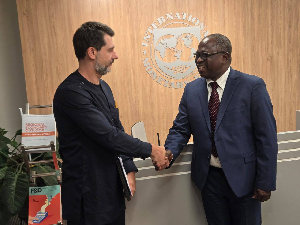 Adrian Alter (L) and Seidu Issifu (R)


Entertainment