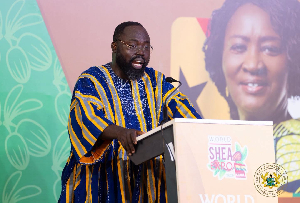
Former Minister for Education and 2024 Vice Presidential Candidate of the New Patriotic Party, Dr Matthew Opoku Prempeh, has called on governments across developing countries to take full ownership of their education financing programmes instead of relying heavily on externally driven interventions.
Speaking during discussions at the Education World Forum in London under the theme “Leveraging Sustainable Innovative Financing for Education,” Dr Opoku Prempeh stressed that sustainable transformation in education can only be achieved when governments prioritise the sector and commit their own resources to it.
According to him, educational financing should not only focus on the availability of funds, but also on whether countries have the capacity to absorb, manage, and sustain the transformation processes they seek to implement.
“I believe that as we talk about educational financing, we have to be able to understand the country and own a transformational process. We must determine whether the country can absorb, manage and sustain whatever transformation it wants to embark on,” he stated.
Dr Opoku Prempeh noted that no amount of external funding would succeed if governments themselves failed to recognise education as a national priority.
“If the country had not come to the realisation that it had to prioritise education, then no matter the type of funding available, it will not help because education is not a quick fix,” he said.
The former Education Minister further argued that governments must efficiently utilise tax revenues to support critical educational needs such as teachers, infrastructure, and other core responsibilities within the sector.
According to him, external funding should only serve as complementary support to bridge existing gaps rather than replace government responsibility.
“External support must be seen as filling gaps or supporting government to do what it wants to do. Things like teachers, infrastructure and others must remain the core duty of government,” he emphasised.
Dr Opoku Prempeh explained that areas better suited for external support include innovation, sharing best practices from other countries, strengthening ministry capacity, improving logistics and accountability systems, and supporting school communities, school boards, and teacher unions to better understand institutional processes.
Touching on the changing global funding environment, he observed that many donor institutions were gradually reducing their support, making it even more critical for governments to take charge of their own programmes.
“In this era of constrained resources where donors are leaving, governments have to own their own programmes,” he stated.
He also urged philanthropies, bilateral institutions, and development partners to align their interventions with government systems instead of independently designing and implementing programmes without sufficient local ownership.
“We should do away with situations where external actors design programmes, come into countries, make presentations, and proceed to implement projects accountable only to their own boards and institutions,” he said.
Dr Opoku Prempeh further called for stronger accountability mechanisms that place governments at the centre of educational financing and implementation processes.
“Now is the time that the financing coming into education should be properly discussed so that ownership does not become an issue. Accountability must go upwards and downwards — not only to boards, but to governments, because governments own these programmes,” he added.
The Education World Forum brings together policymakers, education ministers, and stakeholders from across the globe to deliberate on reforms, innovation, and sustainable strategies for improving education systems worldwide.
General News of Thursday, 21 May 2026
Source: www.ghanaweb.com
Governments must take full ownership of education financing – Dr Opoku Prempeh
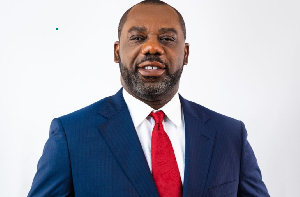 Former Minister for Education, Dr Matthew Opoku Prempeh