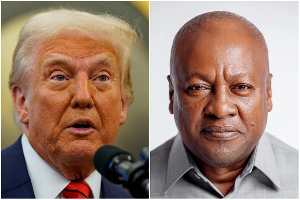
The United States (US), together with Argentina and Israel, voted against the resolution for the United Nations to declare the slavery of Africans a crime against humanity, which was sponsored by Ghana’s President, John Dramani Mahama.
The US representative, during the debate on the resolution at the 80th United Nations General Assembly, argued that the US government, led by President Donald Trump, opposed the resolution because the calls for reparations cannot hold due to the fact that slavery was legal during the era of the transatlantic slave trade.
He also argued that Ghana’s resolution suggests that reparations should be paid to people who were not directly affected by the slave trade.
“United States has defined long-standing objectives to the framing of reparatory justice and the duty of reparation for historical wrongs. While we acknowledge the horrors of the past, we do not accept this resolution's assertion that historical facts from the 15th through 19th century constitute violations of jus cogens, as the term is understood in contemporary international law.
“The United States also does not recognise a legal right to reparations for historical wrongs that were not illegal under international law at the time they occurred. In addition to its obvious legal problems, this resolution is also unclear as to who the recipients of reparatory justice would be. The drafters and supporters of this resolution seem to believe it is them,” he said.
The US representative also stated that the resolution goes against the main objective of the United Nations, which is the maintenance of world peace and security.
“We regret that the United States must once again remind this body that the United Nations exists to maintain international peace and security. It was not founded to advance narrow, specific interests and agendas, to establish niche international days, or to create new costly meeting and reporting mandates. This resolution does all three,” he added.
Read the full argument of the US below:
The United States remained steadfast in its opposition and condemnation of historic wrongs that resulted from the transatlantic slave trade, the trans-Saharan slave trade and all other forms of slavery. We remain committed to the acknowledgement of these historical wrongs.
Despite this, the United States observes that the text of this resolution remains highly problematic in countless respects. Consequently, the United States cannot support the adoption of this resolution.
We regret that the United States must once again remind this body that the United Nations exists to maintain international peace and security. It was not founded to advance narrow, specific interests and agendas, to establish niche international days, or to create new costly meeting and reporting mandates. This resolution does all three.
The United States has defined long-standing objectives to the framing of reparatory justice and the duty of reparation for historical wrongs. While we acknowledge the horrors of the past, we do not accept this resolution's assertion that historical facts from the 15th through 19th century constitute violations of jus cogens, as the term is understood in contemporary international law.
The United States also does not recognise a legal right to reparations for historical wrongs that were not illegal under international law at the time they occurred. In addition to its obvious legal problems, this resolution is also unclear as to who the recipients of reparatory justice would be. The drafters and supporters of this resolution seem to believe it is them.
The United States strongly objects to the cynical usage of historical wrongs as a leverage point in an attempt to reallocate modern resources to people and nations who are distantly related to the historical victims.
BAI
Tension in UK Parliament over Ghana's slavery reparations push at UN
General News of Thursday, 26 March 2026
Source: www.ghanaweb.com
Why US voted against Ghana's resolution to declare slavery a crime against humanity



Entertainment