The government has issued a strong call for increased investment in women-led businesses, stating that limited access to capital continues to stifle growth, job creation, and economic expansion across Ghana.
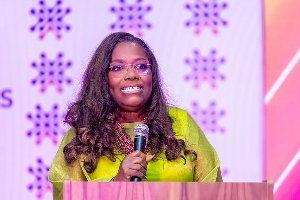
Juliana Ama Kplorfia, delivering a keynote address on behalf of the Deputy Chief of Staff (Administration), Nana Oye Bampoe Addo, at the launch of Fearless Fund Africa, underscored the urgent need to close the financing gap confronting female entrepreneurs.
The event, held at the Accra Marriott Hotel, on March 21, 2026, brought together policymakers, investors, and business leaders to mark the entry of Fearless Fund into Ghana’s entrepreneurial ecosystem.
According to the government, while women play a central role in Ghana’s business landscape and owning nearly half of all enterprises; their ability to scale up remains severely constrained by structural and financial barriers.
“Participation does not automatically translate into growth,” she stated.
She noted that many women-led businesses remain small, informal, and undercapitalised due to limited access to credit, collateral, and investment networks.
Citing global and continental data, she stated that women account for a significant share of Africa’s entrepreneurial activity, yet receive less than five percent of venture capital funding.
This imbalance, the government said, continues to limit productivity and broader economic output.
“When businesses cannot grow, productivity remains low, job creation is limited, and the broader economy loses out on potential output and innovation,” she stressed.
The government also drew attention to deeper structural constraints, including limited access to high-value markets, weak integration into supply chains, and broader social challenges such as safety and mobility, all of which affect women’s economic participation.
Against this backdrop, she termed the launch of Fearless Fund Africa as both timely and strategic.
The initiative introduces a targeted microfinance model designed to directly address the financing gap, offering loans between GH¢10,000 and GH¢30,000 to support business expansion, alongside a GH¢100,000 pitch programme aimed at high-growth enterprises.
Beyond funding, the programme will focus on investment readiness and enterprise support; an approach the government says is critical for long-term sustainability.
“Investment models that combine capital with technical support are essential in unlocking growth,” she noted.
Institutions such as the Microfinance and Small Loans Centre (MASLOC), the Venture Capital Trust Fund, and the Ghana Enterprises Agency were mentioned as key players already working to expand access to finance and strengthen small businesses.
However, the government emphasised that there is more to be done.
“Financial institutions and microfinance providers must go further in designing products that respond to the realities of women-led businesses,” she urged, adding that investors must also increase capital allocation to underserved entrepreneurs.
She concluded by stating that while women-led businesses are already driving economic activity in Ghana, unlocking their full potential will require sustained investment, coordinated partnerships, and deliberate policy action.
NA/VPO
Meanwhile, learn of the story of the man behind the iconic Akwaaba frames in Ghana:
Business News of Sunday, 22 March 2026
Source: www.ghanaweb.com