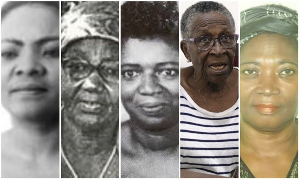
Women’s participation in Ghanaian politics did not begin recently. Since Ghana gained independence and became a republic in 1960, women have played a significant role in shaping the country’s democracy and constitutional development.
In 1960, Ghana witnessed the entry of its first 10 women into Parliament following the passage of the Representation of the People (Women Members) Bill.
These trailblazing women were elected unopposed on the ticket of the Convention People’s Party (CPP) to represent newly created women’s seats in the 104-member National Assembly.
This article explores the first 10 women who entered Ghana’s Parliament in 1960:
1. Susanna Al-Hassan
Susanna Al-Hassan, born on November 27, 1927, was a Ghanaian author and politician.
She became a beneficiary of the June 1960 Representation of the People (Women Members) Bill and entered Parliament representing the Northern Region.
In 1961, she made history by becoming Ghana’s first female minister and the first African woman to hold a cabinet portfolio.
While serving as a Member of Parliament, she also held several ministerial roles. She served as Deputy Minister of Education in the republican government of Kwame Nkrumah from 1961 to 1963.
From 1963 to 1966, she was appointed Minister of Social Affairs and also served as Minister of Social Welfare and Community Development. She passed away on January 17, 1997.
Meet Susan Alhassan, the first Ghanaian woman to be appointed minister
2. Sophia Oboshie Doku
Sophia Margaret Oboshie Doku was a Ghanaian politician and trained teacher.
She entered Ghana’s Parliament in 1960, representing the Greater Accra Region.
As one of the first female parliamentarians in the First Parliament of the First Republic under Ghana’s first president, Kwame Nkrumah, she played an important role in national politics.
Before entering Parliament, she served as an assistant welfare officer at the Department of Social Welfare in 1953.
Doku did not begin her political career with the CPP. She was a founding member of the United Gold Coast Convention (UGCC) and one of the first executive members of the party’s Accra branch.
Meet one of the first Ghanaian female parliamentarians of the First Republic
3. Ayanori Bukari
Cecelia Ayanori Bukari-Yakubu was a Ghanaian politician.
She served as a Member of Parliament representing the Northern and Upper Regions from 1960 to 1965 and later represented Pusiga from 1965 to 1966.
Bukari-Yakubu was among the first women elected to Ghana’s Parliament under the Representation of the People (Women Members) Act.
She was part of the group of 10 women elected unopposed on June 27, 1960, on the ticket of the Convention People’s Party.
4. Lucy Anim
Lucy Anin was born on June 13, 1939, and is a Ghanaian politician.
She served as a Member of Parliament representing the Brong Ahafo Region from 1960 to 1965 and later as MP for the Bechem constituency from 1965 to 1966.
Lucy Anin was also among the first women to enter Ghana’s Parliament in 1960 under the Representation of the People (Women Members) Act.
Lucy Anin Animwaah is the only surviving Member of Parliament from Ghana’s first Parliament.
She was imprisoned for eight months while pregnant following the overthrow of Kwame Nkrumah.
She was one of the first ten female MPs selected to represent various regions of Ghana.
5. Mary Koranteng
Mary Winifred Koranteng, born on December 25, 1922, was a Ghanaian civil servant and politician. She served as a Member of Parliament from 1960 to 1966.
Koranteng began her career as a dressmaker in 1944 while also running a store that sold wax prints. She remained in Achiase until 1960, when she was elected to Parliament.
In addition to dressmaking, she was involved in the timber business, preparing timber concessions for merchants.
Meet Mabel Dove Danquah: The woman who defied colonial power
In 1960, she was among the first women to enter Parliament under the Representation of the People (Women Members) Act.
She served as the Second Member for the Eastern Region and later became MP for Swedru-Achiase from 1965 until 1966, when the Nkrumah government was overthrown.
6. Comfort Asamoah
Comfort Asamoah was a Ghanaian politician.
She served as a Member of Parliament representing the Ashanti Region from 1960 to 1965 and later as MP for Asante Mampong from 1965 to 1966.
Asamoah was among the first women to enter Parliament in 1960 under the Representation of the People (Women Members) Act. She was also among the 10 women elected unopposed on June 27, 1960, on the ticket of the Convention People’s Party.
Before entering Parliament, she served with the Workers Brigade from 1957 to 1960.
7. Christiana Wilmot
Christiana Wilmot, born on July 24, 1915, was a Ghanaian civil servant and politician.
She served as a Member of Parliament from 1960 to 1966. From 1960 to 1965, she was the Second Member for the Central and Western Regions, and from 1965 to 1966, she represented Shama.
She founded the Women’s Association in 1938 and served on the Axim Hospital Board in 1940 and 1948.
Wilmot was also a founding member and chairperson of the Axim branch of the United Gold Coast Convention (UGCC), as well as chairperson of the People’s Educational Association (PEA) in Axim from 1951 to 1952.
In 1960, she was among the first women elected to Parliament under the Representation of the People (Women Members) Act.
8. Regina Asamany
Regina Asamany was born on July 30, 1927, in Kpando in the Volta Region. She was a politician who represented the Volta Region in Parliament.
Asamany was among the first women to enter Parliament in 1960 under the Representation of the People (Women Members) Act on the ticket of the Convention People’s Party.
While in Parliament, she served as Deputy Minister of Labour and Social Welfare from 1961 to 1963.
Before entering Parliament, she worked at the Ministry of Labour and Social Welfare as a mass education assistant.
9. Victoria Nyarko
Victoria Nyarko was a civil servant and politician who served as a Member of Parliament from 1960 to 1966.
She began her career as an education officer at Ghana Secondary Technical School in September 1958.
In October 1959, she was appointed Assistant Secretary at the Ministry of Foreign Affairs, and in June 1960, she entered Parliament.
On June 27, 1960, she was among the 10 women elected unopposed on the ticket of the Convention People’s Party. She entered Parliament at the age of 26 as the Third Member for the Northern Region and served until 1965.
10. Grace Ayensu
Although limited information exists about Grace Ayensu, she remains recognised as one of the pioneering women in Ghanaian politics.
She represented the Eastern Region and was among the first women selected under the leadership of Kwame Nkrumah following the passage of the Representation of the People (Women Members) Bill.
Her inclusion marked an important step in expanding women’s representation in Ghana’s political system.
Together, these women formed the historic group of the first 10 female Members of Parliament in Ghana, paving the way for greater female participation in the country’s political leadership.
JHM/BAI
Two die in helicopter crash at Tema Community 1 - Reports
General News of Wednesday, 18 March 2026
Source: www.ghanaweb.com