Ghana will press ahead on Tuesday, March 10, 2026, with a new sliding‑scale gold royalty regime that links state revenues to rising bullion prices, despite opposition from China, the United States, other Western governments, and mining executives.
The CEO of the Minerals Commission, Isaac Tandoh has told Reuters.
The United States, China, and several other Western governments had mounted a rare joint effort to persuade Ghana to halt the policy, which form part of a broader push by African governments to capture more value from surging commodity prices.
How US, China are fighting to stop Ghana from implementing new gold royalty regime - Report
The new royalty regime replaces the flat 5% rate previously applied by Africa’s top gold producer. The levy is imposed on the income of persons or entities engaged in mineral operations.
Under the sliding‑scale system, gold miners will pay 12% when gold reaches $4,500 per ounce, according to a framework reviewed by Reuters.
Gold is currently trading above $5,000 per ounce.
Lithium royalties will also shift to a 5-12% sliding scale tied to prices between $1,500 and $3,200 per metric ton, while all other minerals will retain a flat 5% rate.
The CEO of the Minerals Commission, Isaac Tandoh, said diplomatic missions had raised concerns about the top 12% royalty rate but had not opposed the broader policy shift.
“They met us; they are not against the review in principle,” Tandoh is quoted to have said by Reuters.
Government introduces sliding-scale royalty regime for its natural resources
He added that the missions had proposed that the 12% rate apply only after gold reached $5,000 per ounce, but Ghanaian authorities rejected that suggestion.
Additionally, CEOs of the world’s top gold miners have also opposed Ghana’s planned sliding-scale royalty regime, warning it could discourage future investment.
The Ghana Chamber of Mines has raised similar concerns, with CEO Kenneth Ashigbey telling Reuters on Sunday that it would “dry up new projects and output.”
Tandoh, however, said modeling showed the sliding scale strikes the right balance between boosting state revenue and preserving industry margins.
He also dismissed fears that Ghana is becoming uncompetitive, arguing that investors care more about regulatory stability than marginal cost shifts.
SP/MA
Auto dealers respond to 15% price cut announcement
Business News of Monday, 9 March 2026
Source: www.ghanaweb.com
Ghana set to introduce new gold royalty regime on March 10
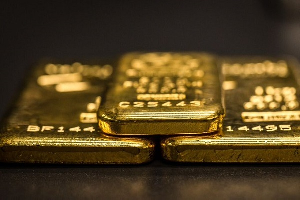 Gold is one of Ghana's major export commodity