The government of Ghana, through the Minister of Communication and Digital Technology, and Innovations, Samuel Nartey George, has announced an intention to extradite Russian national Vyacheslav Trahov, accused of secretly filming Ghanaian women and publishing the videos online.
According to officials, the move is part of efforts to protect citizens’ rights and ensure accountability for digital crimes.
The minister explained that the government has initiated steps to bring the suspect back to Ghana to face prosecution.
"It is a crime to record a person without their consent, and even when you record and keep it on your phone, if the person finds out and reports it to us, we will prosecute you, and you will go to jail. That's the law of the land.
“Now, you don't just record it, but you go and post it on a website for financial gain. That gentleman would be looked for. We will activate every resource at our disposal, working with Interpol, the way we've worked with Interpol to extradite Ghanaians to other jurisdictions,” he stated.
Sam George added that; “...I've invited the Russian Ambassador to work with our law enforcement. We want the gentleman to come to Ghana, to be brought back to Ghana, extradited to Ghana, for him to face the rigours of our law.”
Lawmakers, however, have also cautioned that the process may be fraught with challenges.
One of such is Member of Parliament for Okaikoi Central, Patrick Yaw Boamah.
According to him, Ghana does not have a bilateral extradition treaty with Russia, which complicates the legal pathway.
He stressed that extradition requests without such agreements often rely on diplomatic negotiations, making the outcome uncertain.
"The Russian Embassy in Accra ordinarily engages Ghana's Ministry of Foreign Affairs on such matters, and any serious concerns should have been addressed through formal discussions between the Foreign Minister and the Russian Ambassador, with the Communications Minister present if necessary," he stated.
But what is Russia’s Constitutional Position on Extraditions?
Russia’s constitution presents a major obstacle to Ghana’s request.
Article 61(1) of the Russian Federation’s Constitution explicitly states: “A citizen of the Russian Federation may not be deported from Russia or extradited to another state.”
This provision means Russia does not extradite its own nationals under any circumstances.
Extradition requests are only considered for foreign citizens, and even then, they depend on treaties or bilateral agreements.
So, in practice, Russian authorities often reject requests if they believe the case has political undertones or if it conflicts with their sovereignty.
The Comparative Outlook
While Ghana is determined to pursue extradition to protect its citizens, Russia’s constitutional stance effectively shields its nationals from being handed over.
The clash highlights the limitations of Ghana’s current extradition framework and the broader challenge of addressing cross-border cybercrime when national laws conflict.
Legal analysts argue that the case underscores the urgent need for Ghana to strengthen bilateral treaties and international cooperation mechanisms.
Without such frameworks, efforts to hold foreign nationals accountable for crimes committed against Ghanaians may remain stalled.
VKB/AE
Experience the art of chocolate making with Defli Ventures
General News of Tuesday, 17 February 2026
Source: www.ghanaweb.com
Can Trahov be extradited to Ghana? - What Russian law says
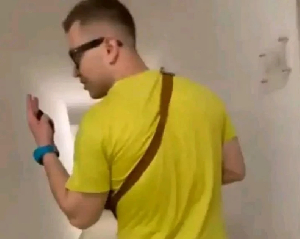 Photo of the pick-up artist




Entertainment