A new report by the Environmental Justice Foundation (EJF) reveals that the country’s industrial trawl fleet continues to harvest large volumes of illegal bycatch, including juvenile fish vital to artisanal fisheries.
The report, titled Breaking the Vicious Circle, says urgent action is needed to safeguard Ghana’s fisheries and indicates that artisanal fishing communities are paying a heavy price, with 94 percent of those surveyed by EJF reporting declining catches.
According to the report, 87 percent of fishers said their incomes have fallen in recent years, while fish processors and traders face soaring prices, as capital that should sustain local livelihoods is diverted into the hands of industrial operators, many of which are ultimately owned by foreign interests.
This trade in so-called “logo fish”, EJF explained, is fuelling the collapse of fish populations, devastating coastal livelihoods and undermining food security.
The report documents the systematic use of illegally modified nets, the routine landing of undersized fish, and the continued, though reduced, practice of illegal fish exchanges trans-shipments at sea.
EJF estimates that between 53 and 60 percent of trawlers’ landings consist of bycatch. It noted that 96 percent of chub mackerel and 97 percent of round sardinella found in landed samples important small pelagic species that should not appear in these catches at all were below the minimum legal size.
Government’s commitment to reforms
Despite these stark findings, the organisation acknowledged that the country stands at a turning point, as government has taken bold steps towards reform.
EJF indicated that the recent expansion of the Inshore Exclusion Zone to 12 nautical miles offers artisanal fishers greater protection from destructive trawling.
GUTA has never consented to the Marine Cargo Act - Joseph Obeng.
At the UN Ocean Conference held in France last year, Ghana committed to unmasking the true beneficial owners of fishing vessels and has since endorsed the Global Charter for Fisheries Transparency.
These measures, according to EJF, are vital steps to expose corruption and prevent foreign interests from exploiting Ghana’s seas in secrecy.
The NGO said the reforms must build on a series of decisive actions, noting that illegal saiko trans-shipments have virtually ceased, sanctions against offending vessels have escalated from fines to licence suspensions, and new gear directives have already delivered measurable improvements in catch selectivity.
However, the report stressed that more must be done to break the vicious circle of illegal bycatch and restore Ghana’s collapsing small pelagic fisheries.
This includes enforcing the new Fisheries and Aquaculture Law with zero tolerance for offenders, seizing illegal catches, deploying electronic monitoring across the fleet, and ensuring penalties are robust enough to act as effective deterrents.
Crucially, the report said, the benefits of these measures must flow back to artisanal fishers and coastal communities.
See the list of BoG-approved Primary Dealers and Bond Market Specialists.
EJF commends nation’s determination
“Ghana has shown real global leadership in recent months,” said Steve Trent, CEO and Founder of the Environmental Justice Foundation.
He added: “While the challenge is serious and the findings of the report are deeply concerning, the expansion of the IEZ, the adoption of landmark legislation, and a firm stand in support of the Global Charter for Fisheries Transparency demonstrate the political will for change. Now is the moment to deliver full enforcement.”
By acting on these recommendations and fully implementing the Charter, EJF noted that the country could make its fisheries work for its people, protecting food security, safeguarding livelihoods, and setting an example for the world in building sustainable, legal and ethical fisheries.
Understanding Ghana's stock market and how to invest | BizTech
Business News of Thursday, 12 February 2026
Source: thebftonline.com
Illegality at Sea: 94% of fishers register declining catches – Report
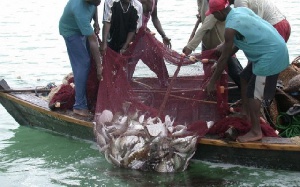 Fishermen pulling back their net after making a catch