Local rubber processing companies have petitioned the government to urgently regulate the export of raw rubber, warning that the practice is undermining domestic processing capacity and threatening jobs across the rubber value chain.
In a petition addressed to the Ministries of Food and Agriculture, Trade and Industry, and Finance, the processors stated that the unchecked export of unprocessed rubber has led to acute shortages for local factories, forcing some to operate significantly below capacity, while others face the risk of shutdown.
According to the petitioners, Ghana’s rubber industry was deliberately developed to promote value addition, industrialisation, and export diversification.
However, the growing preference for exporting raw rubber, they argue, is eroding these objectives and weakening the domestic industrial base.
Ghana to save over $127 million annually from restrictions on raw rubber export
The petitioners noted that foreign buyers, backed by stronger purchasing power, are distorting the local market by offering higher prices for raw rubber, making it increasingly difficult for domestic processors to compete for supplies.
“The foreign exchange losses from raw rubber exports are severe. Between 2025 and 2030, processed rubber is projected to generate about US$950 million, compared to only US$380 million if exported in raw form—a loss of approximately US$570 million,” the petition stated.
It added that if local processors collapse, Ghana risks an average annual foreign exchange loss of about US$190 million.
The group also questioned whether foreign exchange proceeds from raw rubber exports are fully repatriated into Ghana in line with the Foreign Exchange Act.
The processors further cautioned that local factories rely heavily on consistent supplies from outgrower farmers and plantations, and continued disruptions could result in job losses, reduced tax revenues, and the collapse of investments made under government-led industrialisation initiatives.
They are therefore calling for policy interventions that prioritise local processing, including restrictions or a temporary ban on raw rubber exports, alongside incentives to promote value addition within the country.
SP/MA
Understanding Ghana's stock market and how to invest | BizTech
Business News of Monday, 2 February 2026
Source: www.ghanaweb.com
Local rubber firms call for urgent action on raw rubber exports
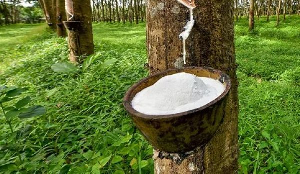 File photo of a rubber plantation