The Bank of Ghana (BoG) is said to have closed 2025 with international reserves at a record US$13.8 billion, making it one of the strongest reserve accumulation efforts in the country’s history.
According to multiple media reports, sources indicate the reserves could have climbed to approximately US$14.2 billion if it were not for a US$709 million Eurobond payment made in December 2025 on behalf of the Ministry of Finance.
The early repayment was reportedly enabled by stronger-than-expected government revenue performance in the final quarter of 2025 and reduced reserves to US$13.8 billion at end-December.
Despite the Eurobond payments, the central bank added roughly US$5 billion to its reserve stock in 2025.
Data from the Bank of Ghana show that international reserves rose to US$11.4 billion by the end of October 2025, up sharply from US$7.4 billion in October 2024.
BoG enacts strict new rules for international money transfer companies
The Bank of Ghana reported that the cedi posted a cumulative appreciation of 40.67 percent against the US dollar in 2025, closing the year at about GH¢10.45 to the dollar.
In December, average daily interbank market trading stood at US$19.7 million, pushing total monthly trading volume to approximately US$394 million.
The robust reserve growth has been attributed to the BoG’s reserve accumulation strategy and its domestic gold purchase programme, both of which played a significant role in strengthening the external position.
The record reserve level is expected to support near-term stability of the Ghana cedi by reinforcing market confidence in the central bank’s ability to intervene when necessary.
Measures have also reportedly been put in place to manage these seasonal pressures, adding that they are not expected to pose a significant threat to currency stability.
ID/AE
Business News of Tuesday, 6 January 2026
Source: www.ghanaweb.com
BoG ends 2025 with record $13.8 billion in international reserves
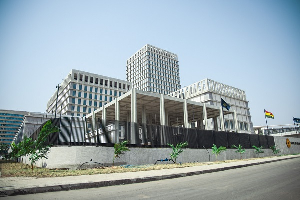 Sources say BoG reserves could have climbed to approximately US$14.2 billion