The Chief Executive Officer of the Ghana Gold Board (GoldBod), Sammy Gyamfi, has announced that the Board is set to begin full-scale operations in 2026, marking a major transition in Ghana’s gold trading and reserve accumulation architecture.
Speaking on TV3's The Key Points program on Saturday, December 27, 2025, Gyamfi said reforms currently under discussion will enable GoldBod to move beyond its inherited role as an agent of the Bank of Ghana (BoG) and operate fully in line with the vision outlined in the Ghana Gold Board Act.
“From 2026, GoldBod will take off fully,” he said, explaining that the current structure, under which GoldBod purchases, assays and exports gold on behalf of the Bank of Ghana, was a transitional arrangement inherited from the defunct Precious Minerals Marketing Company Limited (PMMC).
He noted that GoldBod is barely eight months old and, by law, took over PMMC’s assets, liabilities and existing contracts, including those under the Domestic Gold Purchase Programme launched in 2022. As a result, GoldBod has so far operated largely as an implementing agent within a policy framework designed before its establishment.
“The GoldBod concept, as envisioned under the Act, has not fully taken off yet,” he added, noting that 2025 has largely been dedicated to building the institutional, regulatory and operational foundations required for independent operations.
According to the CEO, the planned 2026 transition will address long-standing structural and accounting challenges surrounding the Gold-for-Reserve programme, particularly concerns raised by the International Monetary Fund (IMF) regarding how associated costs are reflected in the books of the Bank of Ghana.
Gyamfi further disclosed that the IMF has acknowledged the success of the programme in meeting Ghana’s foreign reserve targets far ahead of schedule, but has called for reforms to ensure that the financial burden of the programme does not rest solely on the central bank.
Under the planned reforms, GoldBod is expected to exercise its full statutory mandate, including enhanced regulatory and enforcement powers to curb smuggling, reduce leakages, and improve pricing efficiency across the gold value chain, functions that were previously unavailable to PMMC and constrained under the agency model.
He emphasised that GoldBod’s mandate is strategic rather than purely commercial, focusing on foreign exchange generation and national economic stability rather than profit maximisation.
He noted that this policy orientation will continue under the full operational model, but with improved institutional clarity and financial reporting.
Gyamfi added that GoldBod’s financial position remains sound, with the institution recording surpluses since its establishment and publishing quarterly financial statements in accordance with the law.
External audits expected in early 2026 will further validate the Board’s financial performance ahead of the full operational rollout.
SP/EB
All you need to know about Ghana's new vehicle number plates |BizTech:
Business News of Sunday, 28 December 2025
Source: www.ghanaweb.com
GoldBod to fully take over gold trading and reserves in 2026 - CEO
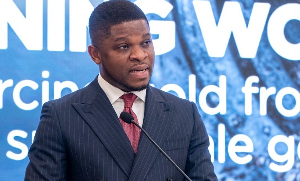 Sammy Gyamfi is the CEO of GoldBod