The Ntikuma Project (TNP), a Ghanaian nonprofit bridging the digital divide in Primary and Junior High Schools, on Wednesday, October 7, 2026, formally handed over 14 new all-in-one desktop computers and a printer to Akim Asafo Presbyterian Basic School.
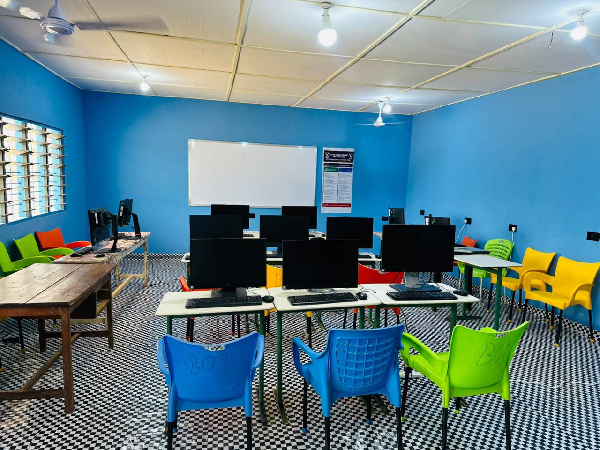
The handover, held at the school in the Abuakwa South Municipality, marks the completion of TNP's first deployment and the opening of the school's first functioning ICT lab.
A further six computers will be delivered before the end of 2026. TNP has also committed to providing an ASANKA Device to support teaching and learning at the school for three years.
The ASANKA Device is a portable offline learning hub that serves curriculum-aligned lessons, videos and assessments to pupils and teachers over its own local Wi-Fi network, with no internet connection required.
Until today, ICT practical lessons at the school were taught on a whiteboard or around one laptop owned by the ICT teacher, with an average class size of 40 pupils. The school had no projector, printer, or school-owned computer. The new lab moves pupils from watching a lesson to practicing it by themselves.
The equipment is donated unconditionally to the school, which owns it outright. Each unit runs Windows 11 with LibreOffice and an offline learning library, so the lab works fully without an internet connection.
Every item was counted against its serial number and functionally tested before handover, and is recorded in a signed asset register held by the school, TNP and the District Education Directorate.
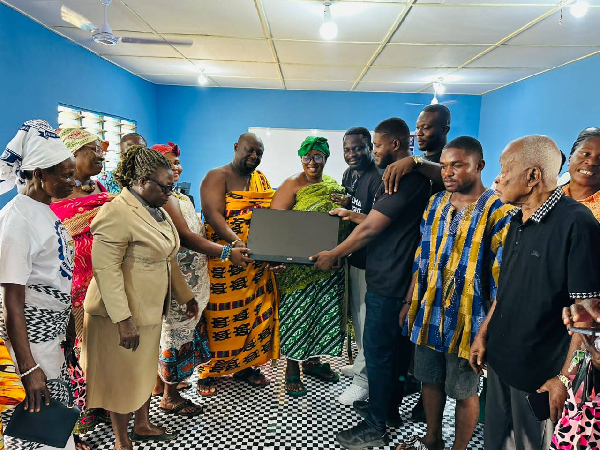
The handover certificate was signed by TNP and the school's Headteacher in the presence of representatives of the Akim Asafo Traditional Authority, the Ghana Education Service District Education Office and the Education Unit of the Presbyterian Church of Ghana, together with the school's Parent-Teacher Association and teaching staff. TNP pre-financed the purchase and managed procurement, customs clearance and installation directly.
Deployment One is the first stage of TNP's four-stage TEPS framework: Access & Infrastructure, Skills & Literacy, Practice & Agency, and finally Technology Enhanced Problem Solvers (TEPS) - young people who apply digital tools to problems in their own community. Teacher orientation preceded the handover, and TNP will track use and learning outcomes at the school against a baseline taken at deployment.
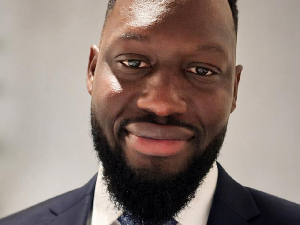
"My father and grandmother attended Akim Asafo Presbyterian Basic School and growing up, I remember playing around the school during our family trips here. Working in technology, I have seen that technology has become an important part of the world. We thought it was important that every child in Ghana has access to technology. That's why we started the Ntikuma project. All great things must start from somewhere and so we chose this school to begin because Asafo is a place I call home,” said Kay Ampofo, Founder and Executive Director of The Ntikuma Project.
Twum Ampofo Thomas, Headteacher of Akim Asafo Presbyterian Basic School, believes the new ICT Lab will help close the technology gap.
“This is a day we have looked forward to because it marks a new chapter in the education of our children. In today’s world, digital skills are no longer a luxury but a necessity.
Through this gesture, our students will be able to learn, explore, and build confidence in using technology. It will help bring them up to their competitors, solving problems. We are grateful to The Ntikuma Project for choosing our school.”
The Ntikuma Project LBG is a Ghanaian nonprofit bridging the digital divide by equipping primary and junior high schools in underserved communities with technology, infrastructure, and training. Its work begins in Akim Asafo, Eastern Region.
The name draws on the Akan parable of Ntikuma, whose practical insight frees the wisdom his father, Ananse, hoarded in a bottle. Bridging the Digital Divide, One School at a Time.
Press Releases of Thursday, 8 October 2026
Source: The Ntikuma Project
The Ntikuma Project hands over first computer lab to Akim Asafo Presbyterian Basic School
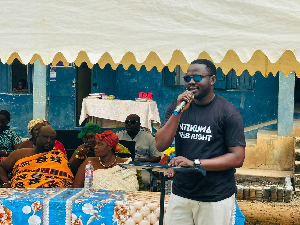 Kay Ampofo, Founder and Executive Director of The Ntikuma Project



Entertainment