The Freight Forwarders Association of Ghana has urged the Ministry of Finance to review or suspend the AI-driven customs valuation system at the country’s ports, arguing that its current application breaches national law and international trade rules.
According to the General Secretary of GIFF, Paul Kobina Mensah, the system, known as Publican AI, requires customs officers to adopt the higher of the AI-generated value or the officer’s own assessment.
He stressed that this directive directly violates Section 68(3) of the Customs Act, which prohibits determining value based on the higher of two alternatives.
Speaking at a press conference on Monday, March 30, 2026, Mensah called for immediate action to align valuation practices with international trade rules and Ghana’s legal framework.
He also advocated for the decentralisation of valuation processes to eliminate delays and reduce associated port charges.
“We support lawful enforcement. We support revenue protection. We support technology where it strengthens compliance, transparency, and fair trade. What we do not support is policy action that is rushed, unclear in scope, weak in consultation, and disruptive to legitimate trade,” he said.
He explained that the directive effectively imposes AI-generated values as a minimum threshold for customs valuation, contradicting the Customs Act, 2015 (Act 891), particularly Sections 67 and 68, which establish transaction value as the primary basis for valuation and prescribe a sequential methodology for alternative methods.
How Ghanaians can be tax compliant
“These values are arbitrary and fictitious, generated without transparent data sources, clear methodology, or any grounding in the legal valuation framework. If these issues remain unaddressed, the consequences will be far-reaching,” he warned.
The Association also criticised the recentralisation of the Customs Technical Services Bureau (CTSB), saying it has created operational bottlenecks and delays in cargo clearance.
The group further expressed concern over rising fees and charges imposed by various Ministries, Departments, and Agencies (MDAs), including the Environmental Protection Agency and the Ghana Standards Authority.
They noted that frequent upward reviews of these charges place an undue financial burden on traders and undermine efforts to improve the business environment.
SA/MA
Business News of Tuesday, 31 March 2026
Source: www.ghanaweb.com
Review Publican AI system at the ports – Freight Forwarders to MoF
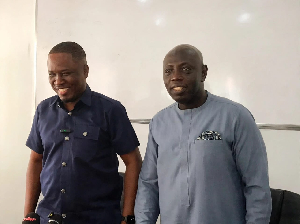
 Paul Kobina Mensah is the General Secretary of GIFF