Renowned legal practitioner Martin Kpebu, a member of the Operation Recover All Loot (ORAL) preparatory committee, has backed calls by former Auditor-General Daniel Yao Domelevo for government to expedite the prosecution of persons implicated in the committee’s report.
Domelevo, who worked alongside Kpebu on the ORAL committee, had earlier expressed disappointment over the slow pace of prosecution by the Attorney-General in recovering state assets and funds allegedly stolen from the country.
According to him, nine months into the administration of President John Dramani Mahama, the work of ORAL has yet to yield any significant results, particularly in prosecuting individuals implicated in corruption-related cases.
Domelevo passes damning verdict on President Mahama's ORAL prosecutions
Speaking in an interview on The KSM Show, aired on YouTube on Tuesday, October 7, 2025, Domelevo lamented that no former government official has been prosecuted despite the team’s extensive work in uncovering cases of alleged corruption.
He criticised the approach by the Attorney-General’s office, describing it as slow and ineffective.
“The procedure that the current Attorney-General is using is going to be very difficult. Nine months is not a small amount of time. Before we know it, we will have finished the term of President Mahama. So, I think we have to change the speed at which we are moving,” he said.
Reacting in an interview with GhanaWeb, Kpebu asserted that Domelevo’s concern, that new laws must be enacted to speed up the prosecution of persons implicated in the ORAL report, is valid.
He stressed that, just like in other advanced democracies, a new law must be enacted to ensure that criminal prosecutions are completed within a stipulated period.
“I back Domelevo's call for a new law to set specific timelines within which criminal trials must come to an end… I support the call for a new law that will say, specifically, when a criminal court case starts you must finish within, let’s say, seven months, one year… there must be a specific and reasonable time, like done in other countries,” he said.
The private legal practitioner further indicated that the country could enact laws to bar unnecessary appeals while substantive cases remain undetermined by the courts.
He explained that such appeals are often used by accused persons to delay proceedings.
“So, what it means is that when the case is before the court, we should change the law to say there will be no right to appeal until the judge has ruled on the main case. Whilst the case is ongoing, if somebody brings something and the accused or prosecution is unhappy, we should not allow an appeal to delay the substantive matter. It’s a proposal; that particular one, we can look at it and compare with other countries.
“But so far, with what he’s saying, the one that is very clear and popular worldwide is putting a timeline that, look, you must finish within eight months or one year. If you let it pass one day, the case will come to an end, and the judge will be in trouble. No judge will sit down to allow that,” he reiterated.
BAI/MA
Meet the two prominent female lawyers with decades of experience at the Bar
General News of Wednesday, 8 October 2025
Source: www.ghanaweb.com
ORAL: Martin Kpebu backs Domelevo’s call for new laws to speed up the prosecution
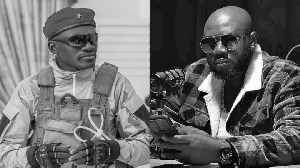
 Martin Kpebu (L) and Daniel Yao Domelevo (R) were all members of the ORAL preparatory committee