Quiz mistress of the National Science and Maths Quiz, Professor Elsie Effah Kaufmann, has recounted how she helped establish biomedical engineering at the University of Ghana (UG) at a time when the course was virtually non-existent in the country.
Prof Kaufmann, who is also the Dean of the School of Engineering Sciences at the University of Ghana, said she returned to the country in 2001 after completing her engineering education abroad and was employed by the University of Ghana to help establish engineering programmes at the institution.
Speaking on Today's Woman on TV3 on August 13, 2026, she said the initiative was led by the Vice-Chancellor at the time, Professor Ivan Addae-Mensah.
“There was no engineering at the University of Ghana. He said he was interested in starting engineering and what he was going to do was to set up a committee to start the process,” she recounted.
By the time she returned in 2001, a committee had already been established, and she was immediately tasked with helping develop the engineering programmes.
Prof Kaufmann said she was particularly responsible for developing two programmes: biomedical engineering and materials science and engineering, areas closely related to her expertise.
“It was a committee, so it was teamwork to do this. However, because I had come, I didn't know how to be on a committee to start engineering without my own discipline. So, I had to make sure that biomedical engineering was part of it,” she said.
Prof Kaufmann said establishing the programme was challenging because biomedical engineering was not being offered as an undergraduate programme in Ghana at the time.
She said the University of Ghana programme was approved in 2003, with the first batch of students admitted in 2004 to graduate in 2008.
She noted that although graduate-level biomedical engineering programmes existed in countries such as Egypt and South Africa, the discipline was largely absent from the rest of the continent.
“Nobody was doing this at the time, in 2003 when we started. When we started the bioengineering programme proper, there were only two of us, teaching all the courses,” she said.
Prof Elsie Effah Kaufmann bags GhanaWeb Excellence in STEM honour
The limited staffing meant that students sometimes had the same lecturers for several courses.
“I would go to class and the students would ask me, ‘Which course is this now?’ Because it was the same person teaching everything, it was very, very difficult. It was extremely difficult. We are performing miracles," she recalled.
Prof Kaufmann also shed light on the challenges of running an engineering programme at a public university with limited financial and human resources.
She said she often tells her students that the achievements of the programme amount to “performing miracles”, given the resources available to them.
“My students, the regular students, are paying less than 300 US dollars per year. That's their tuition, per year,” she said.
She explained that as a government institution, the University of Ghana operates within constraints that make it difficult for departments to independently recruit staff or increase fees to generate additional resources.
“I don't have the luxury of employing as I wish. I need clearance to get faculty,” she said.
According to her, increasing the resources available to the programme would require either more students or higher fees, neither of which she said was entirely within her control.
“If I had my way, there are so many things we would do. I would have more faculty, I would have better facilities and better resources to train my students, and the students obviously would pay a reasonable amount for the type of education they are getting,” she said.
Despite the constraints, Prof Kaufmann said the performance of graduates from the programme demonstrates what can be achieved when students and lecturers work with limited resources.
JKB/VPO
Several feared dead in multiple-vehicle crash at Ofankor Barrier
General News of Friday, 14 August 2026
Source: www.ghanaweb.com
Professor Kaufmann recounts how biomedical engineering started at UG
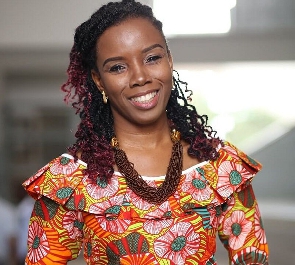 Prof Elsie Effah Kaufmann is Dean of the School of Engineering Sciences at the University of Ghana