Former Head of Information and Public Affairs at Ghana’s Embassy in Washington, DC, Kofi Tonto, has denied any involvement in an alleged financial scheme involving approximately US$19.4 million in irregularities at the mission.
Tonto, a key member of the opposition New Patriotic Party (NPP), described attempts to associate him with the alleged scheme as misleading, insisting that a US$800 payment he received in July 2021 was a legitimate child benefit paid to him following the birth of his daughter.
“I wish to state that I have never been involved in any scheme, the abating of, or the receipt of any ill-obtained funds,” he said.
His response follows details from a forensic audit of the Embassy’s financial operations, which reportedly identified payments to staff from a so-called welfare account.
Documents cited in the audit showed disbursements of US$10,800 and US$14,400, with several embassy staff members allegedly receiving payments ranging from US$300 to US$800.
Among those named in the documents were Genevieve Apaloo, Joseph Ngminebayihi, Janet Maku Koranteng, Laila Heward-Mills, Nineete Ivo Danquah, Cynthia Djokoto, Tetteh Addy, Bernard K Acquah, Ayishetu Shani Mahama, Mary Zori, Matilda Kumah, Francis Hosu Saagbul C1, Karim Kudaya, and Linda Kissi.
Others identified included George Oduro-Boaterg, Eilleen O. Lamptey, Maude Yankey-Marshall, Elizabeth Koranteng, Anne Miriam Asumeng, Frank Atuahene, Phoebe Sam, Joshua Etse, Kenneth Appiah, Joseph Ocloo, Sylvester Okai-Aryeetey, Gabriel Owusu-Darkwah, Joseph Ligi, Ransford K. Acheampon, Richard Quaye, Ernest O. Ampofo, Fred Kwarteng, and Daniel De Los Santos.
However, Tonto said the forensic audit, although referencing the US$800 payment made to him, did not identify him as a person of interest requiring investigation into the alleged financial irregularities.
He said the report indicated that about 28 other staff members had also received various benefits associated with significant life events.
According to him, the payment was neither solicited nor determined by him but was made as part of established employment-related processes.
Tonto argued that a one-off payment of US$800, over which he had no control, could not reasonably be used to associate him with an alleged fraudulent scheme involving approximately US$19 million.
“All payments such as compensations, allowances, benefits, and refunds that I received during my tenure as Head of Information and Public Affairs at the Embassy between the period March 2019 and July 2021 were received bona fide by me as a worker, and these payments were made in accordance with longstanding established processes,” he said.
He further stressed that he had no role in the financial management of the Embassy, particularly decisions relating to the operation or closure of bank accounts.
Tonto therefore urged his family, friends, and the general public to disregard what he described as a distorted narrative seeking to associate him with wrongdoing in the matter.
He maintained that the audit’s reference to the US$800 payment should not be interpreted as evidence of his involvement in the alleged financial irregularities.
Details contained in a forensic report on the alleged corruption scandal at Ghana’s Embassy in Washington, D.C., have meanwhile shed further light on how embassy staff were allegedly paid benefits from a welfare account funded by proceeds linked to visa and passport applications.
The latest details, published by the Public Accountability and Civic Group (PACG), indicate that staff allegedly shared in excess of US$19.4 million, said to have been extorted from visa and passport applicants between 2019 and 2025.
According to the report, a forensic audit conducted by the Auditor-General uncovered what it described as an elaborate scheme in which funds allegedly collected from applicants were channelled to embassy officials under the guise of welfare benefits.
The report identified Fred Kwarteng as the alleged mastermind of the scheme.
It said the proceeds were channelled through a welfare account established with Citibank.
The audit reportedly showed that the Embassy’s Treasury Officer, Janet Maku Koranteng, wrote to Citibank on March 16, 2020, requesting the creation of the account.
“On behalf of the Ghana Embassy/Mission in Washington, DC, this letter is to advise that, effective April 1, 2020, you are requested to open a new account titled Embassy of Ghana Welfare Account,” the letter reportedly stated.
However, Citibank officials subsequently raised questions about deposits and withdrawals into the account, particularly payments made by Ghana Travel Consultancy LLC, a company founded by Mr Kwarteng.
A Citibank official reportedly questioned the Embassy over the source of the funds and the relationship between the company and the mission.
The bank official also sought clarification as to whether Ghana Travel Consultancy was merely providing courier services or was processing consular applications on behalf of the Embassy, and why it was making payments into the welfare account.
The audit further indicated that the welfare account was eventually closed following intervention by the then Minister of Foreign Affairs and Regional Integration, Shirley Ayorkor Botchwey.
However, according to the report, efforts were subsequently made to continue operating the welfare arrangement outside the formal management structure of the Embassy.
In a letter to Citibank communicating the closure of the account following the minister’s directive, Ms Koranteng reportedly asked whether the Welfare Committee could open another account without the involvement of Embassy management.
“Can the Welfare Committee open an account without the involvement of the management of the Embassy?” she asked.
A Citibank official reportedly responded that the bank would not be able to open or maintain a welfare account separately under non-Embassy management as long as the purpose of the account remained the same, making welfare payments to embassy employees.
The forensic audit reportedly found that although the welfare account was officially closed on October 10, 2021, alleged illicit transactions connected to visa and passport applicants paying amounts above the approved fees continued until 2025.
Tonto, however, maintains that his receipt of the US$800 child benefit does not establish any connection between him and the alleged scheme and says he had no role in the financial decisions at the Embassy.
Business News of Friday, 14 August 2026
Source: theheraldghana.com
Kofi Tonto justifies his cut in US$19 million Ghana Embassy cash scandal
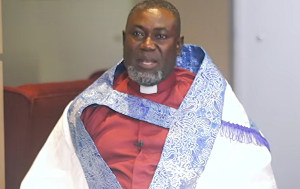
 Kofi Tonto is a former Head of Information and Public Affairs at Ghana’s Embassy in Washington