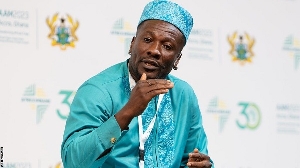
Legal scholar, Professor Stephen Kwaku Asare, has warned that the greatest threat to Ghana’s democracy and the Fourth Republic is not unresolved historical debates from the 1960s, but the delegate system and the entrenched ‘cocoa season’ politics that accompany it.
In a Facebook post on Monday, February 9, 2026, Prof Asare argued that the delegate-based primaries system quietly but steadily corrodes democracy, describing it as a ‘silent coup against the Fourth Republic’ and a grave danger to political pluralism.
According to him, while the system maintains the appearance of political competition, it hollows out its substance by narrowing real choice long before citizens cast their ballots in general elections.
He noted that political power under the delegate model is concentrated in the hands of a small and predictable group, shifting competition away from persuading the electorate to courting delegates.
“As ideas lose value, logistics, inducements, and patronage gain it,” he stated, adding that elections become more about internal party capture than public legitimacy.
Decision on Baba Jamal's reinstatement rests with President Mahama – Kwakye Ofosu
Kwaku Azar outlined three major consequences of the delegate system.
First, he said it distorts representation, as candidates emerge not on the basis of broad public confidence but their ability of aspirants to influence a narrow electoral college, reducing millions of voters to spectators.
Second, it normalises transactional politics, where inducements become rational campaign tools rather than moral failures.
Third, it alienates citizens who are asked to vote in general elections for candidates they had little role in choosing, breeding cynicism and apathy.
Despite these concerns, Kwaku Azar stressed that even small reforms and public condemnations of inducement politics matter.
He argued that such actions help reset democratic norms and signal that ‘cocoa season’ politics is a democratic defect, not a clever strategy.
He added that presidential condemnation carries particular weight, noting that when the Head of State speaks against delegate inducement, the issue is elevated from a partisan grievance to a constitutional concern.
See list of NDC MPs who approved call for cancellation of Ayawaso East primaries
Kwaku Azar also distinguished between ordinary political recall and recall linked to vote buying, describing the latter as a necessary correction for a corrupted selection process rather than a routine accountability mechanism.
Looking ahead, he proposed a long-term solution based on mass participation.
Under his proposal, citizens would declare political affiliation during voter registration, after which parties would select candidates through a national primaries day where registered affiliates vote directly.
He said such a system would make inducement politics impractical, restore legitimacy to candidates, and shift political competition back to convincing citizens rather than capturing delegates.
Kwaku Azar cautioned against mistaking ritual for democracy, arguing that Ghana’s democratic survival depends on institutions that reward persuasion over patronage and participation over proximity.
“If the Fourth Republic is to endure,” he said, we must confront the quiet systems that undermine political pluralism from within.
Read the full post below
MRA/VPO
Understanding Ghana's stock market and how to invest | BizTech
General News of Tuesday, 10 February 2026
Source: www.ghanaweb.com
Delegate system biggest threat to 4th Republic – Kwaku Azar
 Professor Stephen Kwaku Asare is a legal scholar