The Constitution Review Committee (CRC), tasked with assessing and proposing amendments to Ghana's 1992 Constitution, has received over 500 online and in-person submissions to assist in its work.
The committee, composed of legal and governance experts, will focus on identifying key areas of the Constitution that need updating to align with the country’s evolving democratic and socio-economic realities. It will also carefully examine past recommendations, identify necessary changes, and create a clear roadmap for meaningful constitutional amendments.
Dr. Rainer Akumperigya, the Secretary to the CRC, disclosed this to the Ghana News Agency, stating that the stakeholder engagements had, so far, been fruitful.
The committee has received written submissions from various groups, including the National Commission for Civic Education, past officers from the Electoral Commission, and Non-Governmental Organizations (NGOs)/Civil Society Organizations (CSOs) with expertise in the natural resources sector, such as the Africa Centre for Energy Policy. Additionally, academics like Professors Kwame Gyan, Kofi Quashiga, and Kwadwo Appiagyei-Atua from the University of Ghana have also presented proposals to the committee.
The Institute of Economic Affairs, represented by former Speaker of Parliament Prof. Mike Aaron Oquaye and former Chief Justice Justice Sophia Akuffo, has also made written submissions. Many engineers and institutions have also presented proposals.
Dr. Akumperigya said that the committee had already met with President John Dramani Mahama at the Jubilee House to solicit his input, considering his wealth of experience, from his time as an assemblyman to his tenure as Vice President and President of Ghana.
“The committee will also meet with other branches of government, such as the Legislature and Judiciary, to present their proposals, as well as former Presidents and Vice Presidents, to make their submissions to support our work,” he said.
The Secretary to the Committee explained that after its inauguration in February, the committee had set out the modalities for undertaking its mandate, including strategy, engagement, timelines, planning, and resources.
During the first week of discussions, the committee decided on two major forms of engagement: stakeholder and validation engagements. He clarified that even before the committee was formed, the President had announced the holding of a National Constitutional Validation Conference.
To avoid duplicating the functions of the committee and the outcome of the validation conference, which would be materially useful to the committee, it was decided to merge the national validation conference with the zonal engagements. The President accepted this approach.
Thus, eight zones were created out of the 16 regions, with Tamale and Bolga in one zone, and Wa, Sunyani, Kumasi, Takoradi, Cape Coast, and Koforidua as separate zones, while Accra would serve as the hub for stakeholder engagements. These zonal engagements were open to the public, including traditional authorities, heads of educational institutions, students' unions, women’s groups, and disability groups, among others.
Mr. Akumperigya explained that the committee had delineated the Constitution into 10 identifiable thematic subject areas, which included Lands and Natural Resource Governance, Decentralisation, Local Government and Chieftaincy, and Public Services and Enterprises.
Other areas to be considered include independent constitutional bodies or offices such as the Electoral Commission, National Media Commission, Commission on Human Rights and Administrative Justice, the National Commission for Civic Education, the Auditor General, and the Audit Service.
Discussions will also be held on the three branches of government: the Executive, Legislature, and Judiciary. The final area will focus on Finance, the Central Bank, the use of discretionary power, and dual citizenship amendments.
Dr. Akumperigya explained that the Constitution provided for the mode of amending both entrenched and non-entrenched clauses.
He noted, “For the non-entrenched clauses, the provisions can be amended by Parliament. With the NDC’s majority in Parliament, this can be easily done.”
For the entrenched clauses, part of the committee’s mandate is to provide timelines, plans, and a roadmap for how the government could implement the recommendations.
He emphasized that the report would go beyond existing ones, such as the Prof. Albert K. Fiadjoe Constitution Review Committee Report, to take into account current major developments.
General News of Tuesday, 15 April 2025
Source: GNA
Constitution Review Committee receives over 500 proposals from stakeholders
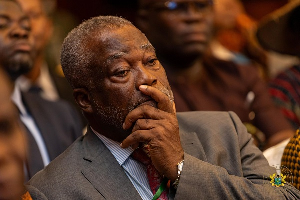
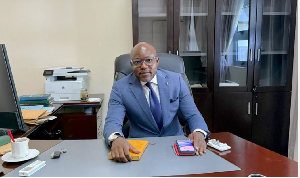 Dr Rainer Akumperigya, the Secretary to the CRC