GhanaWeb Feature by Joycelyn Kyei Baffuor
For many Ghanaians, “Chofi”, the popular name for fried turkey tail, is more than a source of protein; the delicacy is loved for its rich taste and versatility.
It has for years remained a great accompaniment to meals such as fried yam, kenkey and banku sold by street food vendors across the country.
Yet for more than two decades, the poultry product has officially been banned by the Food and Drugs Authority (FDA) due to its high concentration of fat and health implications.
Meanwhile, this delicacy continues to be sold openly in markets across the country, despite the ban.
Shock, disbelief as social media users react to FDA’s ban on 'chofi'
On Monday, May 11, 2026, the FDA reminded the public that the importation and sale of turkey tail and other poultry products with more than 15 percent fat content is prohibited in the country.
The reminder has reignited conversations about why the product is still widely available in markets despite the longstanding restriction.
A ban dating back to 1999
Ghana banned turkey tail imports in 1999 as part of efforts to protect public health and encourage healthier eating habits.
According to the FDA, the product contains extremely high levels of fat, making it unhealthy for regular consumption.
It has also warned that turkey tails may contain residues of veterinary drugs used in poultry production, adding another layer of concern beyond fat content alone.
Health experts have long linked excessive intake of fatty foods to obesity, high cholesterol, hypertension and heart-related diseases.
The ban also covers other poultry products with fat content exceeding 15 percent.
Despite this, “Chofi” continues to appear openly in many markets and cold stores.
Food vendors also prefer it because it cooks quickly, has a distinct taste and can easily be used in popular local dishes.
For some consumers, the health concerns are not enough to discontinue its patronage.
Others simply grew up eating “Chofi” and see it as a normal part of everyday meals.
Enforcement challenges
The persistence of turkey tail in Ghanaian markets also raises concerns about enforcement.
Although the product is banned, authorities face difficulties monitoring imports and distribution channels across the country.
Over the years, the FDA and the Ghana Police Service have carried out joint operations in markets to seize turkey tail from traders.
Some traders are said to smuggle the product into local markets through informal routes.
According to public health advocates, stronger market surveillance and consumer education are needed to reduce demand and improve compliance with food safety regulations.
Nutrition experts have also repeatedly called for greater awareness about the long-term effects of unhealthy diets, contributing to the growing burden of non- communicable diseases with unhealthy diets identified as one of the key drivers.
For now, the FDA maintains that the risks outweigh the benefits.
“The FDA therefore advises the public to stay away from these products,” the Authority said in its latest public notice.
Whether that warning will significantly reduce consumption remains uncertain, but one thing is clear, some Ghanaians still crave for “Chofi” and its relationship with consumers appear far from over.
JKB/VPO
Africa no longer on the sidelines of global finance - BoG Governor
General News of Tuesday, 12 May 2026
Source: www.ghanaweb.com
Chofi: The forbidden 'delicacy' many Ghanaians still crave
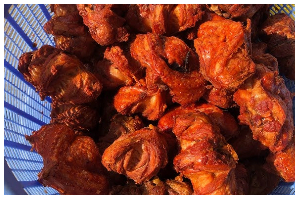 FDA has banned importation of “Chofi” (turkey tail) in Ghana over health concerns