The central bank has signalled a tougher supervisory stance on banks, saying it will introduce new stress tests, recovery-planning requirements and stricter enforcement to protect financial stability even as lenders return to profitability and capital strength improves.
The Bank of Ghana said the next phase of reforms will focus on forward-looking oversight and tighter risk controls following a period of recovery for the banking sector.
The measures come after the Monetary Policy Committee cut the benchmark rate by 350 basis points to 18% in November, extending an easing cycle by 1000 basis point (bps), as inflation fell and external buffers strengthened.
Speaking at a post–127th MPC meeting with heads of banks, BoG Governor, Dr Johnson Pandit Asiama said the regulator would consolidate recent gains with “strict enforcement,” indicating that the central bank would be firm where risks to stability emerge.
The tougher tone follows years of strain in the financial system and a deliberate effort by the central bank to rebuild confidence with lenders after the domestic debt exchange.
Dr Asiama said trust and collaboration have improved, reflected in clearer expectations and steadier policy transmission across the system. Macro conditions have turned more supportive.
Provisional data show the economy expanded by 5.5 percent in the third quarter, a pace slightly below a year earlier but one that points to resilience across productive sectors. Business and consumer confidence indicators remained positive in September, according to official data.
Inflation has also eased sharply, falling to 6.3 percent in December 2025 and returning to the median of the central bank’s target band for the first time in several years.
Dr Asiama attributed the disinflation to tight monetary policy, fiscal discipline and improved food supply conditions, adding that underlying inflation expectations have been “firmly re-anchored,” helping restore confidence among households and businesses.
On the external front, Ghana’s buffers have rebuilt on the back of strong export performance led by gold and supported by cocoa, strengthening the current account position and improving the country’s ability to absorb future shocks.
Fiscal consolidation is on course and aligned with reforms under the IMF’s Extended Credit Facility program, the central bank said.
Within the banking sector, conditions have improved but risks persist. Deposit money banks remain sound, profitable and well capitalised, with financial soundness indicators showing year-on-year gains across solvency, profitability, asset quality and efficiency.
The non-performing loan ratio declined to 19.5 percent in October 2025 from 22.7 percent a year earlier, helped by a pickup in credit growth and a contraction in the stock of bad loans.
Nonetheless, the central bank cautioned that credit risks remain elevated. It said further policy actions, including recapitalisation of a few undercapitalised banks and full implementation of new regulatory guidelines aimed at reducing NPLs, would be needed to strengthen the industry.
Against that backdrop, the regulator plans to introduce new directives covering stress testing, recovery planning and risk management.
A revised risk-based supervisory framework will shift oversight toward a more preventive approach, with greater emphasis on business risk, financial resilience, governance and operational resilience.
“We will remain a firm, fair and transparent partner that is supportive, when necessary, but uncompromising where stability is at risk,” Dr. Asiama said.
The central bank also said it will deepen engagement with banks and expand training as part of the reform push, while strengthening collaboration with other financial regulators and industry bodies to safeguard systemic stability.
At the same time, the regulator renewed its call for banks to support economic growth by expanding credit to the real sector, particularly small and medium-sized enterprises.
Dr Asiama urged lenders to deepen financial intermediation, improve credit allocation and drive innovation that enhances access and inclusion while managing risk.
“This year was not the end of a journey,” the Governor said. “It was just the beginning of a new one.
The coming phase, he added, will demand greater discipline and deeper collaboration as the central bank seeks to build a modern, competitive and resilient banking system capable of supporting long-term economic growth.
All you need to know about Ghana's new vehicle number plates |BizTech:
Business News of Thursday, 18 December 2025
Source: thebftonline.com
Central bank signals tougher scrutiny of banks
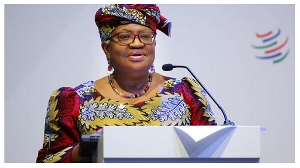
 Dr Johnson Asiama is the BoG Governor