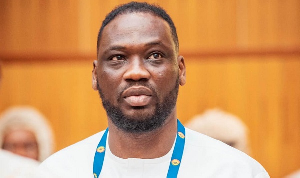
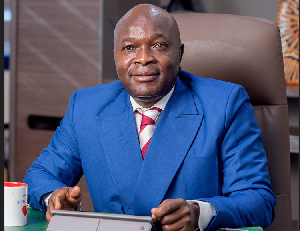
The Head of Programs at Transparency International Kenya, Gibson Mwaita, has
warned that Africa’s fight against corruption and illicit financial flows (IFF) will remain incomplete without full disclosure of beneficial ownership.
He opined that anonymous company structures continue to shield corrupt actors, enabling tax evasion, conflicts of interest, and the siphoning of billions of dollars out of the continent each year.
Speaking in an interview with GhanaWeb’s Ernestina Serwaa Asante at the AFROMEDI VI held in Nairobi-Kenya, Mwaita explained that individuals who uncover corruption and financial misconduct often face intimidation, retaliation, or legal risks.
He said protecting whistleblowers and journalists is essential to dismantling corruption networks and safeguarding public interest.
AFRODAD pushes media accountability over Africa's escalating borrowing costs
According to the Extractive Industries Transparency Initiative, a beneficial owner is always the real human being who ultimately profits from or controls a company’s activities and never a proxy, nominee, or another legal entity.
Mwaita noted that asset recovery remains a key pillar in advancing fiscal justice.
"Beneficial ownership transparency remains critical in exposing anonymous company ownership structures that enable corruption, tax evasion, conflict of interest, and illicit financial flows, particularly within the extractive sector," he said.
"Similarly, access to information is critical to public accountability: Citizens, journalists, and oversight institutions must have timely access to debt agreements, extractive contracts, public expenditure data, and revenue flows in order to meaningfully scrutinize how public resources are managed and how borrowing decisions are made. Whistleblower protection is equally critically," he added.
This year’s theme, “Partnering with Media to Advance Socio-Economic Justice and Africa’s Common Position on Debt,” highlights the role of the press in confronting governance deficiencies and amplifying citizens’ voices.
Mwaita argued that access to information is critical for oversight institutions, journalists, and citizens to scrutinize how public resources are managed and how borrowing decisions are made.
Africa, despite being the richest continent in terms of natural resources, continues to grapple with debt, weak governance systems, and illicit financial flows.
“In fact, Africa consumes more imports than what it produces. These challenges keep undermining the continent’s ability to retain value and finance its own development sustainably,” Mwaita observed.
Recent data shows that Africa loses close to $90 billion annually through illicit financial flows, an amount that rivals its yearly debt repayments and far exceeds the development aid it receives.
Experts warn that without stronger transparency measures, beneficial ownership registries, and coordinated asset recovery mechanisms, the continent will struggle to achieve sustainable growth.
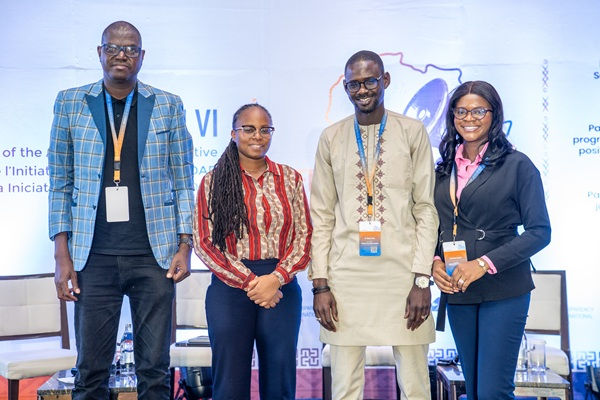
The sixth edition of the AFRODAD Media Initiative (AFROMEDI VI) was organised by African Forum and Network on Debt and Development (AFRODAD) in partnership with TI-Kenya and Stop the Bleeding in Nairobi, Kenya.
SA
Business News of Friday, 29 May 2026
Source: www.ghanaweb.com
Beneficial ownership transparency key to fighting corruption, IFF - Mwaita
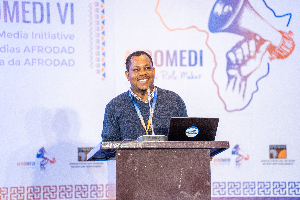 Gibson Mwaita is the Head of Programs at Transparency International Kenya