Ghana’s mining sector is entering one of its most consequential policy transitions in decades.
For years, the national conversation around mining has focused narrowly on concessions, royalties, production volumes and the familiar public frustration that gold-rich communities remain poor despite decades of extraction.
That conversation is now changing. The debate has moved beyond mining rights alone. It is now about the entire value chain: who finances mining, who supplies inputs, who trades gold, who refines it, who retains the foreign exchange, who benefits from local procurement, who bears the environmental cost, and whether Ghana can convert mineral wealth into long-term industrial capacity.
A recent high-level panel discussion on Ghana’s mining value chain captured this shift clearly. Industry leaders, regulators, operators and legal advisers all agreed on one central point: Ghana must retain more value from its mineral wealth. But they also warned that how the country pursues that objective will determine whether the reset strengthens the sector or weakens investor confidence.
There is broad support for local content, responsible mining, refining, traceability and Ghanaian participation. What industry players are cautioning against is not reform itself, but reform implemented without predictability, consultation and commercial logic.
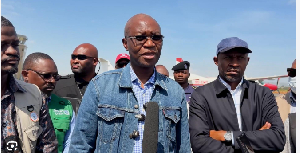
Michael Edem Akafia, President of the Ghana Chamber of Mines, speaking during a panel discussion on legal developments, policy considerations and emerging changes within Ghana’s mining value chain which was a policy dialogue dubbed Conversations with Templars, organised by Accra-based law firm Templars on the theme “Ghana’s Mining Sector at a Turning Point,” framed the issue around value retention.
The 2020 local content regulations, he noted, created reserved areas for Ghanaian businesses and empowered the Minerals Commission to expand the list of goods and services that must be procured locally. In principle, this aligns with the mining industry’s own ESG-driven agenda to keep more value in host communities and the wider economy.
But local content can easily become shallow if it is reduced to import intermediation.
If Ghanaian firms merely import activated carbon, caustic soda, engineering inputs or mining consumables and resell them to mining companies, the country may increase local procurement figures without building real industrial capability.
That is why the Chamber’s push to identify products that can be manufactured locally is important. Ghana’s opportunity is not only in owning mines. It is in building the businesses that supply, service and sustain mines.
Akafia’s gold rush analogy is instructive: those who sold shovels to miners often made more money than the miners themselves. In modern mining terms, the “shovels” are engineering services, fuel supply, fabrication, explosives, activated carbon, reagents, haulage, maintenance, processing plants, technology, security, environmental services and logistics.
This is where Ghana can build durable local champions.
The Gold Board’s intervention adds another layer to the reset. According to its Deputy Chief Executive Officer, Richard Nunekpeku, the Board’s establishment has helped improve formal gold aggregation and export tracking, particularly in the artisanal and small-scale mining sector.
He said official exports from the sector rose sharply from about $4.6 billion in 2024 to $10.8 billion after the Board’s intervention.
That figure, if sustained and properly audited, tells a powerful story: Ghana was not necessarily short of gold output; it was short of formal systems to capture the full value of that output.
The Board’s next ambition is traceability. It plans to track gold from mine sites, support responsible sourcing and help local refineries move toward global accreditation. It has already signed refining agreements with Gold Coast Refinery and Royal Gold, with plans to supply up to one tonne of gold weekly for refining.
This is precisely the kind of value-chain intervention Ghana needs. A gold producer that cannot refine, certify and trade gold on stronger terms remains structurally disadvantaged.
But even here, the implementation questions are significant.
Angela List, founder and CEO of Nguvu Mining Ltd, made a critical point: Ghana already had refineries, but failed to use them effectively for years. The challenge is not simply to build more refineries.
It is to scale existing ones, guarantee reliable feedstock, meet responsible sourcing standards and attract the capital required to reach international accreditation.
She also warned against a policy model in which the regulator becomes both market participant and promoter. That raises legitimate concerns about conflict of interest, pricing, commercial neutrality and the treatment of private operators.
Her point goes to the heart of Ghana’s mining policy dilemma. The state must regulate. The state may also participate. But where it participates, the rules must remain transparent enough to reassure private capital that the referee is not also changing the game in its own favour.
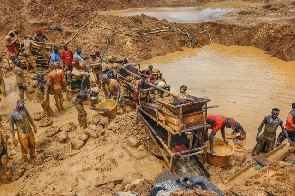
Small-scale mining remains the most difficult part of the equation.
The Gold Board sees formalisation, traceability, district buying centres, geological investigations and equipment financing as ways to bring the sector into a more responsible framework. That is promising.
Small-scale miners often operate without geological data, financing discipline or environmental safeguards. A data-led mining model could reduce trial-and-error extraction and limit environmental damage.
Yet the environmental reality cannot be ignored. Ms List’s warning was stark: Ghana may make money from gold trading today, but pay a far higher price later in contaminated water bodies, degraded land and public health damage.
That is the moral and economic contradiction at the centre of Ghana’s gold boom.
A country cannot celebrate rising gold exports while ignoring poisoned rivers and unsafe communities. Responsible mining must not become a slogan used for international meetings; it must become a binding operating condition from pit to refinery.
The financing side is equally important. Sarpong Bodemah of Templars said investors, banks and development finance institutions are increasingly asking about regulatory certainty. They want to know whether Ghana’s policy direction is stable, whether local content changes will be gradual or abrupt, and whether nationalisation rhetoric reflects real government policy.
The consequence, he warned, is valuation risk. When investors see uncertainty, they discount assets. When financiers see unpredictability, they price in risk. When policy appears inconsistent, capital becomes more expensive.
That is why the current debate over nationalisation is so sensitive.
Ghana has been here before. State ownership of mining assets in the 1960s and 1970s did not produce the sector Ghana has today. By the early 1980s, national gold production had fallen sharply. It was the reforms of the mid-1980s, supported by private capital and international investment, that helped rebuild Ghana into Africa’s leading gold producer.
This does not mean the old model was perfect. It was not. Too much value left the country. Communities remained underdeveloped. Local supply chains were weak. Environmental accountability was inconsistent. Small-scale mining was poorly formalised.
But the lesson is not that Ghana should swing from one extreme to another.
The lesson is that Ghana needs a smarter bargain.
That bargain should be built on five pillars.
First, security of tenure must be protected. Mining is capital-intensive and long-term. Exploration to production can take 15 to 20 years. No serious investor will commit capital if licence renewal, parliamentary ratification or regulatory approval is seen as unpredictable.
Second, local content must become local production. Ghana must deliberately build manufacturers, engineering firms, repair centres and mining service providers in mining regions, not merely create local import agents.
Third, small-scale mining must be formalised through traceability, geological data, financing discipline and environmental enforcement. Without traceability, Ghana cannot build a responsible gold brand.
Fourth, refining must be scaled through existing capacity and new investment, but with a clear pathway to global accreditation. Ghana cannot become a gold hub without credible certification.
Fifth, policy reform must be consultative. Sudden announcements may satisfy political pressure, but they unsettle financiers and operators.
Ghana’s mining reset is necessary. The old model did not deliver enough domestic transformation. But reform must be designed to attract capital, not frighten it; to create local champions, not isolate Ghanaian companies from global markets; to retain value, not merely shift control; and to protect communities, not just increase export receipts.
The country’s challenge is not whether to choose foreign investors or local participation.
It must choose both but on better terms.
That is the real test of Ghana’s next mining era: whether the state can build a more Ghanaian mining economy without making Ghana a less attractive mining jurisdiction.
Business News of Friday, 29 May 2026
Source: thebftonline.com
Mining Reset: Why local value retention must not become investor uncertainty
 Small-scale mining remains the most difficult part of the equation