Ghanaian banks are being pushed into a new round of large-ticket mining financing as major mining companies race to transfer contract-mining operations to indigenous firms ahead of a December 31, 2026 localization deadline.
The transition is opening demand for financing to acquire haul trucks, excavators, drilling equipment and other heavy machinery, as well as working capital for fuel, maintenance and payroll required by Ghanaian contractors taking over operations previously undertaken directly by mine owners or other contractors.
The funding demand is being driven by the Minerals Commission’s enforcement of local-content rules requiring surface mining operations, including drilling, blasting, loading, hauling and dumping, to be undertaken by fully Ghanaian-owned companies.
For underground contract mining, companies or joint ventures undertaking the activity are required to have at least 50 percent Ghanaian ownership.
The Commission last week maintained that the December deadline is “non-negotiable”, with Newmont, Zijin Mining and Ghana Manganese Company among operators yet to fully comply with the requirement.
The directive is expected to increase demand for syndicated loans, equipment financing and working-capital facilities from local banks as indigenous contractors take responsibility for increasingly capital-intensive mining operations.
Evidence of the financing involved is already emerging.
In February this year, Stanbic Bank Ghana and Standard Bank South Africa arranged a US$205 million financing package for Engineers & Planners (E&P) to support the Ghanaian mining contractor’s operations.
The five-year senior secured facility comprised a US$110million term loan and US$95 million revolving credit facility, with Absa Bank Ghana and Ecobank Ghana participating in the transaction.
Stanbic and Standard Bank said the latest transaction took financing they have arranged for E&P over the years to more than US$450million, providing an indication of the size of funding required by established indigenous companies operating large mining contracts.
The financing was structured across several lenders, pointing to the role syndicated facilities are likely to play as more contract-mining business moves to Ghanaian companies.
Local banks have also started developing dedicated financing arrangements for contractors.
Access Bank Ghana last month entered an equipment-financing arrangement with Mantrac Ghana alongside four other banks to provide funding for the acquisition of Caterpillar machinery and working capital by mining companies and contractors.
The arrangement allows contractors to access financing through a consortium of banks rather than depend on the lending capacity of a single institution. Access Bank identified access to capital as one of the major constraints facing indigenous businesses seeking to expand their participation in mining.
Government is using the localization requirement to increase the share of the mining industry’s multibillion-dollar expenditure retained by Ghanaian businesses.
Mining companies spent about US$3 billion on goods and services in 2023, according to the Minerals Commission, with approximately half of the expenditure undertaken by Ghanaian businesses. The Commission subsequently expanded its local procurement list to 52 goods and services as part of measures to increase domestic participation.
Industry figures cited by the Ghana Chamber of Mines put mining companies’ expenditure on goods and services at about US$3.5 billion in 2024, highlighting the size of the procurement market available to local suppliers and contractors.
Contract mining represents one of the more capital-intensive portions of the value chain because contractors taking responsibility for mine production require substantial fleets of heavy equipment in addition to recurring operating expenditure.
The push to move more of those activities to Ghanaian companies comes as gold production and export earnings have increased sharply.
Ghana produced 5.94 million ounces of gold in 2025, up 23.4 percent from 4.82 million ounces in 2024, while gold’s contribution to GDP increased from 7.97 percent to 9.98 percent.
The strong performance has increased government’s focus on retaining more of the expenditure and value generated by the mining industry within the domestic economy.
The contract-mining directive forms part of a wider restructuring of the sector covering local procurement, Ghanaian participation, gold purchases, refining and changes to the country’s mining legislation.
Government has also introduced a requirement for large-scale mining companies to sell 30 percent of their gold output locally, while work is progressing on changes to the Minerals and Mining Act and the fiscal regime governing the industry.
The December localization deadline has put the financing needs of indigenous mining contractors firmly on the banking sector’s agenda.
Newmont had sought additional time until 2027 to complete its transition but the request was rejected by the Minerals Commission. AngloGold Ashanti said earlier this year that Iduapriem was already using a contractor structured as a 50-50 joint venture and had begun the process of moving to a fully Ghanaian contractor, while Zijinindicated it was preparing the tender and technical processes required for its transition.
Zijin’s Bibiani operation has since moved into procurement for contract-mining services covering drilling, blasting, loading, hauling and waste placement, providing another indication that the localization requirement is moving from policy into actual contract awards.
The Minerals Commission is developing minimum tender benchmarks for contract-mining companies after concerns that aggressive underbidding has pushed some mining rates from around US$3 per tonne to below US$2.50 per tonne.
The regulator is also working on minimum wage benchmarks following concerns over differences between the remuneration of workers employed directly by mining companies and those employed by contractors.
Contract pricing will have implications for bank financing because lenders will have to assess whether revenues generated under awarded contracts are sufficient to cover operating expenditure and service loans used to purchase mining equipment.
Indigenous contractors now have until the end of December to secure both the mining contracts and the capital needed to execute them.
The US$205 million Engineers & Planners facility provides a template for how some of the larger transactions could be funded, with multiple banks sharing the financing exposure through syndicated and structured facilities.
The localization programme could therefore open a sizeable new lending market for banks, with demand expected to centre on heavy-equipment purchases and working capital as Ghanaian contractors take on a larger share of mine operations.
Business News of Thursday, 17 September 2026
Source: economytimesnews.com
Banks face financing challenge as mining contracts go local
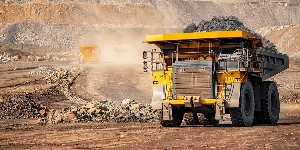 File photo of a mining site



Entertainment