The Minister for Local Government, Chieftaincy and Religious Affairs, Ahmed Ibrahim, has directed all Metropolitan, Municipal, and District Chief Executives (MMDCEs) to ensure that public spaces, ceremonial streets, and visible nuisances within their jurisdictions are cleared by 8:00 a.m. daily, beginning September 4, 2025.
Speaking at a press conference held at the Accra Metropolitan Assembly Auditorium on Wednesday, September 3, 2025, to announce the relaunch of the National Sanitation Day (NSD), the Minister emphasised the need for sustained action to address Ghana’s sanitation challenges.
“All public spaces, ceremonial streets, and visible nuisances within your jurisdiction must be cleared by 8:00 a.m. every day, beginning tomorrow, 4th September 2025,” he directed.
The NSD, a flagship initiative under the government’s “Clean Up Ghana Agenda,” will be officially relaunched by President John Dramani Mahama on Saturday, September 6, 2025, at the Institute of Local Government Studies in Madina, Accra.
National Sanitation Day: Minister urges personal hygiene as a cultural practice
Ahmed Ibrahim highlighted persistent problems such as indiscriminate refuse dumping, choked drains, and unsightly waste heaps in markets, lorry terminals, and streets, which he said threaten public health, economic growth, and Ghana’s national image.
He stressed that poor sanitation undermines the dignity, safety, and well-being of citizens and reflects poorly on local governance.
The Minister directed MMDCEs to prioritise the desilting of drains, removal of waste heaps, and regular cleansing of ceremonial routes, markets, lorry stations, schools, and other public spaces.
He further instructed assemblies to mobilise environmental health officers, waste management officers, private waste service providers, community volunteers, and citizens to ensure compliance.
Fishermen now catching more filth than fish – Minister laments poor sanitation
“To sustain compliance, assemblies must prioritise the desilting of drains, the removal of waste heaps, and the regular cleansing of ceremonial routes, markets, lorry stations, schools, and public spaces. Assemblies must mobilise and deploy their environmental health officers, waste management officers, private waste service providers, community volunteers, and the citizenry,” he stated.
To address funding challenges often cited as a barrier to sanitation efforts, the Minister noted that 80% of the District Assemblies Common Fund had been released to support these initiatives.
He urged assemblies to demonstrate leadership and accountability, warning that the first six months of the directive will serve as a performance benchmark, during which assemblies must progressively eliminate visible filth.
The Minister also announced the introduction of a dedicated sanitation hotline for citizens to report nuisances, a central dashboard to track assembly performance, and a requirement for assemblies to submit monthly sanitation reports to Regional Coordinating Councils for onward submission to the Ministry.
GA/MA
GhanaWeb's latest documentary, Sex for Fish, that explores the plights of teenage girls in coastal communities, all in an attempt to survive, is out. Watch it below:
General News of Wednesday, 3 September 2025
Source: www.ghanaweb.com
Assemblies to submit monthly sanitation reports under new directive
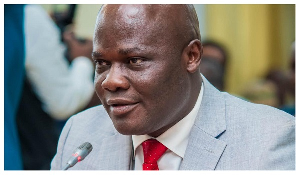 Minister for Local Government, Chieftaincy and Religious Affairs, Ahmed Ibrahim