The Minority in Parliament is preparing to introduce the Public Financial Management (Amendment) Bill, 2026, to ensure tighter discipline and greater accountability for how public funds are spent.
The Private Member’s Bill seeks to amend Ghana’s existing Public Financial Management Act to ensure that money allocated in the national budget is used strictly for projects that align with development priorities approved by the National Development Planning Commission (NDPC).
At a stakeholder engagement on the proposed legislation, the Ranking Member on Parliament’s Economy and Development Committee and Member of Parliament for Ofoase-Ayirebi, Kojo Oppong Nkrumah, explained the motivation behind the amendment.
He said the move is designed to prevent the Minister of Finance, Dr Cassiel Ato Forson, from releasing funds to Ministries, Departments and Agencies (MDAs), as well as, Metropolitan, Municipal and District Assemblies (MMDAs), for projects that are not captured within the country’s officially approved development framework.
According to Oppong Nkrumah, the bill is meant to curb unplanned and discretionary spending that falls outside Ghana’s long-term strategic agenda.
“This amendment seeks to deny the Ministry of Finance the opportunity to fund such projects and programmes. This is separate from contingencies or emergencies that may arise. But for regular programmes and projects that have not been included in the strategic plan of the MMDA or the MDA to get certification, the object of this amendment bill is to deny funding for it until such a time that it is captured and certified as part of the National Development Planning Commission’s programme,” he said.
'I dreamt of my father awaiting judgment' — Mahama recalls teen nightmares
In essence, the proposal would require that every major project funded through the national budget must first be part of a formally approved development plan, ensuring that spending decisions are guided by long-term national priorities rather than short-term considerations.
The Deputy Clerk to Parliament in charge of Legislative Management Services, Camillo Pwamang, said the amendment would also strengthen transparency by tying budget approvals to performance reporting.
“By amending the PFM Act, the bill would, among other things, make development plans duly approved by the NDPC the mandatory basis for the preparation of the annual budget. It also requires the publication of annual progress reports as a precondition for the inclusion of estimates in the budget and for the issuance of expenditure warrants,” he said.
If passed, the amendment would mean that government institutions must not only plan in line with the NDPC’s framework but also demonstrate progress before receiving further funding.
Supporters of the proposal argue that this could improve coordination, reduce waste, and ensure that public funds are directed toward projects that deliver measurable results for citizens.
NA/VPO
Watch the first episode of JUST TALK PODCAST: Unpacking the 'Kayamata craze' ruining lives
General News of Monday, 2 March 2026
Source: www.ghanaweb.com
Why Minority seeks to introduce Public Financial Management bill in Parliament
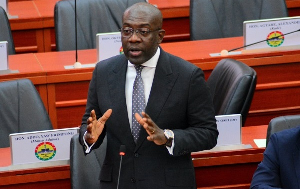 Ranking Member on Parliament’s Economy and Development Committee, Kojo Oppong Nkrumah