The Abidjan-Lagos Corridor Organisation (ALCO) in collaboration with the United Nations Population Fund (UNFPA) has organised a sensitisation workshop for Ghanaian journalists in the Western Region on gender-based violence (GBV).
The workshop held at Elubo on Thursday, November 26, 2026, was aimed at equipping the media with the requisite knowledge on GBV to enable them to educate the public and help curb the menace along the corridor.
The campaign was under the 2026 theme: "UNITE! Invest to Prevent Violence Against Women and Girls."
The campaign sought to strengthen prevention, survivor-centred response and youth-led advocacy across the Corridor.
It also contributed directly to UNFPA's transformative results: ending GBV, ensuring access to quality services and advancing gender equality.
It was a flagship initiative for the broader "Roads to Safety" regional programme proposed by ALCO in collaboration with UNFPA.
The campaign objectives were to raise awareness of GBV risks and prevention strategies among corridor communities, mobilise transport unions, youth, health workers and community actors as GBV champions, strengthen cross-border coordination for survivor referral and reporting, and advocate for increased investment in GBV prevention and survivor support services.
Key activities under the campaign included the Regional Official Launch and Stakeholder Roundtable, Youth Empowerment Dialogues, Transport Sector Pledge Campaign, Regional GBV Commitment Charter, Radio and Social Media Advocacy, GBV-HIV Intersection Workshop, and Awareness-Raising Sessions.
The regional frameworks for the campaign were the UNFPA campaign message: "NAME IT. BELIEVE IT. END IT.", the ALCO regional theme: "ENDING GBV ACROSS THE ABIDJAN-LAGOS CORRIDOR", the regional message: "SAFE BORDERS, SAFE LIVES", and the regional commitment: "FIVE COUNTRIES, EIGHT BORDERS, ONE COMMITMENT."
Speaking at the event, Moses Andoh, Coordinator for the Local Information Unit of ALCO, said the training was the first of its kind since the organisation was established in 2002.
He said the media was a powerful tool that could help disseminate information on the activities of the organisation, particularly on GBV.
Andoh disclosed that a commitment statement would be handed over from Cote d'Ivoire to Ghana on Friday, November 27, at the Elubo border.
He said the Municipal Chief Executive, transport unions, ALCO and UNFPA were expected to sign the statement.
He explained that the programme was a partnership between ALCO and UNFPA, and that authorities at all eight borders across the five member countries would sign to show commitment to the fight against GBV.
He noted that most gender-based violence was committed unknowingly because people perceived it as part of tradition.
"Most of the gender-based violence that we commit against ourselves we do them unknowingly because we think it is part of tradition... If your wife misbehaves, as a man it is your responsibility to discipline your wife. You can beat her. But is it right? Tradition accepts it that way," he said.
He therefore charged the media to use their role to inform and educate the public to bring about change in attitudes.
He further called on government and state institutions to act swiftly when cases were reported.
"What we want government to do, or we want the state to do, is that when issues of this are reported, the necessary actions should be taken. If it is illegal, the legal process should be followed to the latter. That is where people will feel confident in reporting," he said.
"If you report and nothing is done about it, then why reporting? So we want government and the institutions of state that are responsible for gender issues like the Ministry for Gender, Children and Social Protection, the Social Welfare Department, and all those organisations, we expect them to do more," he added.
Some of the journalists commended the Organisation and UNFPA for the training workshop and pledged to preach against gender-based violence and educate their publics on the right.
Regional News of Friday, 27 November 2026
Source: Daniel Kaku, Contributor
Abidjan-Lagos Corridor sensitises media on gender-based violence
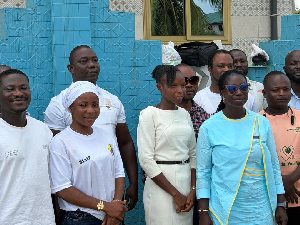 Journalists in Western region educated on Gender-based violence


Entertainment