Display optionsMobile website
PreviousHeadlines United KingdomNext


Lord Black: the Tory peer at the heart of media's biggest battle
The 'extremely efficient' Lord Black is one of those attempting to frustrate parliament's plans for press regulationThose who might think that the era of the press baron is over haven't heard of Lord Black. He may not be a household name but the Conservative peer, director of the company behind the Daily Telegraph and consummate insider is the éminence grise for large sections of the industry, orchestrating an audacious attempt to frustrate parliament's plans for press regulation with a rival scheme endorsed by the country's five largest newspaper groups.Not to be confused with the former owner of the Daily Telegraph, Guy Black has been at the heart of a Conservative-press nexus for the best part of two decades. For the most part, it has given him intimate access into the top tier of society, not least at the first official engagement of Prince Charles, Camilla Parker-Bowles and Prince William.The occasion was a celebration of the 10th anniversary of the now discredited Press Complaints Commission, where Black was the director back in 2001. At the time, Camilla's companionship of the heir to the throne was still a matter of controversy, but like a debutante she allowed herself to be formally introduced to a 600-strong party that included journalists, cabinet ministers, celebrities such as Kylie Minogue, Sir Paul McCartney and Sir Richard Branson and his family.For Black and his partner Mark Bolland – the press secretary to the Prince of Wales – it was a crowning glory, an elegant confluence of both their interests to brighten up a dark February night in Somerset House. It demonstrated that Buckingham Palace could publicly celebrate Prince Charles's romantic life and make it acceptable to a public still mourning Diana.For critics though, the party was nothing but a "tacky showbiz event" denounced by the Daily Telegraph as "a frothy Hello!-type party for tabloid celebs … and cheesy stars such as Carol Vorderman and Richard and Judy."But the then-Telegraph editor Charles Moore was not a fan of either Black or Bolland and the soft power the couple wielded through their network of friends in the tabloid press, including Rebekah Brooks, then-editor of the News of the World and her then-boyfriend EastEnders star Ross Kemp, with whom the couple had holidayed.Twelve years on, fate has gone full circle. Moore is long gone from the paper, and sitting in an office adjacent to the chief executive of the expanded Telegraph Media Group is one Lord Black, executive director reporting to the chief executive Murdoch MacLennan, the former managing director of Daily Mail publisher Associated Newspapers.Brooks, facing phone-hacking and corrupt payments trials, may have moved out of the trade, but Black has moved on. He also has the ear of Paul Dacre, the editor of the Daily Mail, arguably the most powerful figure in the industry. Insiders at the paper say he always takes Black's calls and was one of few (along with Brooks and MacLennan) to be invited to his and Bolland's civil partnership ceremony. News International is also happy to follow his lead.He is seen as the invisible hand behind the prime minister's decision to delay previously agreed plans with Labour, Lib Dems and Hacked Off and consider the 11th-hour alternative put forward by the press. Even critics of his – and the rival royal charter – will freely admit that he is both sharp and shrewd. An executive at a competing newspaper group says: "You have to get up early to outsmart him."Few in newspapers will speak on the record about him, and criticism and praise come in equal measure. He is said by one of his friends to be one of the most "overtly political" animals in the business, "not in party-political sense" but in terms of networking, with his choice of guests at his civil ceremony – Dacre, MacLennan, Brooks – cited as evidence of his power-seeking sensibility.And the pressure on Black to deliver is enormous. He was almost jettisoned as the industry's unofficial ambassador last December in the wake of the publication of the Leveson report because, as the former director of the PCC, he was seen to represent the discredited system of the past. Even now his support base is not complete, which means he will either end up being the kingmaker or the deal-breaker – some left-leaning newspaper groups, most notably the Guardian are sceptical.Black, 48, was a local Conservative councillor in Essex, where he grew up and went on to work in the Conservative research department after graduating from Cambridge with a double first. In 1986, he became special adviser to John Wakeham, then energy secretary. Later he followed Wakeham, who then took him to the PCC.A brief stint working for Conservative party leader Michael Howard following his work at the PCC in the mid-noughties reportedly cured him of his ambition to be an MP, but it is his closeness to senior Tories that is said to have made him the perfect conduit for the press to No 10. After the 2005 election, he joined the Telegraph Media Group as executive director, a non-editorial role that essentially meant he was the newspaper group's chief lobbyist.Maintaining contacts was always a priority. His wedding party, held after the civil partnership ceremony in London, was held in the Cotswolds in 2006. It was a swanky affair attended by the great and good and a sprinkling of editors and PRs. Sir Michael Bishop, the former owner of airline BMI, arrived on a private helicopter. Eventually the networking was rewarded with a peerage in July 2010, just months after Cameron's election victory, sponsored by Wakeham and Lord Marland, a reward for years of service.Against such a background, the question is whether Black is the man to deliver a consensus across the normally warring Fleet Street elements.One newspaper executive says Black has enormous abilities to bring warring factions together into "a demilitarised zone" between tabloids and broadsheets. "He has this frictionless personality and seems to get on with people weirdly well. He is like Wakeham in that he is smooth and unperturbable."Lord Wakeham says Black has long been able to achieve consensus because of his long experience at the PCC, where broadsheets and tabloids were at loggerheads during their stint together between 1996 and 2003.His former boss is one of the few prepared to go on the record about Black, with whom he worked for 10 years. "There are lots of people poncing about saying things but they haven't the remotest chance of actually getting anything through," said Wakeham. The peer regards Black as "an extremely efficient operator" and a "great draughtsman".Critical in the interminable post-Leveson debate has been Black's ability to produce reform proposals in an attempt to head of Leveson both before and after publication. Only those who read the documents closely see that he is careful to protect his own position too.Parliament's royal charter for press regulation bans working peers from participating in the revamped system. But one clause in the press's royal charter for regulation insists on just the reverse.The confusion created by the emergence of a rival press charter has produced a growing belief that there will be some sort of negotiation to bring together the two documents. Which means, after 17 years at the heart of press regulation, it is quite likely there will be a job behind the scenes for this most connected peer to fill.Guy BlackPress regulationConservativesNewspapers & magazinesMedia lawLisa O'Carrollguardian.co.uk © 2013 Guardian News and Media Limited or its affiliated companies. All rights reserved. | Use of this content is subject to our Terms & Conditions | More Feeds    
(Fri, 24 May 2013 00:03:53 GMT)

London attack: police make two further arrests after Woolwich killing - live updates
• Victim identified as Lee Rigby• Cameron: it was attack on Britain and 'betrayal of Islam'• PM seems to say suspects were known to security services• Two men under arrest in hospital• Attack prompts fears of backlash against British Muslims• Share your photos, videos or storiesAlexandra ToppingPaul OwenMartin Williams    
(Thu, 23 May 2013 23:32:00 GMT)

Protect children from internet pornography, report demands
Report finds evidence of a high correlation between exposure to violent and sadistic images and behaviourChildren are exposed to violent and sadistic imagery which risks distorting their attitudes towards relationships and sex, according to the children's commissioner for England.A report released on Thursday by the commissioner's office found that children who watch pornography are more likely to develop sexually risky behaviour and become sexually active at a younger age.It called for urgent action to "develop children's resilience to pornography" after discovering that a significant number have access to sexually explicit images. It also called on the Department for Education to ensure all schools delivered effective relationship and sex education, including how to use the internet safely."We are living at a time when violent and sadistic imagery is readily available to very young children … even if they do not go searching for it, their friends may show it to them or they may stumble on it while using the internet," said the commissioner, Maggie Atkinson."For years we have applied age restrictions to films at the cinema but now we are permitting access to far more troubling imagery via the internet. It is a risky experiment to allow a generation of young people to be raised on a diet of pornography."The report, based on a review of academic research, also found that pornography could influence children's sexual attitudes, foster a negative attitude towards relationships and lead them to engage in risky behaviours such as unprotected anal sex, sex at a younger age and the use of alcohol and drugs during sex.Sue Berelowitz, the deputy children's commissioner, said compulsory education was the only way to ensure children were guarded "against the possible impact of pornography on them and their relationships". She said: "As part of our inquiry into the sexual exploitation of children in gangs and groups we have seen that young perpetrators of sexual abuse describe their activity as 'like having been in a porn film'. This report provides the evidence to support there being a high correlation between exposure to pornography and it influencing children's behaviour and attitudes."Miranda Horvath, senior lecturer at Middlesex University, which led the review of academic evidence, said: "When pornography is discussed, it is often between groups of people with polarised moral views on the subject. Rather than adopting a particular ideological stance, this report uses evidence-based research to draw its conclusions and further the debate."The report's recommendations echo calls made by the End Violence Against Women coalition to make sex and relationships education compulsory in secondary schools. A recent survey by the National Association of Head Teachers found many parents believe schools should teach about the dangers of pornography as soon as children are old enough to use the internet.Sex educationPornographyInternetSchoolsAlexandra Toppingguardian.co.uk © 2013 Guardian News and Media Limited or its affiliated companies. All rights reserved. | Use of this content is subject to our Terms & Conditions | More Feeds    
(Thu, 23 May 2013 23:08:24 GMT)

Rochdale child sex abuse case: council apologises for failings
Report says culture of complacency within the local authority allowed paedophile gangs to prey on girlsRochdale borough council has apologised for letting down victims of child sexual exploitation after a damning report laid bare a catalogue of failures and a culture of complacency within the authority that allowed paedophile gangs to prey on the area's most vulnerable girls.The independent report found that the council's former chief executive Roger Ellis "did not appear to be interested in children's social care issues" and said there was no evidence that he had any intention of investigating the events that led to the jailing of nine men in May last year for offences including trafficking, rape and sexual assault.Ellis, who stepped down while the court case was ongoing, presided over a council with "a lack of consistent senior leadership, or a lack of vision and direction in relation to child sexual exploitation (CSE)", according to the report's author, independent consultant Anna Klonowski.Frontline staff "did not know what to do about CSE and how to deal with it". Furthermore, the 135-page report stated that social workers within the service "did not have a working knowledge of effective risk assessment".Ellis's successor as chief executive, Jim Taylor, said: "It is clear from this review that some children were let down by Rochdale council. On behalf of the council, I am deeply sorry these young people did not get the care and support they deserved."We must never forget that the sexual exploitation of children is an appalling crime carried out by the worst kind of criminals. But keeping children safe from harm is the most important thing a local authority does, and we accept the conclusions and recommendations in the report."This review paints a poor picture of the way elements of Rochdale council has previously been run. Hard-working, dedicated staff were also let down by some senior managers who appear to have shown no leadership and taken no responsibility. I am absolutely determined to ensure these mistakes are never repeated."The report makes 16 recommendations, including that the council review the ways it suspends and/or revokes licences for taxi drivers and fast food establishments, helping to disrupt the environments in which the 2012 trial found that the abusers operated.Klonowski also urged Taylor to ensure that any necessary disciplinary investigations against individuals relating to CSE be finalised and the "appropriate actions" taken.Rochdale's MP, Simon Danczuk, said it was wrong that senior officers such as Ellis had been allowed to escape disciplinary action by taking early retirement and called for systems to be put in place that would allow their pension funds to be clawed back."This report shows that there were alarm bells going off all over the place and they were ignored," he said. "Senior officers turned a blind eye to child abuse and didn't want to know. The perpetrators of these terrible crimes and some senior council officers have brought shame on our town."Danczuk also criticised what he called "appalling complacency" after it emerged that senior managers viewed CSE as being "no more or less prevalent in Rochdale than in other local authorities". At one point a senior officer – believed to be the former executive director for children's services, Terry Piggott – is quoted as saying that they viewed CSE "as part of the combined evils that many children faced".Danczuk said: "The council now needs to tell us what package Roger Ellis and other implicated senior officers left with. If Roger Ellis has one iota of decency, he will return this money."Jim Taylor has a very difficult job but he has decided to grasp the nettle that his predecessor ignored," he said. "He has inherited a completely dysfunctional children's services department and it will take time to turn it around."Ellis was unreachable for comment on Thursday night.Rochdale child sex ringCrimeChild protectionChildrenSocial careMark Smithguardian.co.uk © 2013 Guardian News and Media Limited or its affiliated companies. All rights reserved. | Use of this content is subject to our Terms & Conditions | More Feeds    
(Thu, 23 May 2013 23:03:02 GMT)

Council tax benefit cuts leading to 'more bailiff visits' for poor households
Citizens Advice says there has been a big rise in the number of people using its services following introduction of new schemeIncreasing numbers of low incomes households could be at the mercy of aggressive bailiffs because of recent cuts in council tax benefits, according to Citizens Advice.Council tax benefit was axed in April 2013 and replaced by a localised scheme, council tax support. The new scheme has 10% less government funding than the old, national scheme, and has meant some councils have started to make savings by reducing the number of people entitled to the benefit, or have cut the amount of benefit people receive.Council tax collection is already a lucrative business for bailiffs. In the year to March 2013, Citizens Advice bureaux in England and Wales helped with 60,652 problems to do with bailiffs; a third of these were for council tax debts, and 161,564 problems with council tax arrears.But the latest changes to the benefit have already led to a substantial leap in the number of people visiting Citizens Advice worried about council tax, it said. It said it has also seen a trebling of the number of people seeking online advice about how to deal with bailiffs in the year to April."We're concerned that changes to council tax benefit will mean more people will end up in debt because they can't pay their bill and have the bailiff knocking at their door," said Citizens Advice chief executive Gillian Guy. "Bailiffs often overstate their powers, deliberately frighten debtors and charge extortionate fees. We want councils to help people get on top of their council tax debts so the use of bailiffs is no longer necessary."Raymond Merry and his wife Susan recently found themselves at the sharp end of bailiff's practice. They fell a month behind on their council tax payments after both being taken ill in December and then paid their January bill two days late. "The next thing I knew I had a note pushed under my door by a bailiff who was sitting in a van outside," said Mr Merry. "He tried to walk in but I stopped him. He told me we owed him £300 – £107 was our debt and the rest in fees to him."The Merrys then paid off their arrears but the bailiffs kept coming round. "My wife was very worried and we felt threatened," said Mr Merry. "In the end, after we had told them numerous times that we had been to Citizens Advice and that we had paid off our arrears, they stopped coming round."Recent figures released by the Money Advice Trust also show a sharp, long-term trend in calls to its National Debtline service for help with council tax arrears, with one-fifth of the calls made to the service in 2012 asking for help for this type of debt. In the past five years, calls for help with council tax have increased 40%. The charity estimates this rise is partly down to the increasing use of bailiffs to collect debts owed to local authorities.Recent changes to legislation have been designed to reign in bailiff's powers, although debt charities argue they don't go far enough. The safeguards, introduced by the Ministry of Justice, will prevent bailiffs from: visiting a property outside the hours of 6am to 9pm; using force against people who owe money; fixing their own enforcement fees – the government is introducing a set fee structure designed "to end excessive and multiple fees".In August 2012 Citizens Advice analysed over 400 bailiff problems and found two in five bailiffs threatened the use of force to gain access to a property and one in four threatened to take items, such as clothing or work tools, that are banned from removal by debt collectors.Council taxBorrowing & debtTaxFamily financesLisa Bachelorguardian.co.uk © 2013 Guardian News and Media Limited or its affiliated companies. All rights reserved. | Use of this content is subject to our Terms & Conditions | More Feeds    
(Thu, 23 May 2013 23:03:01 GMT)

Phone-hacking victims reject newspapers' charter proposal
Culture secretary Maria Miller has been urged not to permit the press industry to 'write its own rulebook'Some of the most prominent victims of phone-hacking have written to the culture secretary, Maria Miller, urging her to reject the royal charter proposed by the press industry, saying that it is unacceptable for "those responsible for the damage to our lives and the lives of others [to] seek to shrug off responsibility and once again write their own rulebook".Miller is holding a consultation on whether the press industry's royal charter should be considered formally first by the Privy Council as opposed to one initially drawn up by the government with the support of Labour. The consultation ends this week, and government departments, as well as the Privy Council secretariat, will now take a further two weeks to decide its next step. Miller now has to decide if the industry's royal charter meets the criteria.The Press Standards Board of Finance (PressBof) petitioned the Privy Council with its version of the charter on 30 April, and has made some adjustments to its proposals partly in a bid to win over the Financial Times, Independent and Guardian.In their letter, some of the most prominent victims of press misconduct including J K Rowling, Gerry and Kate McCann, and Sheryl Gascoigne say they object to the draft Royal Charter drawn up by the PressBof on behalf of the newspapers, saying "it demonstrates once again the press industry thinks it is above the law".They also claim it lacks any democratic legitimacy, pointing out the Leveson-compliant royal charter for self-regulation by the press has the backing of the main political parties. "We were subject to intrusion, bullying, harassment, intimidation, libel and other forms of abuse by some newspapers, and they were allowed to get away with it for a very long time because of the lax, self-regulatory system in place."They add that the prime minister had said he wanted the new system of regulation to enjoy the support of the victims, citing David Cameron's evidence to Leveson on 14 June that "the test of the system is: is it going to provide proper protection to ordinary families who… get caught up in these media maelstroms and get completely mistreated?"In their letter the victims claim: "There is no legitimate reason for the industry to be given a veto on a system which the public so urgently needs and which has been fairly and reasonably designed."They add the initiative is "an attempt by a small number of newspaper proprietors to continue to run the system for their own ends, claiming it has been led by Associated Newspapers, News International and the Telegraph Group, who have for many years dominated the discredited system of regulation run by the PCC".The victims also claim the PressBoF Charter "dilutes one of … Leveson's core recommendations, the creation of a cheap arbitration panel to resolve disputes and save parties the burden of legal costs".The letter states the "PressBof charter does not make any provision for directing (or even requiring) apologies at all … this would enable newspapers to continue burying … apologies in the back of a newspaper, having defamed an innocent person on the front page."Press regulationMaria MillerNewspapers & magazinesJudicial committee of the privy councilLeveson inquiryPatrick Wintourguardian.co.uk © 2013 Guardian News and Media Limited or its affiliated companies. All rights reserved. | Use of this content is subject to our Terms & Conditions | More Feeds    
(Thu, 23 May 2013 23:01:07 GMT)

Carbon monoxide killed mother and daughter on Lake Windermere boat
Fumes from a generator spread into the cabin where Kelly Webster, 36, and daughter Laura Thornton, 10, were asleepA mother and her 10-year-old daughter died after inhaling carbon monoxide fumes as they slept on a moored motor cruiser on Lake Windermere, marine accident investigators have confirmed.Fumes from a generator, whose improvised exhaust and silencer system had become detached, had spread into the cabin where Kelly Webster, 36, and daughter Laura Thornton, who were on an Easter boating holiday, were asleep. The boat belonged to Matthew Eteson, who was Webster's partner, 39, who was on board but survived the incident."The boat's carbon monoxide sensor system did not alarm because it was not connected to a power supply," said an interim report by the Marine Accident Investigation Branch (MAIB).The MAIB's report said: "A bank holiday weekend on board an 11-year-old Bayliner 285 motor cruiser ended tragically when a mother and her 10-year-old daughter died. Initial findings indicate the deceased were poisoned by carbon monoxide."It went on: "A 'suitcase'-type, portable, petrol-driven generator had been installed in the motor cruiser's engine bay to supply the boat with 240V power. The generator had been fitted with an improvised exhaust and silencer system which had become detached from both the generator and the outlet on the vessel's side. As a result, the generator's exhaust fumes filled the engine bay and spread through gaps in an internal bulkhead into the aft cabin where the mother and daughter were asleep."When the owner of the boat awoke in the boat's forward cabin, he was suffering from carbon monoxide poisoning, but was able to raise the alarm. The mother and daughter could not be revived."The boat's carbon monoxide sensor system did not alarm because it was not connected to a power supply."The MAIB said the incident raised a number of safety issues. The bulletin said portable air-cooled petrol generators were readily available and inexpensive, but were usually intended for use in the open air.It added that "the use or permanent installation of these engines on boats, particularly in enclosed spaces or below decks, increases the risk of carbon monoxide poisoning".The bulletin said it was essential that engine exhaust systems were fitted by qualified engineers and maintained to direct poisonous fumes outside the vessel clear of ventilation intakes and accommodation spaces.The MAIB also warned boaters to be vigilant and recognise the signs of carbon monoxide poisoning. It added that the correct positioning and the regular testing of carbon monoxide sensors was essential. A full MAIB report into the incident will follow later.guardian.co.uk © 2013 Guardian News and Media Limited or its affiliated companies. All rights reserved. | Use of this content is subject to our Terms & Conditions | More Feeds    
(Thu, 23 May 2013 23:01:06 GMT)

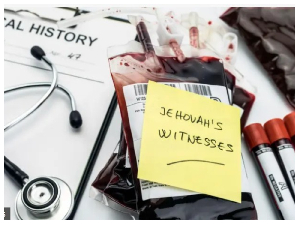
Permanent blood donation clinics 'may be more effective than mobile units'
Officials say fixed sites can offer Wi-Fi, making it easier to attract young donors, while travelling units may not be value for moneyThe tradition of volunteers going to the village hall or community centre to give blood may become less common, with more permanent clinics, complete with free Wi-Fi and bedside iPod docks, attracting a new cohort of younger donors, experts have said.As the blood service for England and north Wales examines whether it should reduce the minimum time between donations, a senior official has also questioned whether the sending of mobile units to rural areas always represents value for money.Lorna Williamson of NHS Blood and Transplant (NHSBT) and Dana Devine of the Canadian Blood Services discuss ways of increasing blood supply in the Lancet medical journal as the world's richer countries look at ways of ensuring they have enough donors as their populations age.Now email, text messaging, Facebook, Twitter, Spotify and interactive websites are commonplace, they say, online discussion boards, appointments and news sections could increase donor loyalty."With further development, this approach could also allow donors to complete health-check questionnaires online at home, avoiding a wasted journey if they are ineligible to donate," they say.Although travelling long distances to collect donations might be socially desirable, it can be expensive to cart kit around the country, Williamson said."Blood services need to examine whether blood collection efforts can continue to be spread thinly, or should be concentrated on areas where more people are likely to donate … Blood collection in village halls and local schools is possible, but limits what can be done to improve the donor experience. Fixed donor sites potentially offer more digital-age facilities, such as free Wi-Fi and iPod docks at each bed."NHSBT already has 25 permanent centres, mainly for donating platelets – blood components vital for patients undergoing chemotherapy or organ transplantation or who have severe bleeding or blood disorders. The process requires more heavy equipment than so-called "whole blood" donation.Donation practices have already changed radically in the 50 years since Tony Hancock's famous blood donor sketch. Volunteers rest in a semi-sitting position on equipment more resembling a dentist's chair than a bed. Yet more than 90% of the near 2m "whole blood" donations from 1.6 million donors each year are still collected outside fixed sites, even if use of "bloodmobiles" visiting large employers or business parks, with donation happening in the vehicle, is less common than it used to be.Only 4% of the population donates blood and only about 15% of those are between 17 and 24. The upper age limit for donation has been scrapped, but Williamson, NHSBT's medical and research director, said attracting more young blood donors was vital. "We expect to see an increase in demand for blood over the next 10 years as a result of an ageing population requiring more complex procedures, such as joint replacements and cancer therapies."Attracting younger blood donors for the future is key, and we are doing a lot of work to modernise and attract such donors, for example, by developing mobile applications and making it easier for donors to interact with us online."Williamson said rural collections would probably continue but might happen less often and last for longer.NHSBT and scientists at Oxford and Cambridge universities are already conducting research involving up to 50,000 donors in what they say is the first study of its kind to see if the length of time between donations can be tailored depending on age, weight, diet and other factors. In England and Wales, the minimum period is 12 weeks for men and 16 for women, but in Scotland it is 16 weeks for both sexes. In other countries, it is as low as eight weeks. Donating blood can lower iron levels.NHSHealthJames Meikleguardian.co.uk © 2013 Guardian News and Media Limited or its affiliated companies. All rights reserved. | Use of this content is subject to our Terms & Conditions | More Feeds    
(Thu, 23 May 2013 23:01:02 GMT)

British fraud suspect found hanged in French jail
John Steele, 38, was found by prison guards hanging in his cell on Tuesday, four days after being remanded in custodyA Briton arrested on suspicion of organised fraud has been found hanged in a French jail. John Steele, 38, was found by prison guards hanging in his cell on Tuesday, four days after he was remanded in custody.Steele, who had lived near Paris for some years, was believed to be behind a scheme which took more than £1 million in loans from French banks.A Foreign Office spokesman said: "We are aware of the death of a British national in France on 21 May and we stand ready to provide consular assistance."FranceEuropeCrimeguardian.co.uk © 2013 Guardian News and Media Limited or its affiliated companies. All rights reserved. | Use of this content is subject to our Terms & Conditions | More Feeds    
(Thu, 23 May 2013 22:31:31 GMT)

Suspect's journey from schoolboy football to phonejacking and jihad
Those who knew Michael Adebolajo recall his typical London childhood, before his student days saw persue the path to jihadThe mother of one of the suspects in the murder of British soldier Lee Rigby moved her family out of London in an attempt to remove him from the influence of a gang.But Michael Adebolajo returned to the capital to go to university and it was while he was a student that he appears to have set foot on the path that took him from being a schoolboy to an alleged extremist intent on jihad. His tutor, it is claimed, was Omar Bakri Mohammed, leader of the now banned al-Muhajiroun."He was on our ideological wavelength," said Anjem Choudary, a senior figure in the organisation. Adebolajo, whose family are Christians, sealed his conversion to Islam by taking the name Mujaahid – meaning one who engages in jihad.The 28-year-old was a regular at the al-Muhajiroun stall outside the HSBC branch on Woolwich high street, handing out extremist literature, and one witness said he was recently seen outside Plumstead community centre encouraging an audience to go to Syria to fight.For the last eight years his activities have been such that he featured in several counter-terrorist investigations, always as a peripheral figure and not the central subject of the inquiry. Sources said there was nothing in his activities which indicated that he might carry out such an attack."You would see them there every week," Atma Singh, a Sikh leader said, speaking on Thursday outside Woolwich's neo-classical Victorian town hall. "They were there over a period of several years, handing out radical literature. They were about eight to 10 of them."They stopped coming at some point but I was quite annoyed that they were able to do this for so long. Nobody tried to shut the stall down."Six addresses were searched yesterday, three in south-east London, one in east London, one in north London and one in Lincolnshire. The impact of the investigation on Adebolajo's family was seen in searches at London addresses where relatives lived and 150 miles away in Saxilby, Lincolnshire, at the semi-detached modern home where his mother, Tina, had moved her family in an attempt to remove her son from bad influences.Adebolajo himself was being held under armed guard in hospital, where counter-terrorist police were waiting to interview him over the hacking to death of 25-year-old Rigby.The second suspect – believed to be a 22-year-old British man – was being held in a different hospital, also under armed guard. One of the addresses searched in south-east London was believed to be his home; neighbours said they had recognised the man as the suspect, that he lived with his mother and that he disappeared for a period and when he returned had converted to Islam and appeared more "distant". It is not known whether the second suspect was linked to al-Muhajiroun – Choudary said he did not know him.Adebolajo attended meetings and demonstrations run by al-Muhajiroun for at least five years, from around 2005 to 2011, where he heard an interpretation of Islam preached by Bakri Mohammed, which many Muslims would consider extreme. Bakri Mohammed told the Guardian that he had known Adebolajo, who had attended many meetings. These included al-Muhajiroun events at community centres and a mosque in the Woolwich area.Bakri Mohammed, now banned from Britain, said as a new convert Adebolajo received special attention: "In 2004 Muslims were feeling a lot of pressures from new laws and from Iraq."Adebolajo asked the group when violence may be justified. "He asked these type of questions, like many others," said Bakri Mohammed: "He was asking what to do, he was most likely affected by the situation in Iraq and Afghanistan." Adebolajo appears to have later attended events organised by successor groups to al-Muhajiroun until around 2011.These interests contrast with the accounts of the normal boy that Adebolajo was described as in his earlier life. Born in Lambeth on 10 December 1984 to a family of Nigerian heritage, he grew up in Romford, played football and was said to be a joker within a large group of friends.His family lived in Eastern Avenue in the town and attended the local church. He has a sister, Blessing, and a brother, Jeremiah.Both boys went to Marshalls Park school in Romford until at 16 Michael moved to Havering sixth form college. He later attended Greenwich University, where he lived in student accommodation in 2004 and 2005.Friends at Marshalls Park school talked of how he was an ordinary student until he became involved with a local gang and began "jacking" phones and carrying a knife, they said.Louise, 26 from Romford, said she knew Adebolajo and Jeremiah from Marshalls Park, where Michael was known as "Naan" and his brother "Jel"."Naan was two years older than us … Jel was a nice boy. Quite quiet," she said. "We were all really close because there was quite a few who used to hang around together."She said Jeremiah was "obsessed with the Harry Potter books". She described Michael as clever, popular and extremely funny. "He was a down-to-earth, nice guy, there was nothing out of the ordinary, nothing … [that would make you] have thought, obviously this would have happened," she said.Louise, who did not want to give her full name, said Adebolajo's mother was strict and dressed in traditional West African clothes to go to church most Sundays. "They were strong on their beliefs."Louise said that as he headed into his final years at Marshalls Park and then Havering sixth form, Adebolajo became involved with a criminal gang."As he got older he started mixing with other people from outside [the school]."We used to go around the house and there used to be 20 black guys and they would walk around the streets … they were stealing people's phones and that and they had knives."She said Adebolajo would carry a knife, not just for protection but as part of his criminal activities.It was then that his parents decided to get the boys out of Romford. "His mum and dad clocked on to that and they moved him away."No one has spoke to them since they moved because his mum wanted to get them away from everyone."Other friends from Marshalls Park conversed on social media to express their shock that Adebolajo was at the centre of a counter-terrorist investigation."We left year 2001," one said. "And he was always a good guy at school, do anything for anyone ."Another added: "They used to live down the eastern avenue two minutes from marshals, they had a garage on the side of the house and Jel had a little telly an that in there and loads of people uses to go round there, from what I remember they were nice boys."A former neighbour of the family remembered them as friendly and welcoming churchgoers.The man, who asked not to be named, said his wife used to give Adebolajo's mother – whom he remembered as working for social services – a lift to church. "They were very pleasant, a very ordinary normal family," he said.However Graham Silverton, 63, who has lived in the street for 25 years, said that when Adebolajo was a teenager he was unruly and would get into trouble. He claimed one of the neighbours' children, a teenage girl, had once gone to the Adebolajos' door to retrieve a ball kicked into their garden and was insulted and punched by Michael.Kemi Ibrahim-Adeoti, 45, described Adebolajo as a typical teenager growing up. She said: "Michael was older than my son, I knew him from when he was about 17. He used to come around and play with my son and I didn't have any problems with him coming around."Michael was just a typical teenager, you know, he would rebel against his parents once or twice that I know of."In 2004 Michael's mother, Tina, moved her son away to Lincoln but he later returned to the capital, where he became a student at Greenwich University.Addresses in Greenwich where he lived as a student were searched by counter terrorist police on Thursday, as was the home where Adebolajo's sister lived in Romford.Another address in Greenwich – thought to be that of the second suspect – was also sealed off and searched early on Thursday. The small flat is on the fourth floor of a block, Macey House, about four miles from the site of Wednesday's attack . It is registered as the home of a 22-year-old British man, also of Nigerian descent, who lived in the property with his mother.Neighbours at the scene said he lived there with his mother and went to a local college – although this has not been confirmed by police.One neighbour, Madeleine Edwards, said the man at the flat had been involved in gangs when he was younger. She said he had left the property for about a year after giving evidence in a murder trial."His mother said he had to disappear," said Edwards.When he came back Edwards had converted to Islam, she said, and had become "distant"."He could see my disdain at the direction he had gone in," she said.Another neighbour, Jonathan Ackworth, 42, said: "I was so shocked when I saw his picture on the television … I used to see him coming and going and would say hello – he seemed perfectly pleasant."Two uniformed officers stood guard outside the top-floor flat as plainclothes officers and forensics detectives went in and out of the property yesterday.Many neighbours in the block – which sits close to the banks of the Thames – were visibly shaken. One said she did not want to talk because she feared reprisals from rightwing groups."This is a good block and people can't quite believe this has happened right on our doorstep – a lot of the neighbours are in tears today," said Ackworth.One woman, who did not want to be named, said officers had knocked on the door and asked if they could use her flat to watch the property, which was raided several hours later.Woolwich attackCrimeLondonPeter WalkerShiv MalikMatthew TaylorSandra LavilleVikram DoddBen QuinnLuke Hardingguardian.co.uk © 2013 Guardian News and Media Limited or its affiliated companies. All rights reserved. | Use of this content is subject to our Terms & Conditions | More Feeds    
(Thu, 23 May 2013 22:19:22 GMT)

Hugh Muir's diary: Buckles has bolted but still the millions roll in for G4S
Another fine mess. Another big contract• There's no way back from the bungling of a £284m contract with the government, one would have thought. And certainly the future looks less than bright for G4S's departing chief executive Nick Buckles, who presided over the Olympic security fiasco. But in the privatisation-crazed 21st century, one never says never. Last week while G4S was, not very reassuringly, replacing the aptly named Buckles with a man called Ashley Almanza – who had joined the company only three weeks before – Barry Sheerman MP was asking a question in parliament. How much was the Foreign Office paying G4S? Quite a lot, it turns out. "The Foreign and Commonwealth Office (FCO) has over 40 contracts with G4S globally," replied the minister David Lidington. "For the current financial year, these are valued at £36m approximately per annum. The highest value centrally managed contracts are for the provision of armed static and mobile security services in Afghanistan (£25m this financial year), guarding services in the UK (£4.5m per annum) and armed mobile security services in Somalia (over £1m per annum)." In total, £112m since 2009. That's just from one department. So Nick passes on but everything else stays much the same.• Unexpected repercussions flow from Wednesday's dreadful terrorist atrocity in Woolwich. Already, those who yearn for even more burdensome anti-terrorism legislation see opportunity. Trouble too for the energy company EDF, for its reputation means everything. As the far-right English Defence League (EDL) descended on Woolwich, the utility company was forced to defend itself on social media. "If you are referring to Woolwich, the protest was from the English Defence League (EDL), not EDF Energy," it said. With revenues of £8.4bn last year, EDF has little to protest about anyway.• More rumblings among Green activists. On Wednesday we flagged up the controversy over the party's "flawed" selection process to find MEPs in London. Today, the issue is population. The party policy says: "There is a limit to the level of ecological impact the Earth can sustain. The number of people on the planet, their levels of consumption and their local and global impacts are key factors determining how far the Earth's ability to renew its resources and to support all life is compromised. Even within this limit, high rates of population growth, as well as local depopulation can have a damaging effect on sustainability, equity and justice." But what has many members distressed and perplexed is this email fired off by deputy leader Will Duckworth. "I personally believe that the Earth could comfortably accommodate twice the current population if we all lead a more sustainable lifestyle," said Duckworth. "I feel that undue concentration on numbers of people excuses the greedy western lifestyles which are dozens of times more destructive than others. When you look at the land in this country, for instance, devoted to grass and non-productive trees it illustrates that we are not trying to produce our own food in this country." Few Greens are willing to contemplate a doubling of the Earth's population, but then the deputy leader leads by example. And as members tend to like trees – even the "non-productive" ones – one fears trouble ahead.• Much to admire in a lecture at Cambridge University by the celebrated philosopher Judith Butler, whose influential work Gender Trouble challenged and reshaped society's view of gender. The gender issue follows her everywhere. She recently stayed in a hotel, she said. There was a knock on the door. "I'm here to check the minibar, madam, mister, madam, mister, madam, mister," said the man with the trolley. "I thought about putting him out of his misery," she told students. "But instead I said 'I'm quite sure it's not necessary to designate my gender for you to check the mini-bar'." One assumes he was out of there quite quickly.• Finally, why the top TV anchor never jumps to conclusions. "I guess, you gotta thank the Lord, right?" said CNN's Wolf Blitzer, empathising with a survivor of the Oklahoma tornado. "Do you thank the Lord?" "I'm actually an atheist," she replied. God Bless America. God bless Wolf.Twitter: @hugh_muirHugh Muirguardian.co.uk © 2013 Guardian News and Media Limited or its affiliated companies. All rights reserved. | Use of this content is subject to our Terms & Conditions | More Feeds    
(Thu, 23 May 2013 22:15:01 GMT)

Steve Bell on David Cameron's response to the Woolwich killing – cartoon
David Cameron refuses to make knee-jerk response to killing of Lee Rigby in WoolwichSteve Bell    
(Thu, 23 May 2013 21:31:56 GMT)

Woolwich attack highlights power of mobile technology as a news source
Breaking news is no longer the preserve of established broadcasters, thanks to the camera phone and social mediaA man covered in the blood of his recent victim, still holding the weapons, explains to a passer-by with a camera phone the motives for his appalling attack. Peppered with political messages and carrying a clumsy apology to "women who had to see that", the bloodied man is not enraged that his macabre and twisted actions have been filmed, he is gratified. This is a 21st century terrorist "press" conference, conducted on a pavement in Woolwich in the middle of a Wednesday afternoon.The video obtained by ITV News, but evidently not actually shot by them, is uploaded and disseminated to the globe, through YouTube, Twitter accounts, Facebook pages, on emailed links, on reddit, Tumblr. Meanwhile on Twitter another eyewitness, rapper "Boya Dee", whose timeline of mundane tweets previously focused on cheesy jokes, Arsenal and the appeal of Mila Kunis, was able to give a firsthand, dramatic and colloquial account of what he saw. It did not need a reporter or policeman to relay what he witnessed: "The two black bredas run this white guy over then hop out the car and start chopping mans head off with machete!!"Attacks by extremists which include filmed beheadings and executions are nothing new. Islamic extreme terror groups in the Middle East and Chechnya have deployed the tactic of filming and disseminating shocking footage for well over a decade. Increasingly it is a tactic also seen in the narcotic wars of Mexico, with a series of gruesome and public murders, beheadings and disembowellings of those seeking to interfere with the narco trade. It is distressingly easy to find all of these images online.The speed of uploading images and video, the quality and length of video on camera phones, the ability to stream live events from a phone without a battery of attendant satellite trucks, and the frictionless sharing of all material through social recommendation transform our expectation and experience of news. We still know very little about the planning and motivation for the attacks in Woolwich, but we know the tools of recording and dissemination are leading us into a world of streamed events and atrocity which will find us, unfiltered, through the phones in our pockets.What this means in a commercial, political and cultural realm is unclear. News organisations, such as the Irish start-up Storyful, focus on the verification of non-mainstream footage – a kind of 21st century Associated Press. The major platforms for dissemination; YouTube, Facebook and Twitter, have tried hard to hold the line that they are neutral networks, but as their usage figures overtake those of mainstream media they too are forced to respond to difficult editorial and ethical problems thrown out by this hyper connectivity. Privately all organisations acknowledge that as the default news providers for the world, there has to be attention paid to both verification and filtering systems. Two months ago, Facebook removed gruesome footage of a beheading from its pages. It said it would be "re-evaluating" its content policy.Writing recently in the New Republic, legal scholar and columnist Jeffrey Rosen described semi-confidential meetings in Silicon Valley of a group he calls "the Deciders", effectively the legal and policy heads of social networks, who are trying to hash out a standard of free speech which can be applied to the open web. Rosen observes that the work in screening stretches to building complex algorithms, but that ultimately the broader interpretation of expression in accordance with US standards of free speech is likely to prevail. The challenges, though, of extreme acts of graphic terror are as much the problem now of these technology companies as they used to be of news and picture editors.The language of protest and shock have adapted themselves more quickly to the new technology platforms than any filtering mechanism or official media can keep up with. Whether it is the relatively benign topless ambushes of the Femen group of feminists, the handmade signs of Occupy Wall Street, or the hacking of Twitter accounts of the Syrian Electronic Army, protest can aggregate an international audience before the news anchor has brushed her hair. Terror has adopted the same path as we witnessed with the Boston bombings and now the butchering of a man in broad daylight on a south London street.The impact of events is as much in direct proportion to our ability to witness them vividly and instantaneously, with the filter of time and geography removed. When a fertiliser factory in the small town of West, Texas explodes, our understanding of the impact is delivered through an amateur camera phone video which is blown out of the owner's hand. Our understanding of the horror of the Boston marathon attack is relayed by a photo of a pale runner, his lower legs jagged and incomplete, being wheeled to an ambulance. It reaches the world before he reaches the operating theatre.When American Airlines flight 11, crashed into the World Trade Centre on September 11 2001, the precise moment of impact was captured by three people with video cameras: an artist in Brooklyn who was filming the Manhattan skyline for an installation project; a tourist who did not realise he had captured the first collision in the corner of a frame until months later; and a documentary maker filming firefighters.Only a dozen years ago, the largest act of instantaneous terror taking place in the world's most photographed city, was captured on video by three people. Now, even the most mundane setting can yield the most potent and graphic images, filmed in real time, and shot to the world in a second. The future of how those images are received and filtered relies as much on the ability of networks to decide and implement their own rules and norms as on any top down filtering or editing process.Woolwich attackSocial mediaMobile phonesCrimeLondonDigital mediaTelecomsTwitterInternetEmily Bellguardian.co.uk © 2013 Guardian News and Media Limited or its affiliated companies. All rights reserved. | Use of this content is subject to our Terms & Conditions | More Feeds    
(Thu, 23 May 2013 21:15:08 GMT)

Woolwich killing: a life lost – and more
The Woolwich attack was something pretty exceptional, an extraordinarily foul deed for which there are few, if any, precise precedentsSometimes the old labels are simply not adequate to a new situation. Heated arguments about how they apply can seem almost perversely beside the point. The horrific Woolwich killing of the unsuspecting soldier Lee Rigby this week is a good example. Was it a terrorist crime? The honest answer is: yes in some ways, no in others. Was it an "ordinary" knife crime? The answer is the same. Was it, perhaps, more like a hate crime? Same answer again. Did it require the UK state to go into crisis mode? Once more there are arguments both ways. Are politicians part of the problem or the solution? There are serious points to be made for and against. And the media? Likewise.In the end the labels are less important than an open-minded recognition of the facts and what they may imply. By any serious yardstick, the Woolwich attack was something pretty exceptional, an extraordinarily foul deed for which there are few, if any, precise precedents. The victim was unknown to his killers except as a soldier. That much is familiar from Northern Ireland. But what followed was something even the IRA would never do. The killers ran him down and carved him up in full view of onlookers. They were willing, even eager, to be filmed. When approached, they celebrated their attack and framed it with a political justification.But the disjunction did not end there. With incredible coolness, a bystanding stranger reasoned with them to surrender. Within 24 hours, her words – "You're going to lose. It's only you versus many" – were being repeated by David Cameron in Downing Street and may already be on a bestselling T-shirt. Even the prime minister's reluctance to threaten new anti-terrorist legislation was something new. In short, there was nothing run-of-the-mill about the Woolwich killing. It is ridiculous and even perverse to insist on squeezing this event into already existing categories.This is not in any way to say that Woolwich teaches no wider lessons, because it certainly does. One of these lessons is that such a crime can easily be self-started at home, not plotted by some established network in a bomb-making school in Pakistan. That does not mean such crimes are about to become common. But it does mean that they are relatively easy to plan – and relatively hard to detect.Second, the Woolwich crime makes a fresh and dangerous new tear in the fabric of community. Most people, Muslim or not, have not the slightest intention of killing random victims of any kind anywhere. But the ease of obtaining a car or a knife, and the ordinariness of the killers' appearance, is bound to create some unease that something similar may happen somewhere else – as sadly it may. That is why the political response was important and, in principle, good. Mr Cameron's message of calm, solidarity and inclusiveness was the right one. And so, as long as he sticks to it, was his rejection of kneejerk legislative responses.This was also a crime of the social media age. Any public act in the modern era will inevitably be filmed and broadcast. We can celebrate that – or we can regret it. But the pictures of a man with bloodstained hands, ranting in our living rooms about the slaughter of his victim, will be the abiding image of the Woolwich killing. A disturbing threshold feels to have been crossed, raising significant ethical questions for media providers and users alike. But in the era of modern phone technology it is impossible to stop it without threatening vital freedoms, any more than it was impossible to prevent Anders Breivik from saying his piece after he slaughtered dozens of young Norwegians two years ago.It is no more true that the Woolwich killing requires a wholesale change of public policy than that it requires no response at all. This was a truly revolting event. There was no justification for it. The responsibility lies solely with those who committed it. But there are lessons from such a deed for politics, religions, communities and individuals too. For this is an event that in some way diminishes all of us.CrimeWoolwich attackLondonguardian.co.uk © 2013 Guardian News and Media Limited or its affiliated companies. All rights reserved. | Use of this content is subject to our Terms & Conditions | More Feeds    
(Thu, 23 May 2013 21:04:26 GMT)

Government ready to hit football with bill to push through reforms
• Sports minister wants to accelerate change at FA and beyond• Game's response to governance failings has been inadequateThe government has issued a stark final warning to football, making it clear that it is already drawing up legislation in an effort to force the game into long overdue reforms, including becoming more diverse and involving fans in the running of clubs.In a letter to the culture, media and sport select committee, which published its initial report on the game's governance failings in July 2011 and then in January this year made clear its displeasure at football's inadequate response, the sports minister, Hugh Robertson, reveals he has obtained permission from the Parliamentary Counsel to draw up the draft bill.While successive sports ministers have attempted to threaten and cajole the Football Association and the game at large into action, Robertson is the first to begin working up a draft bill. The outgoing FA chairman, David Bernstein, forced to step down in July on account of his age, has recently expressed his own intense frustration at the slow pace of change."I share the select committee's frustration at the football authorities' slow progress in implementing long promised and much needed reforms," Robertson writes. There are, he says, "three key areas" where progress needs to be made urgently: a licensing system for clubs; "the introduction of a representative and balanced board" at the FA; and "improved supporter engagement at club level". Without "significant progress" by the start of next season, Robertson warned: "We should seek to introduce legislation as soon as practicably possible."The select committee, withering in its assessment of football's response to the original report, believed the game was too much in thrall to the influence of the Premier League. "Altogether ... they fail to address the fundamental issue that the FA should exercise responsibility for all issues of major significance to the game through its main board and council," it said.It also called for an overhaul of the FA Council, which is supposed to be the game's parliament but is frequently criticised for a lack of diversity, and concrete proposals for greater fan influence at every club. The FA Council has 118 members, many of whom have served for more than 20 years while two-thirds are aged 64 or over.While the Premier League and the Football League have made progress in introducing more effective financial controls and greater transparency, the government wants to see an over-arching licensing system with the FA as the backstop regulator.Whitehall sources stress that the legislation would not seek to exert government control over football but would seek to enable the transformation of the FA into a modern governing body. They point to the analogy of the BBC Trust, which replaced the outmoded BBC board of governors in the wake of the governance debate that followed the Hutton inquiry.Ironically, Greg Dyke – the former BBC director general forced out in the wake of the Hutton report – takes over as chairman of the FA in July. Robertson is expected to meet with him before he starts in an attempt to obtain assurances that he plans to follow a reforming agenda.Bernstein attempted to take a collegiate approach to reform and made some progress, securing the addition of two independent directors to the main board but hit the buffers when he attempted to put further changes before the FA Council.Robertson also urged the football authorities to provide more detail on how they planned to engage with supporters' groups and called for the process to be enshrined in any licensing system. He also reiterated the committee's call for a long-term financial settlement for Supporters Direct, the organisation that supports and co-ordinates the efforts of supporters' trusts."At the same time, I believe the football authorities should continue to consider ways to actively encourage and incentivise the inclusion of supporter representatives on the boards of clubs," Robertson said.Football politicsThe FAOwen Gibsonguardian.co.uk © 2013 Guardian News and Media Limited or its affiliated companies. All rights reserved. | Use of this content is subject to our Terms & Conditions | More Feeds    
(Thu, 23 May 2013 20:29:33 GMT)

Woolwich attack: MI5 knew of men suspected of killing Lee Rigby
• Security service assessed suspects but did not investigate• Victim Lee Rigby had served in the army for seven years• Police raid homes in London and Lincolnshire• Extremist cleric says he tutored suspectThe two suspects in the butchering to death of a British soldier had been known to the domestic security service MI5 and the police over an eight-year period, but had been assessed as peripheral figures and thus not subjected to a full-scale investigation, it has emerged .One of the two attackers was named as Michael Olumide Adebolajo, the man seen in dramatic video brandishing knives and justifying the attack as a strike against the west while his victim lay yards away bloodied and fatally wounded.Adebolajo, from a Nigerian churchgoing family who later converted to Islam, had complained of harassment by MI5 in the last three years after he came to the intelligence agency's attention.The admission came as the Ministry of Defence named the victim of the attack in Woolwich as Drummer Lee Rigby, a 25-year-old from Rochdale who had served in the army for seven years. Rigby, who had spent six months in Afghanistan in 2009, had a two-year-old son, and had been based in London since 2011.The suspects, shot by police shortly after the incident, remain in separate but unidentified hospitals, too badly injured to be questioned.Detectives investigating Rigby's death also arrested a 29-year-old man and woman on suspicion of conspiracy to murder the soldier, suggesting there may have been a wider conspiracy to carry out the attack. The 29-year-old woman was arrested at a flat in Greenwich, south-east London.Parliament's intelligence and security committee would examine the wider role of the police and MI5, David Cameron said on Thursday, an inquiry that is expected to address any lessons that may need to be learned after counterterrorism officials decided not to monitor the suspects.Speaking in Downing Street before a visit to Woolwich, Cameron said: "You would not expect me to comment on this when a criminal investigation is ongoing, but what I can say is this: as is the normal practice in these sorts of cases, the Independent Police Complaints Commission will be able to review the actions of the police, and the intelligence and security committee will be able to do the same for the wider agencies, but nothing should be done to get in the way of their absolutely vital work."There were some suggestions that one of the two men may have tried to visit Somalia; Whitehall sources did not deny reports that one of the suspects was stopped while trying to travel to the war-torn east African country. Somalia is feared by counterterrorism officials to be a training ground for violent jihadists.The extremist cleric Omar Bakri Mohammad, who has been expelled from Britain, told the Guardian he had tutored Adebolajo in Islam after he converted to the religion in 2003. He was the former leader of al-Muhajiroun, an organisation banned for professing extremist views. Mohammad described Adebolajo as a shy man who had been angered by the Iraq invasion, and who would ask questions about when violence was justified.Adebolajo had a Muslim name, Mujaahid, which means one who engages in jihad. He went to meetings of the now banned Islamist organisation from around 2004 to 2011, but stopped attending those meetings, and those of its successor organisations, two years ago.The soldier's murder is being treated as a terrorist incident. Thursday saw another meeting of the government crisis committee Cobra, chaired by Cameron. However, so far the national threat level from al-Qaida-inspired terrorism remains unchanged, suggesting that officials do not believe Britain faces a wave of similar attacks.The immediate focus is on the criminal investigation, which on Thursday saw detectives from Scotland Yard's counterterrorism command raid five addresses in London, and one in Lincolnshire that was the Adebolajo family home.Sources stressed that the investigation was at an early stage, but detectives are examining whether the arrested woman was in a relationship with one of the two men detained on Wednesday, and what the links are between the four people they currently have in custody. The arrests are a clear signal that counterterrorism detectives suspect the attackers may not have acted alone.Adebolajo's mother moved her family out of London to Lincolnshire in an attempt to remove him from the influence of a street gang. But Michael Adebolajo returned to the capital to go to university. The 28-year-old was a regular volunteer at the al-Muhajiroun stall outside HSBC bank on Woolwich High Street, handing out extremist literature. One witness said he had been recently seen outside Plumstead community centre encouraging an audience to go to Syria to fight.His family were churchgoing Christians of Nigerian heritage but he converted to Islam about 10 years ago and investigators are trying to establish how he became radicalised to the point that he may have committed violence.The murder led to condemnation from President Obama who said: "I condemn in the strongest terms the appalling attack against a British service member in Woolwich on May 22. The United States stands resolute with the United Kingdom, our ally and friend, against violent extremism and terror.There can be absolutely no justification for such acts, and our thoughts and prayers are with the family of the victim, the police and security services responding to this horrific act and the communities they serve, and the British people.Our special relationship with the United Kingdom is especially important during times of trial."Among British authorities there are fears of a violence and potential attempts by extremist groups such as the English Defence League to exploit the tragedy. In London police said they had deployed 1,200 extra officers amid fears of a backlash. Dozens of Islamophobic incidents were reported in the wake of the murder, including attacks on four mosques.Police tried to rebut claims of a delayed response saying they were first called to reports of a man being attacked in the street at 14.20. Four minutes later they were told by witnesses that one attacker had a gun, at which point, 14.24, officers in an armed response vehicle which patrols London's streets, were ordered to the scene.Five minutes later, at 14.29, the first unarmed officers arrived at the scene, and at 14.34 armed officers arrived and two of them opened fire, and a Taser was also fired.Woolwich attackCrimeLondonUK security and counter-terrorismVikram DoddNicholas WalkerNicholas WattNick HopkinsSandra Lavilleguardian.co.uk © 2013 Guardian News and Media Limited or its affiliated companies. All rights reserved. | Use of this content is subject to our Terms & Conditions | More Feeds    
(Thu, 23 May 2013 20:22:20 GMT)

Picture desk live: the best news pictures of the day
Our photo coverage of the day's events in the UK and around the world    
(Thu, 23 May 2013 20:11:00 GMT)

Letters: 'Orwellian' changes to legal aid provision
As a practising member of the criminal bar, I am horrified at the proposed changes to the provision of legal aid, currently undergoing a so called "consultation period" by the Ministry of Justice (Editorial, 22 May), albeit the justice minister refuses to meet the chairman of the Criminal Bar Association. It is clear that the truncated consultation period is no more than window dressing. Chris Grayling is disinterested in any contribution from the profession. It is beyond doubt that the tendering out of legal aid to private business will herald a decline in standards in a legal system that has been a model of justice for centuries. There is no provision whatsoever in the proposals to ensure standards are maintained when individuals are unable to choose their representation. Once in possession of a contract, a company's clients will be guaranteed, irrespective of the quality of service. The idea that this service would be properly provided by employees of a profit-driven company, whose lowest bid has rewarded them with the responsibility for the representation of citizens accused of crime by the state, is dubious. The prospect that the same company could be responsible for housing prisoners, transporting them, and representing them is, frankly, Orwellian.Rebecca HerbertEast Langton, Leicestershire• You report dissidents in Iran "have been denied adequate legal representation" (22 May). In the UK we are a long way from Iran's repressive regime, but the present government's proposals on reforming legal aid to allow Eddie Stobart and the like to turn a profit by supplying third-rate representation to people who are (to use Grayling's analysis) "too thick to know better", will have us catching up with the regime in Tehran in no time. Whatever one's view of defence lawyers, the importance of ensuring that only those proved to the satisfaction of their peers are found guilty, is a matter of social, democratic and constitutional importance to us all.Ben SummersLegal aid barrister, LondonLegal aidUK criminal justiceChris GraylingEddie Stobartguardian.co.uk © 2013 Guardian News and Media Limited or its affiliated companies. All rights reserved. | Use of this content is subject to our Terms & Conditions | More Feeds    
(Thu, 23 May 2013 20:00:02 GMT)

Letters: Woolwich, UK foreign policy and integration
The savage killing of a British soldier in Woolwich has to be condemned without reservation by all Muslims (Report, 23 May). This murder fills us with revulsion, and our heartfelt condolences are extended to the victim's family.Last week, the British Muslim community was in the spotlight with the conviction of a child sex abuse gang in Oxford (Report, 15 May). This week, two misguided Muslims – new converts to Islam – have brought further opprobrium to practising Muslims. This terrible scourge of child abuse and terrorism within some strains of British Islam is sadly reflective of the broader incapacity of the Muslim community to fully integrate with the general mainstream. British Muslims must disassociate themselves from all variants of imported religious fundamentalism so that far-right organisations cannot exploit burgeoning social tensions in the UK.However, there are underlying reasons behind the Woolwich brutality. There is a clear correlation between Tony Blair's illegal invasion of Iraq and the emergence of Muslim terrorism in the UK. Before the UK embarked upon non-UN sanctioned intervention in the Middle East, there was no Muslim violent extremism here. This in no way condones the despicable deeds of two opportunistic converts to Islamic fundamentalism, but Labour's former leaders must be held accountable for dragging this country into needless US-inspired foreign adventures. They are partly responsible for providing Muslim militants with their conveniently toxic propaganda. It is time that the UK addressed the roots of Islamic terrorism instead of focusing just on its contemptible results.Dr T HargeyImam, Oxford Muslim Congregation• Although it is too early to say whether the terrorists who killed the British soldier are nation-centric or al-Qaida-centric, there is no denying that lack of integration incubates both. Nation-centric groups (Kashmiri militants, Sikh separatists, etc) invoke religion as a mean to win public support, while al-Qaida-centric ones are driven by it. Both groups, however, kill innocent people to achieve their aim.Britain is home to a large number of religious minorities, some of which are more fully integrated than others. Those who find integration painful tend to find solace in political radicalisation. Unless Britain places integration at the centre of its immigration policies, it is difficult to see how such radicalisation of religious minorities can possibly be pre-empted.Randhir Singh BainsGants Hill, Essex• As a long-time reader of the Guardian I have appreciated your position as the moderate, well-informed and liberalist alternative to the excesses and ignorance of many other newspaper offerings. However I must complain about your front page (23 May). The headline, "You people will never be safe", may be an accurate quotation, it may be newsworthy and eyecatching, but it is also a shameful misuse of your influence in the current climate. You know the Islamophobia that is being used to justify hate crimes across the globe. This would have been an inappropriate front page for a tabloid; for the Guardian it is reprehensible. Read the comments it has prompted on social media networks – you have gravely offended your readers.Dr Samantha PeggSenior lecturer, Law School, Nottingham Trent University• Twenty years ago, also in south London, another man was stabbed to death for "what", rather than who he was. No media nor public outrage immediately followed, nor did the full weight of the state swing so dramatically into action – quite the opposite, in fact, as the Stephen Lawrence inquiry was years later to document. Moreover, on the day of the killing in Woolwich, Julie Bindel called for an inquiry into why victims of domestic violence – two women a week killed in England and Wales – are not getting sufficient protection. None of these cases are direct equivalents – but the differential responses to each of them are, sadly, all too telling about state, institutional and societal priorities. Steve TombsProfessor of criminology, Faculty of Social Sciences, the Open University• No amount of condemnation can hide the fact that in Woolwich the blood of the innocent was shed in the name of Allah. If Muslims want to live in the UK it is incumbent upon us to take responsibility for how the Qur'an is being interpreted and taught to British Muslims. Likewise, those of us who find it hard to reconcile with the British way of life have the choice of moving to the lands where sharia supposedly rules. But please, no more butchering of human beings in the name of Allah on British soil.MA QaviLondon• A soldier is murdered and our leaders react with "keep calm and carry on". Carry on with the drone attacks which kill indiscriminately. Carry on with the collateral damage of criminal allied actions against wedding parties and families mistaken for insurgents. Carry on with the politically blind foreign policies that put us all in mortal danger. David Cameron has no intention of ending reckless militarism, but until he does, these atrocities will continue to threaten our nation.Bruce WhiteheadEdinburgh• Mohsin Hamid expressed the sentiments I have for years been urging my Muslim students to include in letters to editors ('Islam is not a monolith', G2, 20 May). I teach PR and journalism and continually stress the importance of standing up publicly for Islam. Hamid has done this beautifully. The radical fanatics who do so much damage are thankfully a minority, but how many Muslims are pointing this out? So far my students have regrettably been reluctant to champion their religion. Such silence contributes to the rise of Islamophobia. Only if more people follow Hamid's example can there be any hope of Islam being regarded in a better light. Jane Hammond Rochester, KentWoolwich attackCrimeLondonUK security and counter-terrorismIslamReligionIraqMiddle East and North Africaguardian.co.uk © 2013 Guardian News and Media Limited or its affiliated companies. All rights reserved. | Use of this content is subject to our Terms & Conditions | More Feeds    
(Thu, 23 May 2013 20:00:01 GMT)

Country diary: Allendale, Northumberland: Hedgehogs have everything they need in this garden
Allendale, Northumberland: A volunteer brought boxes with breathing holes from the rescue centre. I sat and watched the hedgehogs emergeHonesty is flowering all around the dark pile of leaves. Hellebores, fading from burgundy to antique pink, are creating a screen. Under the leaves a hedgehog is sleeping out the daytime, here in the same place that it spent the winter. This is its hibernaculum made from leaves that I heaped on this border last autumn. Perhaps thanks to my feeding it in November, it has survived the lengthy winter, along with a second hedgehog that nested in the same flowerbed.Hedgehogs have everything they need in this garden. Plentiful food, water, undisturbed places to shelter and an absence of badgers – their only predators – have made it an ideal habitat. A month ago this garden was chosen as a release site by Northumbrian Hedgehog Rescue, an organisation funded by donations. From the back of a hatchback, volunteer Guy Pearce brought out six large cardboard boxes labelled with the names of their occupants. Each box had breathing holes, bedding, dried food, water and a hedgehog. We took them to quiet parts of the garden and left them there until dusk.Under instructions, I took out cat food and bowls of water before opening the boxes. A half-moon cast shadows across the garden, bats flew around the roof of the house and tawny owls began calling in the wood. I sat motionless and watched as the most adventurous of the hedgehogs emerged. By morning all the boxes were empty.It took time for one of the group to settle into the right routine. Houdini, as I named him, would forage in daylight so I would seal him back in a box until evening; he dug his way out of three boxes before emerging later and later. I have no idea how many hedgehogs now live in this garden. They can climb over the drystone walls, but the evidence is there in the morning; black droppings on the paths, a reassuring sight that they are still about.Rural affairsAnimalsConservationSusie Whiteguardian.co.uk © 2013 Guardian News and Media Limited or its affiliated companies. All rights reserved. | Use of this content is subject to our Terms & Conditions | More Feeds    
(Thu, 23 May 2013 19:59:01 GMT)

Phone hacking victims reject newspapers' charter proposal
Culture secretary Maria Miller has been urged not to permit the press industry to 'write its own rulebook'Some of the most prominent victims of phone hacking have written to the culture secretary, Maria Miller, urging her to reject the royal charter proposed by the press industry, saying that it is unacceptable for "those responsible for the damage to our lives and the lives of others [to] seek to shrug off responsibility and once again write their own rulebook".Miller is holding a consultation on whether the press industry's royal charter should be considered formally first by the Privy Council as opposed to one initially drawn up by the government with the support of Labour. The consultation ends this week, and government departments, as well as the Privy Council secretariat, will now take a further two weeks to decide its next step. Miller now has to decide if the industry's royal charter meets the criteria.The Press Standards Board of Finance (PressBof) petitioned the Privy Council with its version of the charter on 30 April, and has made some adjustments to its proposals partly in a bid to win over the Financial Times, Independent and Guardian.In their letter, some of the most prominent victims of press misconduct including J K Rowling, Gerry and Kate McCann, and Sheryl Gascoigne say they object to the draft Royal Charter drawn up by the PressBof on behalf of the newspapers, saying "it demonstrates once again the press industry thinks it is above the law".They also claim it lacks any democratic legitimacy, pointing out the Leveson-compliant royal charter for self-regulation by the press has the backing of the main political parties. "We were subject to intrusion, bullying, harassment, intimidation, libel and other forms of abuse by some newspapers, and they were allowed to get away with it for a very long time because of the lax, self-regulatory system in place."They add that the prime minister had said he wanted the new system of regulation to enjoy the support of the victims, citing David Cameron's evidence to Leveson on 14 June that "the test of the system is: is it going to provide proper protection to ordinary families who… get caught up in these media maelstroms and get completely mistreated?"In their letter the victims claim: "There is no legitimate reason for the industry to be given a veto on a system which the public so urgently needs and which has been fairly and reasonably designed."They add the initiative is "an attempt by a small number of newspaper proprietors to continue to run the system for their own ends, claiming it has been led by Associated Newspapers, News International and the Telegraph Group, who have for many years dominated the discredited system of regulation run by the PCC".The victims also claim the PressBoF Charter "dilutes one of … Leveson's core recommendations, the creation of a cheap arbitration panel to resolve disputes and save parties the burden of legal costs".The letter states the "PressBof charter does not make any provision for directing (or even requiring) apologies at all … this would enable newspapers to continue burying … apologies in the back of a newspaper, having defamed an innocent person on the front page."Press regulationMaria MillerNewspapers & magazinesJudicial committee of the privy councilLeveson inquiryPatrick Wintourguardian.co.uk © 2013 Guardian News and Media Limited or its affiliated companies. All rights reserved. | Use of this content is subject to our Terms & Conditions | More Feeds    
(Thu, 23 May 2013 19:48:54 GMT)

Lee Rigby: an ordinary soldier who died in extraordinary circumstances
Woolwich attack victim who served in Afghanistan during one of worst periods of fighting, dies on London streetLee Rigby was born in Manchester, spent a year in Cyprus, and served for six months in Afghanistan with the military during one of the most violent periods of the 12-year-long conflict.His friends and family could never have imagined that the 25-year-old would lose his life in broad daylight, on a busy London street, at the hands of two men wielding knives and boasting allegiance to a virulent form of Islamist extremism.These men would not have known that their victim was a father of a two-year-old boy, Jack.These were some of the bare details of Rigby's life, which were set out by the Ministry of Defence last night in the format it uses for anyone who has died on duty in Helmand province.His family paid tribute to "a loving son, husband, father, brother and uncle", adding that he always wanted to be in the Army and "live life and enjoy himself".It had taken the MoD longer than it would have liked to honour Drummer Rigby because of the unusual and shocking nature of his death, and the need to protect his family, who still live in Manchester, and are now being shielded from the furore by the army.When the eulogies emerged, they offered a portrait of an ordinary soldier who had died in extraordinary circumstances. Rigby was born in Crumpsall, Manchester, in July 1987, went to a local school and joined the army as a teenager in 2006.He completed an infantry training course at Catterick and was selected to be a member of the Corps of Drums, posted to the 2nd Battalion, The Royal Regiment of Fusiliers.Life in the battalion took him to Cyprus as a machine gunner, based at Dhekalia. And it took him back to London in 2008, when he stood outside the royal palaces to perform the battalion's public duties commitment.But like every serving soldier, he was due a spell in Afghanistan, which came during the summer of 2009, when he was sent to Helmand province to spend six months at a remote, dusty, forward operating base called Patrol Base Woqab in Musa Qala.A member of the fire support group, he was in Helmand during one of the worst periods of fighting against the Taliban, and life in the base would have been austere – and hot. Pot Noodles were the food of choice, rather than army ration packs.Since then he had been in Germany, and in the past two years he had been based in Woolwich in a recruitment post; he also assisted with duties at Regimental Headquarters in the Tower of London. Those who commanded him, or served alongside him, said Rigby was an "extremely popular and witty soldier", who had been a lifelong supporter of Manchester United, and was never shy of letting people know it.But at the family home in Middleton, Rochdale, there was distress. At one point a doctor was summoned to the house to treat one of the bereaved.Police stood on duty outside as reporters and television crews arrived, but members of the media agreed to withdraw from the immediate area after being told a tribute to the murdered soldier would be issued by the MoD later in the evening.His family issued a statement: "Lee was lovely. He would do anything for anybody, he always looked after his sisters and always protected them. He took a 'big brother' role with everyone."All he wanted to do from when he was a little boy, was be in the Army. He wanted to live life and enjoy himself. His family meant everything to him. He was a loving son, husband, father, brother, and uncle, and a friend to many. We ask that our privacy be respected at this difficult time."Military colleagues also provided tributes. In one of a number of statements from his colleagues, Lieutenant Colonel Jim Taylor, the commanding officer of the Second Fusiliers, described him as a dedicated and professional soldier. "His ability, talent and personality made him a natural choice to work in the recruiting group. He will be sorely missed by everyone in the Second Fusiliers. Our thoughts and prayers are with his family and friends at this incredibly difficult time. Once a Fusilier, Always a Fusilier," he added.Captain Alan Williamson thought of Rigby as "a cheeky and humorous man" who was an "extremely popular member of the Fire Support Group [FSG]". Described as always willing to help out younger members of the FSG, Williamson added that Rigby's loss would be felt across the battalion while conceding that that would be "nothing compared to how his family must be feeling at this difficult time. Our thoughts and prayers are with them".Warrant Officer Ned Miller said he was "one of the battalion's great characters always smiling and always ready to brighten the mood". His regimental colleague said he was easily identified by a characteristic smile, reflecting how "proud he was to be a member of the Drums. He would always stop for a chat just to tell me Manchester United would win the league again".Other details emerged about Rigby, who was married in 2007, but was understood to be estranged from his wife, Rebecca. Vicar Guy Jamieson, who married the couple at St Anne-in-the-Grove church in Southowram, West Yorkshire, told reporters: "I remember his wedding well. He had already spoken to the chaplain at Catterick and came to me well prepared with lots of questions. The wedding day was wonderful, as all weddings are."Of course because it was a military wedding it requires a lot of preparation. I remember sitting next to Lee on the front pew before everything started and reminding him what his first words to say were. This is an absolute tragedy. When the news first came through yesterday I felt sickened."Woolwich attackCrimeLondonBritish ArmyMilitaryNick HopkinsNigel Bunyanguardian.co.uk © 2013 Guardian News and Media Limited or its affiliated companies. All rights reserved. | Use of this content is subject to our Terms & Conditions | More Feeds    
(Thu, 23 May 2013 19:44:12 GMT)

Woolwich attack: police seeking source of suspect's extremism
Suspect said to have attended al-Muhijaroun events in the Woolwich area and chose his own Muslim nameAmong the questions for counter-terrorism officials after the Woolwich attacks is how the alleged attackers became radicalised to the point where they decided to carry out violence on Britain's streets.Part of that radicalisation can be tracked to extremist groups such as the now-banned al-Muhijaroun. Its former UK head, Omar Bakri Mohammad told the Guardian that he had known Michael Olumide Adebolajo, who had attended many meetings. These included al-Muhijaroun events at community centres and a mosque in the Woolwich area.Adebolajo attended the meetings from 2004 to around 2011 and, according to Bakri Mohammad, chose his own Muslim name after converting from his Christian upbringing. The name he chose, Mujaahid, means one engaged in jihad.Bakri Mohammad, now banned from Britain, said that, as a new convert, Adebolajo received special attention: "In 2004, Muslims were feeling a lot of pressures from new laws and from Iraq."Questions asked by Adebolajo included when violence may be justified: "He asked these type of questions, like many others," said Bakri Mohammad. "He was asking what to do, he was most likely affected by the situation in Iraq and Afghanistan."But the man who stood on a London street on Wednesday, being filmed clutching weapons, with his alleged victim lying in the street near by, was shy, said the one-time extremist leader.Bakri Mohammad said: "He was very, very shy person, he spoke very quietly."Adebolajo appears to have attended events organised by groups which succeeded al-Muhijaroun until around 2011. There are claims he may have been seen as recently as a fortnight ago in south-east London railing against the west.Attending meetings of extremists is one type of radicalisation. Another is the internet where some of the most popular extremist preachers include Anwar al-Awlaki, a preacher based in Yemen linked to major terrorist plots such as the Fort Hood massacre at an army base in the US and plots in the UK including the attempted murder of Labour MP Stephen Timms in his constituency surgery. Al-Awlaki was killed in a US drone strike in October 2011.He had no qualms in saying Muslims should attack the west in whatever way they could. His videos have been found on YouTube leading to demands they should be removed.One of the features of the two suspects in the Woolwich attacks is their Nigerian heritage.One law enforcement source said this showed the increased number of countries those contemplating violence can now travel to for radicalisation or even for training: "In the past the concern was around Afghanistan or Pakistan, but now there are a multiplicity of places."This shows the complexity of the picture. We have got Nigeria here, there is also Syria, Libya, Mali."Syria is of special concern currently, and it is estimated that scores of Britons may have travelled there.Woolwich attackCrimeLondonReligionUK security and counter-terrorismIslamVikram Doddguardian.co.uk © 2013 Guardian News and Media Limited or its affiliated companies. All rights reserved. | Use of this content is subject to our Terms & Conditions | More Feeds    
(Thu, 23 May 2013 19:31:14 GMT)

Jeremy Hunt's blundering blaming of GPs makes for bad politics | Polly Toynbee
The health secretary is taking a risk in gunning for family doctors. The public trust them more than they do those in governmentThe inevitable NHS crisis has begun to rumble even sooner than predicted. Not two months into the great commercialising upheaval, and blood pressure in the NHS is already rising. When a spending tourniquet squeezes both health and social care, A&E always shows the first symptoms. Jeremy Hunt, the health secretary, has some gall in blaming GPs, when the entire NHS plan was designed with the pretence of putting the service into the friendly hands of your trusted family doctor. In the government's lexicon of blame, GPs have gone from hero to zero in no time. Yesterday's BMA conference made plain they won't stand for it.Money is the immediate cause: the NHS falls over if denied a 2% real increase. Everyone – from Stephen Dorrell, head of the health select committee, to just about every health economist – warned David Cameron. Margaret Thatcher caused eruptions by cutting too hard, as did Tony Blair by spending too little in his frozen first two years – but neither tried such a squeeze as this alongside a tumultuous £3bn re-disorganisation.Blaming Labour's GP contract of a decade ago is an absurdity contested even by those who solidly support the government's plan, such as the NHS Confederation. Alan Milburn, as Labour health secretary, did have the wool pulled over his eyes on the 2004 GP contract, and the BMA struck gold – winning pay for lucrative targets too easy to hit while letting GPs buy off out-of-hours duties too cheaply.But escape from unsocial hours did solve the acute shortage of GP trainees. Contrary to Hunt's claim, A&E visits didn't soar after the GP contract, only increasing by the 1% or 2% expected with an ageing population, according to the government's own Emergency Care Review. Lest Hunt forgets, Labour left the NHS with virtually no waiting lists for operations or long A&E waits, and patient satisfaction at the highest ever recorded. Hunt's attempt to blame the GP contract is, even by his standards, an eye-watering, breathtaking economy with the truth.A&E pressure has risen sharply recently for obvious reasons. GPs are good value as gatekeepers to hospitals – a system envied by continental services where patients take themselves straight to costly specialists. But the government ignored warnings about giving professionals too much power over their own services. While most GPs were indignantly opposed to the privatising reforms, a few entrepreneurial types seized the chance to run care-commissioning groups: nothing stops them sending patients to private clinics that they have invested in. Some GPs never liked competition from Labour's walk-in and urgent treatment centres, so these are being cut back, with 26 closing altogether – though they prevent far more expensive A&E visits. Lord Darzi's plan for polyclinics to ease pressure on hospital outpatients was abandoned: GPs prefer keeping their own premises.Tony Blair, assailed by an angry patient in the 2005 election, obliged GPs to open on a Saturday or at least one evening, and three-quarters did. But this government, when it was wooing GPs, abandoned the monitoring of their hours, since when over half of surgeries have cut opening times. Last year the numbers offering evenings and Saturdays dropped by almost 6%. You may remember that Cameron promised in the Mail just before the election: "You will be able to see a GP in your area until 8pm, seven days a week". Instead there are too few GPs to cope with a growing need, and many are overworked.Labour's successful NHS Direct staffed by nurses was recklessly replaced with 111's clueless call-centre operators. That swelled numbers referred to A&E by a third. "Teething problems", says Hunt, but 111 may never win public trust, as 40% abandon their calls to it in some areas. South East Coast Ambulances Service staff say callouts have doubled as inept operators send them out to trivial complaints. Ambulances queue outside A&E, and only half of hospitals hit the government's lower waiting target: no surprise in the 50% drop-out rate for young doctors in emergency medicine. Patients wait on trolleys in A&E partly because there are 6% fewer hospital beds than in 2010. Consultants warned the Commons this week that occupancy was dangerously near 100% .Talk of getting people out of hospital and into the community is wildly unrealistic when social care is deeply cut. Last year there were 118,000 "bed-blockers", people waiting in hospital for lack of community care or a home to go to. Protecting the NHS budget comes at the price of a massacre of local authority spending, so the frail getting inadequate 15-minute care visits end up in a crisis needing hospital treatment. Benefit cuts that shunt at least 660,000 families away from their GPs into distant temporary housing add to A&E visits.Sir David Nicholson, NHS England head, was the last glue holding together this organisational chaos, so losing him to the wolves of the Mail, Telegraph, Times and Sun should deeply alarm the government. He was hounded for the Mid Staffs scandal, though was not blamed in the Francis report. His real sin was to know (and almost say) that Lansley's plan was a disaster in the making, but instead of blowing the whistle he tried to make it work. Fragmenting the service with private competition is no way to secure the NHS in hard times. The only hope is by binding health and social services budgets together, as Labour proposes. Easy to say, hard to do.Jeremy Hunt takes a risk in gunning for GPs, walloping them with a "rigorous" new chief inspector. What chutzpah to talk of cutting their red tape so they can "care", just as hefty commissioning duties are foisted on them. How will he give GPs back out-of-hours duties, just as clinical commissioning groups put them out to private tender? Hunt was put there to stop NHS noise and halt closures before the election, but this blundering blaming of GPs is bad politics. Who will the public trust? History is not on his side.NHSGPsHealth policyHospitalsHealthJeremy HuntPolly Toynbeeguardian.co.uk © 2013 Guardian News and Media Limited or its affiliated companies. All rights reserved. | Use of this content is subject to our Terms & Conditions | More Feeds    
(Thu, 23 May 2013 19:30:01 GMT)

Nissan recalls Micras over steering problem
Japanese firm is calling back 841,000 cars worldwide after some drivers reported that the steering wheel became looseNissan is recalling tens of thousands of its Micra cars in the UK after some drivers reported that the steering wheel became loose in their hands.The Japanese firm announced it was calling back 841,000 cars worldwide over the glitch, the company's third major recall in less than a year.In the UK, the recall applies to 133,869 Micras made between December 2002 and May 2006 at the company's flagship Sunderland plant.The fault comes just weeks after Nissan announced a problem with 59,000 cars in the UK as part of a global recall involving 3.4m cars fitted with airbags that could catch fire or explode. Last September Nissan called back 51,000 cars – 7,000 in the UK – over a separate steering wheel problem with the Qashqai models.A company spokesman said the two steering-wheel recalls were unrelated. The September recall was triggered because of faulty moulding, which caused steering wheels to fracture, he said, whereas the current recall stems from the manufacturing process.A new metal was used in the manufacture of the steering wheel, causing it to expand and contract in hot and cold weather, gradually loosening the nut, the spokesman said. "If it is becoming loose it is quite evident to the driver because it feels wobbly," he said.Nissan has received about 75 complaints worldwide about the problem steering wheel, but no accidents, injuries or deaths have been reported, the company said. It is inviting customers to visit a Nissan dealership so the steering wheel can be checked free of charge. The fix takes around 15 minutes.The latest recall will focus unwelcome attention on the Sunderland plant, which has played a crucial role in the revival of the British car industry and produces just over half a million cars every year. David Cameron lauded British manufacturing when he visited the plant in April to launch the Nissan Leaf, the first all-electric car to be produced in Britain. The Leaf is not affected by the recall.David Bailey, professor of international business strategy and economics at Coventry Business School, said the recall did not reflect badly on the Sunderland plant."Recalls are actually very frequent in the car industry and they have been around as long as the car industry has been around.""It is quite a big one – 840,000 cars – but I don't think it is significant in that they have identified the problem and identified the fix … They are doing the right thing," he said."We are much more sensitive to these issues since the massive recall by Toyota when they recalled millions of cars … Clearly there have been more recalls that have affected Japanese companies in the last few years than we have previously expected, but I don't think it is a major problem."Toyota's reputation was battered when it was forced to recall 19m cars worldwide over faulty accelerators between 2009 and 2011.In Japan, the Nissan recall also affects the Cube, a car only produced in that country. About 442,000 recalled Micras made in Sunderland have been exported to Europe, Africa and the Middle East.According to the Society of Motor Manufacturers, about 90% of cars recalled in the UK are eventually fixed, compared with 70% in the US. Under code of conduct rules drawn up by the Vehicle and Operator Services Agency (VOSA), car companies are not allowed to give consumers compensation.NissanAutomotive industryRenaultJennifer Rankinguardian.co.uk © 2013 Guardian News and Media Limited or its affiliated companies. All rights reserved. | Use of this content is subject to our Terms & Conditions | More Feeds    
(Thu, 23 May 2013 19:29:24 GMT)

Guardian News and Media Limited or its affiliated companies. All rights reserved. 2013