Chadema national chairman Tundu Lissu subjected the ninth prosecution witness in his treason trial to rigorous cross-examination, questioning the legal provisions that guided him to caution himself and record his own statement, which later made him a witness in the case.
During the hearing, Mr. Lissu pressed the officer on both his oral testimony and the written statement he prepared, repeatedly citing the Police General Orders (PGO), which govern police conduct in the execution of duties.
Ordinarily, when an officer conducts investigations, makes an arrest, or searches, he prepares a statement explaining how the duty was performed.
In performing such duties, officers are guided by various laws relating to criminal matters, including the Criminal Procedure Act (CPA) and the PGO, which set standards of professionalism, impartiality, and integrity in policing. Mr.r Lissu faces one count of treason under Section 39(2)(d) of the Penal Code.
The charge stems from words he allegedly uttered regarding an intention to prevent the 2025 General Election from taking place.
The prosecution alleges that on April 3, 2025, in Dar es Salaam, Mr. Lissu, being a citizen of Tanzania, with the intent to incite the public, persuaded people to prevent the holding of the 2025 General Election.
He is said to have uttered and written words pressuring the Head of State, including:
“If they say this stance signals rebellion, it is true..., because we say we will prevent the election, we will mobilise rebellion, that is how to obtain change..., so we are going to cause chaos..., especially this election we will disrupt it seriously..., we are going to cause serious chaos...”
The case is being heard at the High Court of Tanzania, Dar es Salaam Sub-Registry, before a panel of three judges led by the Judge in Charge of the High Court, Iringa, Dunstan Ndunguru, assisted by Judges James Karayemaha and Ferdinand Kiwonde.
The ninth prosecution witness, PS 18544 ASP Geofrey Aggrey, 47, of the Regional Crime Officer’s office in Arusha, Anti-Robbery Unit, testified on Tuesday, February 17, 2026, under examination-in-chief by Senior State Attorney Renatus Mkude.
He told the court that police received information that youths were mobilising each other to prevent the 2025 General Election.
When questioned, they allegedly said they were supporting Mr. Lissu’s “No reforms, no election” stance.
After completing his evidence-in-chief, the witness was cross-examined byMr.r Lissu, particularly on the manner in which he executed his duties and applied the PGO.
Part of the exchange was as follows: Mr.Mr Lissu: Are you familiar with the PGO?
Witness: I amMr. Mr Lissu: Is it correct that police officers are required to act professionally?
Witness: It is correct.
Mr. Lissu: According to the PGO, are officers required to be honest, impartial, and not corrupt?
Witness: It is true. Mr.r Lissu: You wrote your statement on April 18, 2025. Is that correct?
Witness: It is correct, Mr.Mr Lissu asked that the witness be given his statement, already admitted as Defence Exhibit 8Mr. Mr Lissu: Who cautioned you when writing that statement?
Witness: No one cautioned me.
Mr. Lissu: Who witnessed you?
Witness: No one. Mr.r Lissu then highlighted matters the witness testified about in court that were not reflected in his written statement. Mr.Mr Lissu: If they are important, do they appear in your caution statement?
Witness: You cannot write everythingMr. Mr Lissu: Do you have 15 years of investigative experience?
Witness: YeMr.
Mr Lissu: Did you record those matters in your statement?
Witness: I cannot write everythiMr..
Mr Lissu: Did you write them?
Witness: I did not.
Mr. Lissu warned the witness against evasive answers, saying the court could “stay here all night” if he pretended to be clever.
On the legal basis of the arrests, Mr.r Lissu asked under which law preventing a General Election constitutes an offence.
Witness: I cannot know.
Pressed further, the officer said the suspects were arrested for conspiracy.y Mr.Mr Lissu asked who authorised him to write his own statement, caution himself, and testify.
The witness remained silent on some questions and replied to others that he did not remember or was unsure.
Mr. Lissu referred him to PGO No. 236 on recording statements and Section 10(3)(b) of the CPA, questioning whether the law permits an officer to write and caution himself.
Witness: There is a law that allows me, but I have forgotten it.
The witness maintained that preventing a General Election is an offence, though he could not cite the specific law.
The case continues today, Wednesday, February 18, 2026.
Africa News of Wednesday, 18 February 2026
Source: thecitizen.co.tz
How Lissu used Police General Orders to question police witness
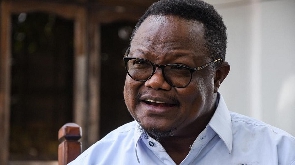 Tundu Lissu is the national chairman of Chadema



Entertainment