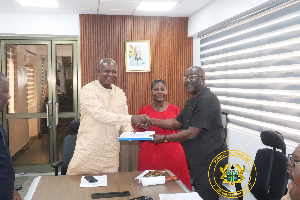
The Overlord of the Mamprugu Kingdom, Naa Bohagu Abdulai Mahami Sheriga, has led traditional authorities in declaring their commitment to ending child marriage and preventing adolescent pregnancy in the kingdom and beyond.
The declaration was made at a durbar in Nalerigu in the North East Region with support from the United Nations Population Fund (UNFPA) and the Obaapa Development Foundation.
The paramount chiefs of the Samni, Mozuu, Wungu and Soo traditional areas joined the Overlord and other traditional leaders in pledging to protect girls’ rights, discourage child marriage and promote opportunities for girls to pursue their education and aspirations.
The initiative, held ahead of the International Day of the Girl Child on October 11, forms part of efforts to mobilise traditional authorities and communities to address harmful practices affecting adolescent girls.
Deputy Minister for Local Government, Chieftaincy and Religious Affairs, Rita Naa Odoley Sowah, led participating traditional leaders, including chiefs and queen mothers, in affirming their commitment to ending child marriage and preventing adolescent pregnancy.
In a statement delivered by Dr Doris Mawuse Aglobitse on behalf of the UNFPA Country Representative, Dr Wilfred Ochan, he said the declaration presented an opportunity to translate discussions and commitments into practical action.
He noted that child marriage deprives girls of their childhood, disrupts their education and limits their future opportunities, with consequences for families, communities and national development.
Dr Ochan identified poverty, harmful social norms and persistent inequalities as factors exposing adolescent girls to child marriage, stressing the need for collaboration among government, traditional authorities, religious leaders, families and development partners.
He called for constructive engagement with communities to address the underlying causes of harmful practices rather than blame families, noting that economic pressures and longstanding social norms sometimes influenced decisions affecting girls.
According to him, UNFPA has supported efforts to empower adolescent girls over the past three years in collaboration with the Ministry of Local Government, Chieftaincy and Religious Affairs and the Obaapa Development Foundation.
The interventions, supported by Global Affairs Canada and pooled funding for the UNFPA-UNICEF Global Programme to End Child Marriage, seek to improve girls’ access to education, sexual and reproductive health information and services, and opportunities to realise their potential.
Dr Ochan described the Mamprugu declaration as the 11th of its kind in Ghana and expressed hope that it would mark a turning point in efforts to protect girls from child marriage and other harmful practices.
Regional Minister pledges support for students
North East Regional Minister Ibrahim Tia called for collective action to protect children, describing child marriage as a serious obstacle to girls’ education, health, personal development and economic empowerment.
He commended the traditional authorities, UNFPA, the Obaapa Development Foundation and other partners for supporting the initiative.
Tia stressed that government alone could not address the problem, urging traditional authorities, religious leaders, parents, teachers, civil society organisations and community members to contribute to efforts to change attitudes and protect children.
He called for stronger public education, improved reporting of child marriage cases, support for affected girls and closer collaboration among institutions responsible for child protection.
As part of his response to the students’ participation in the event, the Regional Minister offered to pay a term’s school fees for the pupils who performed a drama depicting the consequences of child marriage.
The performance by pupils of Royal Academy Junior High School was one of the key highlights of the durbar, using drama to illustrate the effects of child marriage and the importance of safeguarding girls’ rights.
Other participating educational institutions included Kobo Memorial School, Nalerigu Senior High School, Nalerigu Vocational and Technical Senior High School, and the Nalerigu College of Nursing and Midwifery.
Assembly commits to practical measures
East Mamprusi Municipal Chief Executive David Bariche Bukari reaffirmed the Assembly’s commitment to working with traditional authorities, government agencies and development partners to translate the declaration into practical interventions.
He said child marriage was not merely a family matter but a child-protection concern and a development challenge that could undermine girls’ education, health and economic opportunities.
Bukari announced plans to strengthen collaboration among the Ghana Education Service, Ghana Health Service, Department of Social Welfare and the Domestic Violence and Victim Support Unit (DOVVSU) to improve the prevention of, and response to, child marriage and related abuses.
He also pledged to intensify community sensitisation, promote girls’ education, strengthen child-protection and referral mechanisms, and support efforts to prevent school dropout and facilitate the return to school of girls whose education had been interrupted.
He urged parents and guardians to prioritise their daughters’ education and wellbeing, emphasising that protecting girls was an investment in the future of their families and communities.
The durbar was attended by traditional leaders, government officials, development partners, religious leaders and community stakeholders.
Among the participating paramount chiefs were Poanaa Shinga Hajia Ayishetu Abdulai Mahami Sheriga of the Samni Traditional Area, Mozuu Rana Abdulai Scott Mahami of the Mozuu Traditional Area, Wun-Naa Salma Mahamudu Issahaku of the Wungu Traditional Area, and Soo Naba-Naa Maligu Nantomah Seidu of the Soo Traditional Area.
UNFPA representatives Dr Wilfred Ochan and Dr Doris Mawuse Aglobitse, a political development specialist, were also associated with the initiative.
The declaration calls on traditional authorities, families and community stakeholders to work together to prevent child marriage, curb adolescent pregnancy and ensure that girls can remain in school, access healthcare and pursue their ambitions.
Stakeholders emphasised the need to move beyond ceremonial commitments and ensure sustained action in homes, schools, palaces and communities across the Mamprugu Kingdom and beyond.
Regional News of Tuesday, 24 November 2026
Source: www.ghanaweb.com
Mamprugu chiefs declare commitment to ending child marriage
 The declaration was made at a durbar in Nalerigu in the North East Region