Traditional leaders of the Nungua Traditional Council have rejected claims that the Gborbu Wulomo performs traditional rites at the Meridian Rock, insisting that the sacred site belongs to the Sanshie Quarters of Nungua.
They maintain that the Meridian Rock has never been among the deities under the spiritual authority of the Gborbu Wulomo and have challenged those making such claims to provide credible historical records to substantiate them.
The development follows a press conference organised by the Amanfa Quarters, during which several claims were made regarding the history, traditional practices and spiritual authority of the Nungua Traditional Area.
The Nungua traditional area comprises two quarters: the Sanshie Quarters, which constitute the Nungua Traditional Authority, and the Amanfa Quarters, which fall under the authority of the Nungua Mankralo.
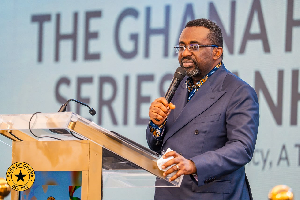
Addressing the media on behalf of the traditional leaders, youth leader of the Nungua Traditional Council, Laud Nii Odai Annang, maintained that the Sanshie Quarters remain the rightful custodians of the Meridian Rock and the traditional rites associated with the sacred site.
He further emphasised that Nungua has one recognised king, His Royal Majesty Oboade Notse, King Professor Odaifio Welenshi III, whom the Sanshie Quarters recognise as the highest spiritual authority responsible for performing all customary rites associated with the Meridian Rock deity.
He also cautioned against statements that could distort the history of Nungua and create divisions between the Sanshie and Amanfa Quarters.
Meanwhile, Otinor Mantse, Nii Afotey Botwe II, expressed concern over what he described as persistent disagreements within the traditional area. He called on traditional leaders to exercise wisdom, integrity and mutual respect in the interest of the entire Nungua community.
The leaders maintain that both the Sanshie and Amanfa Quarters are integral parts of the wider Nungua Traditional Area and should work together to preserve their shared history, cultural heritage and traditional identity.
Regional News of Wednesday, 11 November 2026
Source: Augustine Nyalali, Contributor
Nungua Traditional Leaders speaks on the Meridian Rock
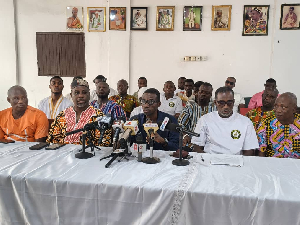 Some of the chiefs at the meeting