The Executive Director of the Purim African Youth Development Platform (PAYDP), Reverend Aku Xornam Adzraku-Kevi, has revealed that the organisation, through its partnership with the United Nations Population Fund (UNFPA), has reached more than 100,000 women and girls with interventions aimed at improving their lives.
According to her, since 2017, the organisation has implemented several programmes targeting adolescent girls, head porters (kayaye), teenage mothers, parents and traditional leaders, with a particular focus on empowering vulnerable girls.
Speaking to the media at a one-day capacity-building workshop on UNFPA country programme reporting and development communication on November 5, 2026, Reverend Adzraku-Kevi said the interventions had focused on sexual and reproductive health education, protection against sexual and gender-based violence, livelihood empowerment and leadership development.
The workshop, organised by UNFPA in collaboration with MCAN, was held under the theme, “Broadening the Lens: Connecting Adolescent Girls’ Empowerment to UNFPA’s Broader Outcome Areas.”
Reverend Adzraku-Kevi explained that PAYDP had worked with adolescent girls and kayaye through community engagements, durbars and outreach programmes organised in collaboration with the Ghana Health Service and other non-governmental organisations.
She noted that the engagements were designed to educate girls about their sexuality, sexual and reproductive health, and how to better understand their bodies.
She further disclosed that the organisation had supported efforts to address harmful traditional practices and other forms of abuse affecting vulnerable girls, including female genital mutilation (FGM), rape and sexual abuse.
According to her, PAYDP had collaborated with partners such as the Domestic Violence and Victim Support Unit (DOVVSU) and Social Welfare to support its interventions.
Beyond sexual and reproductive health education, the PAYDP Executive Director stressed the importance of equipping adolescent girls with practical skills and sustainable sources of income.
She disclosed that the organisation had introduced livelihood empowerment initiatives in areas such as cassava and potato flour processing, basket weaving, animal rearing, farming and cosmetics production, with some of the cosmetics registered with the Food and Drugs Authority (FDA).
The organisation had also established cooperatives to help the girls build sustainable livelihoods.
She explained that providing reproductive health information without equipping girls with the means to support themselves financially could limit the impact of such interventions.
“One of the things we realised is that if you only give the girls reproductive health information and you do not give them livelihood empowerment, the girls are a bit defective and they will not be able to support themselves,” she said.
The PAYDP Executive Director also identified mindset transformation and leadership development as critical components of the organisation’s work.
She cited the Chief Justice Mentorship Programme, led by the Chief Justices of Ghana, as an initiative that allowed judges to engage with adolescent girls on the justice system while encouraging them to develop positive mindsets and take charge of their futures.
According to her, providing girls with skills and other opportunities would not achieve the desired results without also investing in their mindset and leadership development.
“One of the things you realise is that you can do whatever programme you want to do, but if you do not do mindset shifting and leadership empowerment for these girls, you are just wasting your money,” she said.
She added that the mentorship initiative gave judges the opportunity to educate the girls about the justice system and encourage them to become empowered and responsible individuals.
Reverend Adzraku-Kevi said the Global Programme to End Child Marriage, the Adolescent Girls Programme and other UNFPA-supported interventions had collectively reached more than 100,000 women and girls in various communities where the programmes had been implemented.
Meanwhile, Bazaara Serinye Priscilla, a beneficiary of the PAYDP and UNFPA programme, has shared how the initiative transformed her life and inspired her to pursue her dream of becoming a lawyer.
Priscilla, who described herself as a young girl who once lived on the streets without a clear direction in life, said her participation in the programme, particularly the Chief Justice Mentorship Programme, helped her discover her potential and choose law as a career.
She disclosed that she is now preparing to begin her LLB journey, expressing gratitude to PAYDP and UNFPA for the support and empowerment she received.
She also encouraged other girls, particularly those living on the streets, to be bold in communicating their aspirations and seeking support, noting that such conversations could help them identify opportunities to transform their lives.
“I met PAYDP at first, and they were working with UNFPA, and through them we went for some Chief Justice mentoring programmes, and I was empowered. So I chose to do law.
“Sometimes we go out to preach to some of the ladies on the street, especially the girls. So I would like everyone to be bold in communicating with us about what they want to do, how we can help, and then we take it from there. My biggest dream is to become a lawyer,” Priscilla shared.
Regional News of Saturday, 7 November 2026
Source: George Owusu, Contributor
How Chief Justice mentorship inspired a former street girl to pursue law
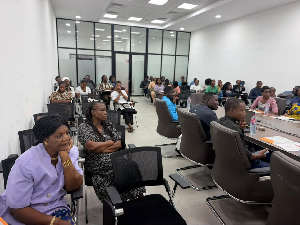 Some of the stakeholders at the event