Cocoa farmers and traditional leaders in the Ashanti Region have backed the Ghana Cocoa Board Act, 2026 (Act 1182), but are demanding improved agricultural support, transparency in scholarship allocations, and the speedy implementation of the proposed Farmer Pension Scheme.
The farmers, who initially expected a higher producer price for the new cocoa season, said explanations provided by the Ghana Cocoa Board (COCOBOD) on the factors behind the announced price had helped them better understand the decision.
Their views emerged during stakeholder engagements organized by COCOBOD, in collaboration with the Cocoa Health and Extension Division (CHED), across seven cocoa-growing districts in the Ashanti Region.
The engagements covered Offinso, Kyerayaso, Toase, New Edubiase, Kuntenase, Kona, and Juansa, providing a platform for farmers and traditional leaders to discuss the new law, cocoa pricing, and interventions to improve productivity and farmers' livelihoods.
Although some participants had hoped for a higher producer price, they acknowledged the explanations provided on the considerations underpinning the announcement, indicating a better understanding of the economic realities confronting the cocoa sector.
Beyond the producer price, the farmers welcomed reforms under the new Cocoa Board Act but called for sustained public education to help them understand its provisions, particularly those aimed at protecting cocoa-growing communities and farmlands from destructive activities such as illegal mining and unauthorized sand winning.
They also called for cocoa-related issues to be depoliticized, arguing that the industry requires a united, long-term approach focused on its sustainability and the national interest.
On agricultural support, participants urged COCOBOD to improve the distribution of free farm inputs, especially fertilisers, to ensure that farmers receive adequate quantities at the right time to support production.
They further appealed for the speedy implementation of the proposed Farmer Pension Scheme, describing it as a critical intervention that could improve the long-term welfare and financial security of cocoa farmers.
The administration of the cocoa tertiary education scholarship scheme also came under scrutiny, with participants demanding greater transparency to ensure fairness, accountability, and equal access for all eligible beneficiaries.
Leading the COCOBOD delegation, Deputy Head of Public Affairs, Benjamin Larweh, stressed the importance of keeping farmers informed and actively involved in policy discussions that directly affect their livelihoods.
He said the engagements demonstrated the Board's commitment to open communication, stakeholder participation, and a shared understanding of the reforms and interventions needed to sustain Ghana's cocoa industry.
Mr. Larweh added that constructive dialogue was essential to building trust between COCOBOD and farmers, assuring participants that the concerns and recommendations raised during the meetings would be submitted to management for consideration.
Meanwhile, the Ashanti Regional Manager of CHED, Isaac Adu, announced plans for further engagements with farmers on the distribution of fertilizers and other agricultural inputs, as well as the mass spraying exercise under the Cocoa Diseases and Pests Control Programme (CODAPEC).
The completion of the Ashanti Region engagements marks the first phase of a broader national programme intended to bring COCOBOD's policies and interventions closer to farmers and other stakeholders across the cocoa industry.
EA
Regional News of Tuesday, 13 October 2026
Source: www.ghanaweb.com
Ashanti cocoa farmers back new COCOBOD Act, demand better support and transparency
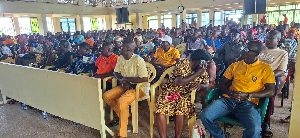 Ashanti region cocoa farmers