The Ghana Scout Association (GSA) is taking its child safeguarding campaign beyond the Scout environment, using community service to demonstrate how young people can help create safer and healthier places to live.
The Association organised a beach clean-up in Accra as part of activities marking the final day of its Safe from Harm Capacity Enhancement Training, bringing Scout leaders and young people together to put lessons from the training into practice.
The exercise was organised in collaboration with Wɔn beꜪ Ga.
The Safe from Harm training covered how to prevent harm to children and young people, identify risks, report concerns and respond appropriately when incidents occur.
However, the GSA says safeguarding should not end when a child leaves a Scout meeting or activity. The conditions in which children live, learn and play also matter to their health and wellbeing.
That thinking shaped the beach clean-up, which gave participants an opportunity to put leadership, teamwork, responsibility and community service into action.
Chief Commissioner of the Ghana Scout Association, Hilary Y. Awusie, led the exercise alongside Youth Program Commissioner Shaibu Fenteduah Fuseni, National Safe from Harm Coordinator Prince Akese, National Training Commissioner Holly Boadi and World Organization of the Scout Movement consultant Eric Mwanda Gitonga.
Turning lessons into action
For the GSA, involving young people in community work is part of teaching them to take responsibility for the challenges they see around them.
Plastic waste and other forms of pollution remain a challenge for many coastal communities in Ghana. Apart from affecting the appearance of beaches, waste can pose risks to public health, marine life and the livelihoods of people who depend on the coast.
The Scouts’ involvement gives young people a direct role in addressing one of these problems.
It also puts into practice a basic principle of Scouting: young people learn not only through instruction but also by taking part in activities that require teamwork, leadership and service.
For participants, the clean-up provided an opportunity to work together to address a problem in their own surroundings rather than simply discussing responsibility in a training room.
Protecting children and their surroundings
The GSA’s approach connects child safeguarding with the wider conditions that affect young people’s lives.
Protecting children from abuse, exploitation and other forms of harm remains central to safeguarding. However, their wellbeing is also affected by whether the places where they live and spend time are clean, safe and healthy.
The Association wants to build on this approach by involving its young people and adult volunteers in activities related to sanitation, environmental protection, health, climate action and community service.
It also sees opportunities to work with community groups, businesses, development partners and other organisations to expand such activities.
The beach clean-up was modest in scale, but it gave the Scouts an opportunity to put one of their core values into practice: service to others.
For the GSA, the wider goal is to raise young people who can recognise problems in their communities, work with others to address them and take responsibility for the places in which they live.
Regional News of Wednesday, 16 September 2026
Source: Ghana Scout Association
Ghana Scouts turn child safeguarding into community action
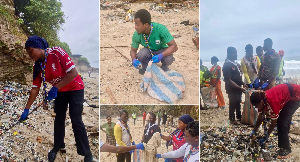 GSA is taking its child safeguarding campaign beyond the Scout environment