The livelihoods of cocoa farmers, hitherto threatened by ageing, disease and unproductive cocoa trees, have made rehabilitation increasingly important, particularly for farmers whose farms can no longer provide the yields needed to support their households.
This led to the nationwide Cocoa Rehabilitation Programme (CRP), launched in 2020 to replace ageing, diseased and unproductive cocoa trees with disease-tolerant, early-bearing and high-yielding cocoa varieties, offering renewed hope to farmers in the Kadjebi District of the Oti Region.
For farmers in the district, the intervention goes beyond replacing old trees. It provides an opportunity to rebuild farms that have struggled to produce enough cocoa to support their families.
Restoring hope to ageing farms
Ghana’s cocoa sector has faced a difficult period, with production affected by Cocoa Swollen Shoot Virus Disease (CSSVD), ageing farms, climate variability, poor farm maintenance and illegal mining.
The rehabilitation programme seeks to address these challenges through the removal and replacement of diseased and unproductive trees with improved hybrid seedlings, alongside farm maintenance and the adoption of good agronomic practices.
Farmers see a future in cocoa
Mark Markwei Tetteh, a beneficiary and resident of Kordibenum Francis, whose five-acre cocoa farm was rehabilitated, said the CRP represented an opportunity to return the land to productive use.
His experience demonstrates the importance of interventions that directly address the challenges confronting farmers at the farm level.
Daniel Kporvuvu, another beneficiary from Dzindziso, whose three-acre farm was rehabilitated, said the intervention had been beneficial to farmers and called for it to be sustained to reach more cocoa farmers.
George Dorhame, a 54-year-old beneficiary from Kadjebi, who had his one-acre farm rehabilitated, also welcomed the programme, describing its continuation as necessary to help farmers restore ageing farms and improve their productivity.
The positive response from the beneficiaries underscores the growing acceptance of the programme in the district.
Their views reflect a broader concern among cocoa farmers: rehabilitation must not end with the cutting down of old or diseased trees and the planting of new seedlings.
Farmers need sustained technical guidance, farm maintenance support, inputs and other assistance during the period when the new trees are growing and yet to generate significant income.
Technical support key to success
Dr Oliver Mills, the Volta Regional Manager of the Cocoa Health and Extension Division of COCOBOD, also welcomed the programme and called for its sustainability.
He emphasised the importance of farmers’ cooperation with extension officers and adherence to recommended farming practices to ensure that rehabilitated farms achieved their expected productivity.
Proper pruning, weed control, shade management, fertiliser application, and effective control of pests and diseases are among the practices required to keep rehabilitated farms healthy and productive.
He said the technical support was particularly important because newly planted cocoa trees require time to mature. Without proper management during this period, the investment in rehabilitation could fail to deliver its intended benefits.
Sustainability beyond planting
The success of cocoa rehabilitation must therefore be measured beyond the number of farms treated.
It should be reflected in increased yields, improved household incomes, renewed farmer confidence and the ability of younger generations to see cocoa farming as a viable livelihood.
A sustainable cocoa sector requires collaboration among COCOBOD, farmers, traditional authorities, local government and development partners to protect farms and maintain the investments made in rehabilitation.
A promise for tomorrow
The Cocoa Rehabilitation Programme has given farmers in Kadjebi a renewed sense of possibility.
For a farmer like Tetteh, five rehabilitated acres represent more than hectares of land; they represent an investment in the future.
The experiences and views of the beneficiaries point to a clear lesson: rehabilitating cocoa farms is only the beginning. Sustained technical support, farmer commitment, adequate financing and protection of cocoa-growing lands will determine whether the new trees translate into lasting prosperity.
As the rehabilitated farms mature, the hope is that they will produce not only more cocoa, but also stronger livelihoods for farming families and a more resilient cocoa industry for Ghana.
For Kadjebi farmers, the CRP is not just about rehabilitation, but also about sustaining the process until the promise of today’s young cocoa trees becomes tomorrow’s harvest.
Regional News of Tuesday, 15 September 2026
Source: GNA
Cocoa rehabilitation offers fresh hope to farmers in Kadjebi
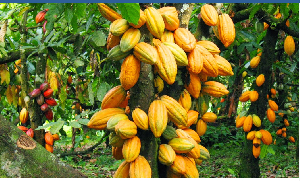 File photo of cocoa farm




Entertainment