Many caregivers in the coastal communities of Agavedzi, Salakorpe and Amutinu depend on fishmongering and salt mining not only as sources of income, but also as businesses that help put food on the table, keep children in school and meet everyday household needs. Yet, for many small-scale entrepreneurs, knowing how much money comes into a business does not always mean knowing how much profit it makes.
Friends of Adaklu (FOA) has therefore organised Business Management training for caregivers on the project. The programme was conducted under the eight-month Sea Works At Night Project, as a direct response to the devastating tidal waves that have impacted residents and their livelihoods in the area for years.
The training focused on some of the everyday challenges caregivers encounter in running small businesses, including understanding business costs, calculating profit and loss, keeping records, managing capital, setting prices, handling credit, customer service, product quality and storage, savings, marketing, diversification and the use of mobile money and digital tools.
One of the strongest messages from the training was the distinction between cash received from sales and actual business profit.
Caregivers were encouraged to protect their business capital and avoid using all business funds to respond to household emergencies. They were also encouraged to save part of their income and reinvest profits to increase their stock and gradually strengthen their businesses.
This became a significant moment of reflection for participants, many of whom recognised that money generated from sales can easily be mistaken for profit when business expenses and capital are not properly accounted for.
Facilitating the training, Madam Celestine Ladzakah, a seasoned business professional, used participants' own livelihood activities to make business management lessons practical and applicable.
One of the participants, Adayo Borrika from Salakorpe, said the training really helped her understand her business better.
In her words, “I used to think that the money I received from sales was all my profit. Now I know that I have to first take out my expenses and protect my capital before using the money. I have also learned how to keep simple records and save part of my profit to grow my business. I am grateful for this training because it will help me manage my business better.”
Speaking during the training, the Project Manager, Roberta Donkor, emphasised the importance of treating small livelihood activities as businesses that require planning, discipline and consistent monitoring.
She encouraged caregivers to take ownership of their businesses by knowing how much they invest, how much they spend, how much they earn and how much they can safely withdraw for household use.
She further stressed that livelihood support is most effective when beneficiaries are able to protect the resources invested in their businesses and use the proceeds to sustain and grow their enterprises. Caregivers were therefore encouraged to apply the lessons from the training beyond the classroom and make business record-keeping and financial planning part of their daily routines.
The Program and Policy Advisor of Friends of Adaklu, Robert Tornu, also highlighted the importance of record-keeping, including domestic record-keeping, as a foundation for responsible financial management.
Tornu explained that keeping records should not be seen as something reserved for large businesses. Even a caregiver operating a small fish or salt business needs to know what comes into the household, what goes out and what is being retained for business growth.
Participants were encouraged to maintain simple records of daily sales, purchases, expenses, debts and money reinvested into the business. The training introduced caregivers to simple record-keeping templates that they could use without requiring advanced accounting knowledge.
Tornu further linked business records to domestic record-keeping, explaining that households also need to understand their income and expenditure patterns. When household and business finances are mixed without records, it becomes difficult to determine whether a business is generating sustainable profit or simply financing household expenses.
For caregivers, domestic record-keeping therefore helps them make better decisions about food, education, healthcare, savings, debt repayment and business reinvestment, while business records help them determine whether their livelihood activities are actually growing.
By the end of the training, caregivers demonstrated a stronger understanding of the relationship between costs, sales and profit. They gained practical skills in recording sales and expenses, protecting business capital and separating business funds from household expenditure. They also developed greater awareness of how product quality, storage, pricing and customer service can affect their businesses.
One significant observation from the training was the realisation by caregivers that cash received from sales does not automatically represent profit. Participants also recognised that profits can be reinvested to increase stock and support future business growth.
Regional News of Thursday, 3 September 2026
Source: Desmond Tinana, Contributor
Coastal caregivers trained to manage businesses, protect profits and grow livelihoods
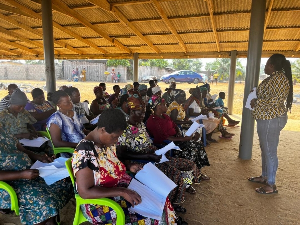 A picture of the caregivers receiving training